

Still Planting Squash And Cucumber Together? Here's Why You Shouldn't
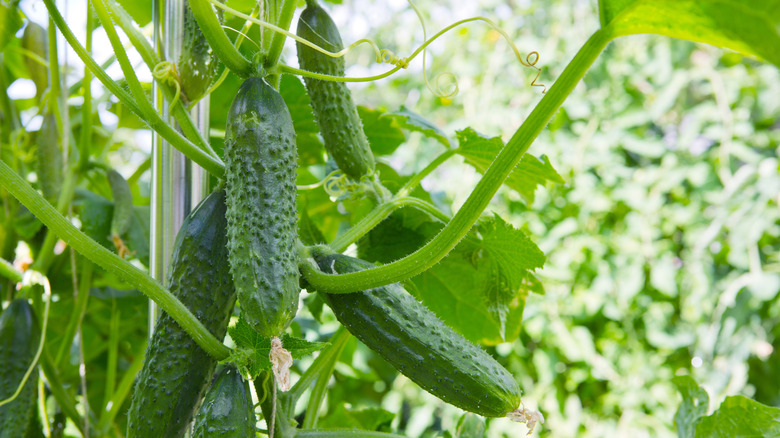
When space in your vegetable garden is at a premium, you probably look for crops that you can grow together, so that you can get as much productivity out of your patch as possible. If you've been growing for a few years, you will most likely also rotate your crops from year to year for better soil health and fewer disease issues. In fact, this is one of those ancient techniques that deserves a place in your garden, but while it might seem rather logical to grow similar species together because they like the same conditions, there are some caveats to consider before you do this. One combination to avoid is squash (Cucurbita pepo) and cucumbers (Cucumis sativus) for various reasons, including pest and disease problems, and nutrient competition.
Cucumbers and squash are vining plants in the Cucurbitaceae family. This means that they need similar conditions to grow and use the same nutrients from the soil. Both plants are heavy feeders, so unless you're constantly replenishing those nutrients, you'll find that the soil will become depleted fairly quickly, and this may result in slower growth, less fruit production in both species, and misshapen fruits in cucumbers. Although it might seem like a good pairing because you can use a climbing frame for the cucumbers and let the squash sprawl along the ground, keeping up the required nutrients could prove to be a bit challenging.
Avoiding pest and disease problems that can affect both squash and cucumbers
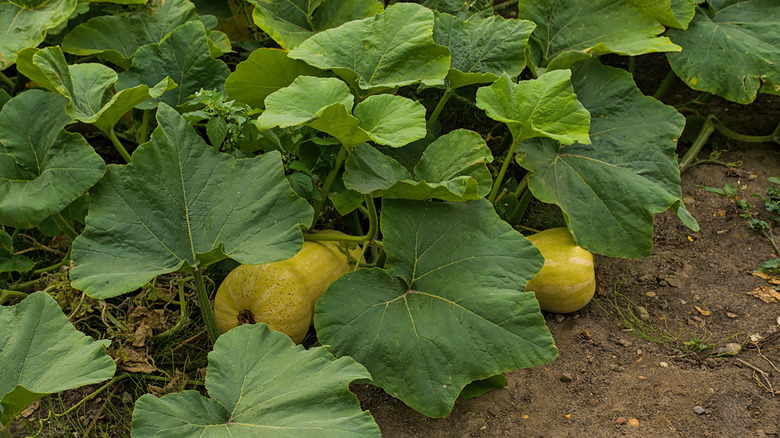
Apart from cucumbers and squash competing for nutrients in the soil, they also attract and can be damaged by the same pests. These include cucumber beetles, pickleworms, and squash vine borers. Not only do cucumber beetles make holes in the leaves, flowers, and fruit, but they also spread diseases such as bacterial wilt and cucumber mosaic virus, which is why these are one of the worst pests you want to banish from your yard. Pickleworm larvae can damage the blooms and also the developing fruits. Vine borers are even more damaging because they feed inside the stems and can cause entire runners to wilt and die. Once any of these pests have found either your cucumbers or squash plants, it's likely that they'll spread from plant to plant and could end up decimating your entire crop.
Common diseases such as downy and powdery mildew can also affect both cucumbers and squash plants, and these can be quite difficult to control. Once they take hold, they tend to damage both leaves and stems, which can result in stunted fruits. On top of that, there are a variety of other diseases that will damage these two plant species. Essentially, it's better not to grow these two plants together if you want a healthy crop that will thrive and reward you with a bumper harvest. On the flip side, you might want to familiarize yourself with flowering companion plants that can ward off pests and help to keep your vegetable patch flourishing.