

What It Means If You See A Glass Window On The Inside Of A Vintage House
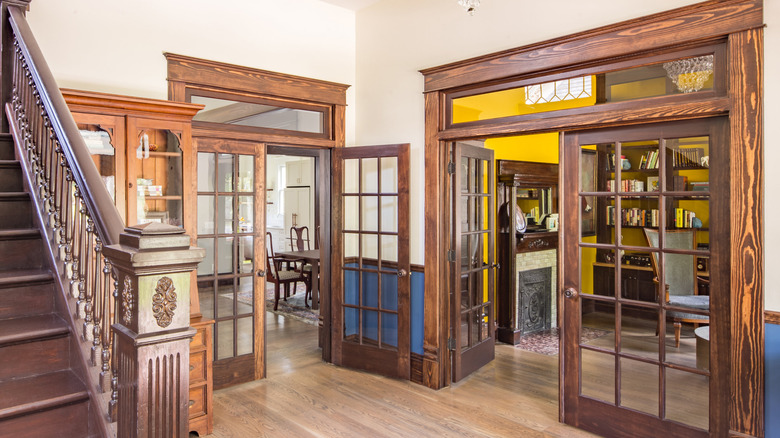
Old houses have their charms. The elaborate wood molding of Victorians, the half-timbers of Tudor homes, and the unexpected delights of a dumbwaiter or a hidden ironing board make them sought-after properties. But it may seem odd to see a narrow glass window over a door inside a vintage house, with a view into another room rather than outdoors. These are not the windows that suddenly find themselves indoors when an addition is built; these odd openings served several purposes. They were intended to chase away the stale air and gloom in old houses without adequate ventilation or light, and they were even required by some 19th-century laws in an effort to improve the health of the home's residents.
These narrow, rectangular or arched panes of glass over interior doors are type of transom window. Without air conditioning, exterior transom windows keep the inside cooler on hot days by giving the warm air near the ceiling an escape route to the outdoors. At night, they're a safer alternative to keeping the traditional windows open. Meanwhile, interior transom windows may have gone out of style with homebuilders, but if you live in an older home, you're probably aware that these types of windows are still useful. They cut down on a stuffy atmosphere, mold and mildew issues, and air pollution in homes by increasing ventilation.
Transom windows were meant to fight tuberculosis
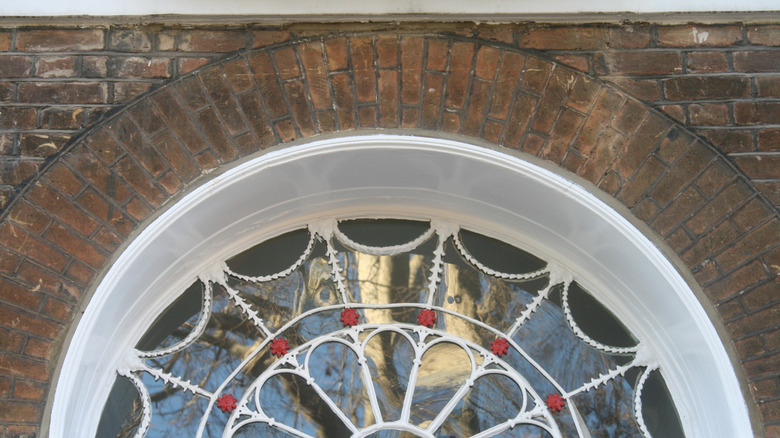
Transom windows can be fixed, but many have a long rod that turns, opening and closing the window on its long axis. Not all are clear glass — stained glass transom variations add light and elegance. These windows allow more light into the house when they're over an exterior door, but the transoms over interior doors also control airflow and temperature in and between rooms. If, for instance, all the transoms in a house are opened, air flows freely through the house.
Interior windows served a more serious purpose in vintage homes. In the 19th century, tuberculosis, a contagious disease that typically attacks the lungs, had no known treatment other than long-term care. Preventing the spread of the disease before effective treatment was developed in the 1940s was the only way to control it. Scientists and doctors noted that the disease spread quickly in densely populated areas and concluded that preventing exposure to stagnant air could help. Those with the means could go to cure cottages, where they got fresh air and medical treatment. Those without the means didn't have that option.
After a law was passed in New York in 1867 requiring tenements to have better circulation, tuberculosis windows were installed inside crowded buildings in an attempt to keep the air moving between rooms. In 1879, the law was amended to acknowledge that fresh air, not just internally circulated air, was needed, and new buildings required every habitable room to have an outside window or a window that connected to another room with an outside window.