

How To Water A Hoya Plant So It Thrives
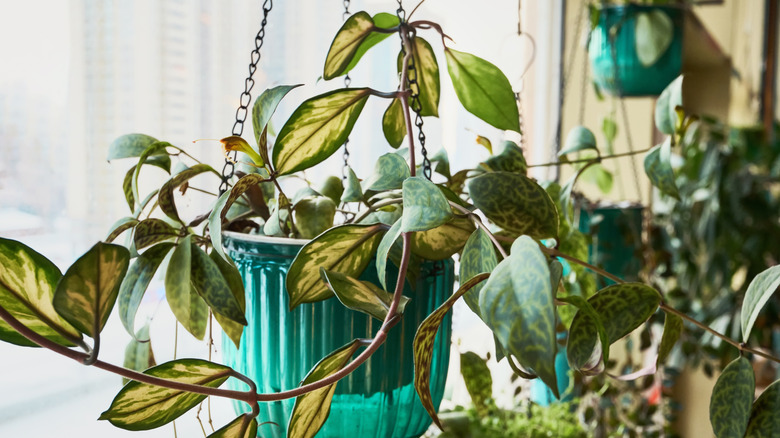
With their intriguing foliage and dainty clusters of bright flowers, hoya plants (Hoya spp.) are beloved by many gardeners and houseplant collectors. These stunning vines flourish when hung up indoors in a sunny spot, with their beautiful leaves cascading down to create a waterfall of color and texture. There are loads of different hoya plants available to bring into your home, from the classic wax plant to the cute sweetheart hoya, which often appears on store shelves around Valentine's Day. However, whichever hoya plant you have, you need to water it correctly to ensure that it thrives. Most importantly, hoya plants do well when the soil is on the dry side, and the soil should always be left to dry out before watering.
As is the case with all houseplants, it's helpful to reflect on the hoya plant's natural environment when it comes to care. These flowers grow beautifully indoors, but their native home is very different. Hoya plants come from Asia, Australasia, and the Pacific islands, and they often grow as epiphytes on trees. This means that their roots absorb moisture from the rain instead of the soil, with their thick leaves retaining water. Because of this, they do not enjoy constantly wet soil, making the soak-and-dry method perfect for this genus.
Dry soil is usually the best indicator of when your hoya plant needs water, but you should also be aware of seasons and growth rate. Watering should be more frequent in the warmer months and less frequent in the low-light, colder seasons. Some experienced houseplant owners will wait until leaves start to shrivel slightly before watering. If you've noticed signs that you are overwatering your indoor plants and your hoya looks unhappy, however, you may wish to try out this soak-and-dry technique.
How to use the soak-and-dry method for watering hoya plants
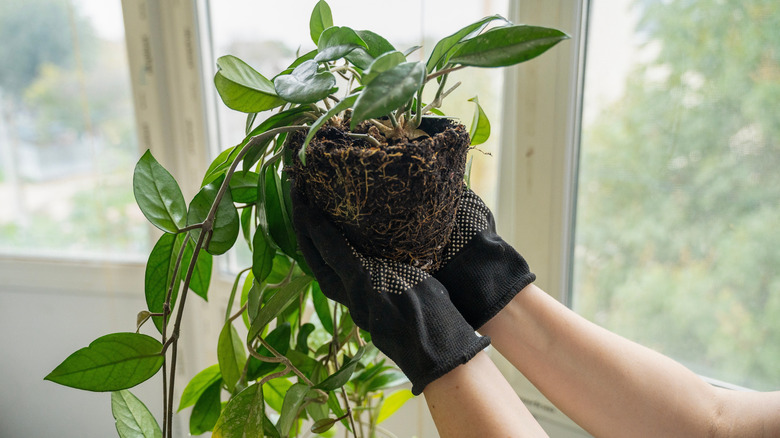
A common indoor gardening mistake that even experienced houseplant owners make is thinking that "less watering" refers to the amount of water and not the frequency. So, instead of watering a plant less often, they may just give it a lighter watering. However, this can lead to poor root growth and damage the health of the plant. To avoid this issue with hoya plants, it's helpful to use the soak-and-dry method. This involves allowing the soil to dry out almost totally before watering again — you can stick your finger into the soil and feel how the moisture is an inch below the surface. If it's dry, it's soaking time.
To soak your hoya plant, you need to give it enough water so that the root zone is moistened. Pour water into the pot and wait to see if it begins to seep out of the drainage holes after a minute. If it hasn't, apply more water. It may be a good idea to take your hoya plant out of its decorative pot or saucer and place it in your sink or bath to ensure the excess water runs away freely. Leaving your plant sitting in a saucer of water can be detrimental to its health and can cause root rot. Once you've soaked the plant and the water has run out, you can put it back in its usual spot. Then, wait until the soil has dried out again before repeating the process.