

The Lesser-Known Basil Variety You Can Grow At Home
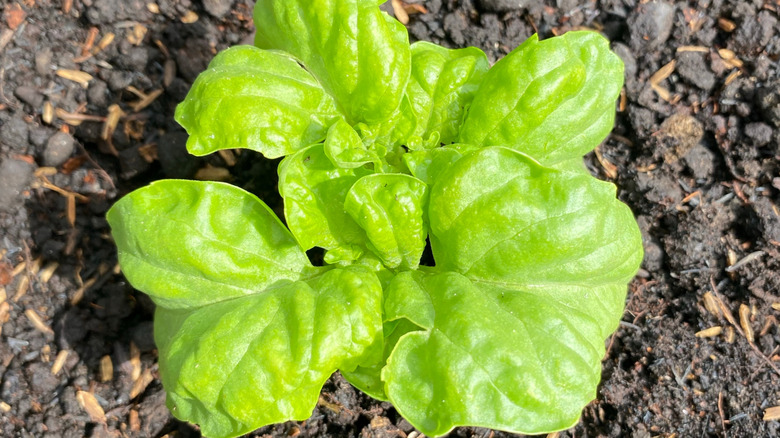
Basil, a member of the mint family, is a common ingredient in various culinary cultures — perhaps most famously in Italian pesto and tomato dishes. The variety you'll see most often is sweet basil, but other types, like Genovese or Thai basil, frequently make the rounds, too. However, if you're looking for a lesser-utilized variety of basil to plant in your home garden, it's hard to go wrong with lettuce leaf basil (Ocimum basilicum crispum). Named for its larger, crinkly green leaves, lettuce leaf basil is a softer, creamier, and sweeter-tasting variety that grows quickly. A few different cultivars exist, from "Napoletano" to "Mammoth," but, given that they still fall under the broad umbrella of sweet basils, growing your own isn't going to look all too different from other basils and their companion plants.
The larger-leaf varieties of basil tend to grow 2 to 3 feet tall, and lettuce leaf grows best in USDA hardiness zone 11. That being said, basil seeds can easily be sown indoors for six to eight weeks before being transplanted outdoors. Since it's a tender annual, you'll want to overwinter your basil, too.
How to grow lettuce leaf basil at home
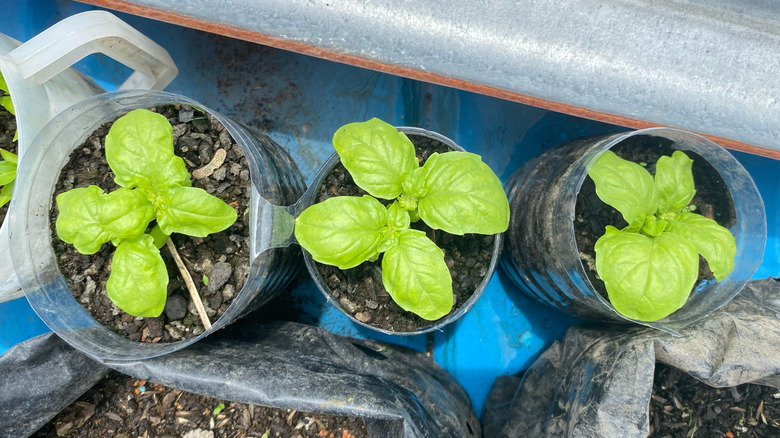
Fertile and well-drained loamy soil with lots of organic matter is going to be the ideal growing medium for basil varieties like lettuce leaf, and this soil should always be kept well watered. Moist soil will encourage germination, so be sure to water deep near the roots every week or so; plants like basil should be watered even more often if they're grown in containers, which dry out faster. If you're growing lettuce leaf basil outdoors, you'll want to choose a spot that's far from any driveways and streets to avoid any vehicle exhaust bleeding into the soil. Keeping a pH range around 6.0 to 7.5 is ideal, and you can raise the pH level if need be using soil additives like calcium carbonate or limestone. That said, you'll want to fertilize your basil sparingly, only once or twice each growing season, with the fertilizer worked into the top 6 inches of the soil.
One of the biggest mistakes you can make when growing basil, including lettuce leaf varieties, is not giving the plants enough sunlight. Lettuce leaf basil requires full sun conditions, with at least six to eight hours of direct light every day. If you're growing your plants outdoors, transplant or seed them after the last frost of the year, spacing each sprig of basil about a foot apart.
Using and preserving your lettuce leaf basil
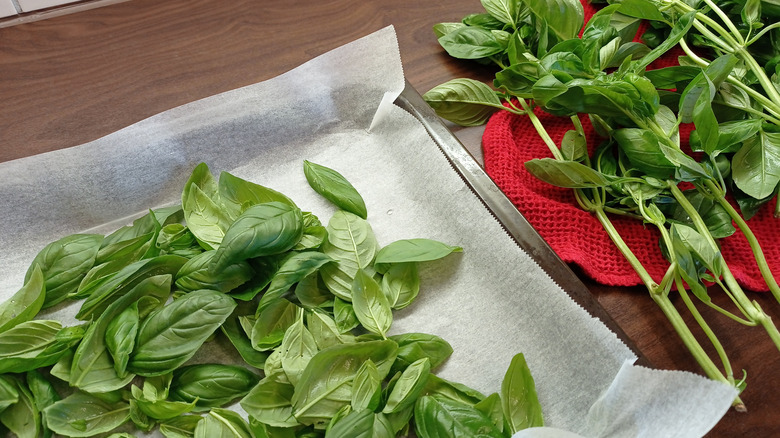
One reason you'll want to consider lettuce leaf basil amongst the many other varieties out there is the fact that it's so easy to destem for quick use. The plant's large leaves can just as easily be chopped up to add into a dish as they can be added wholesale to salads, making for a good lettuce alternative alongside spinach, mustard greens, or endive. If you're growing your own lettuce leaf basil, though, you'll want to be watchful for weeds that outcompete the plant, diseases like basil downy mildew, and pests such as grasshoppers or slugs.
Given basil varieties are tender annuals, they will eventually die — even when planted indoors. You'll have to replant your lettuce leaf basil every growing season, so it's worth preserving as much as you can while you have it. Consider salt-drying your lettuce leaf basil, which helps herbs last longer by drawing out moisture between layers of salt without burning out the aroma. There are plenty of other tips to follow when harvesting garden herbs, too, including harvesting before they start to flower. Whether you're growing them as a houseplant or as part of a larger edible garden, lettuce leaf basil clearly deserves just as much attention as the more popular varieties out there.