

Keep Ticks From Invading The Garden With A Fresh-Smelling Kitchen Herb
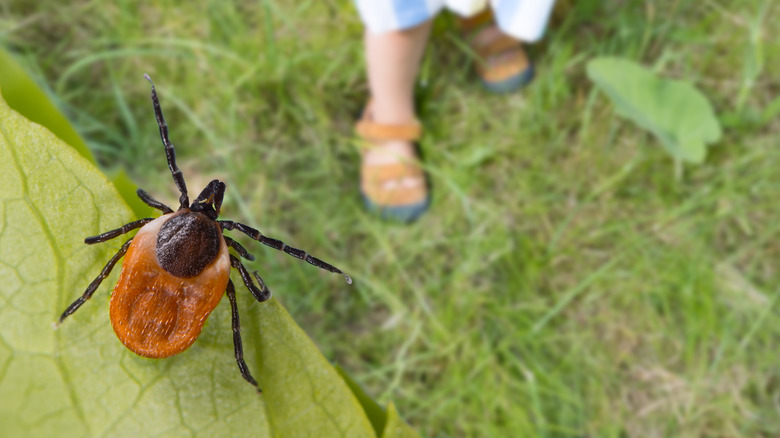
Ticks can be a massive nuisance in the garden. These blood-sucking creatures do not just ruin happy walks for gardeners, but they can also be sources of deadly illnesses, like Lyme disease. In fact, one out of every three blacklegged ticks is infected with this disease-causing bacteria, per the Minnesota Department of Health. However, resorting to chemical methods for eliminating these intruders is not advisable either. More and more gardeners are looking for natural ways to get rid of them, and fortunately, there are several plants that can keep ticks out of the yard. Artemisia absinthium, also known as wormwood, is one such plant. Planting wormwood will not just save you from annoying tick bites and the possibility of Lyme, but its beautiful silver leaves and aromatic properties will also provide an excellent ground cover option for your yard.
Wormwood is a perennial herb, native to Asia, Europe, and the Middle East. It has historically been used for its medicinal and culinary properties. Wormwood is hardy through USDA Hardiness Zones 4 to 9. You can plant these herbs in heavily tick-infested regions in your garden and use them to stop ticks from taking over the lawn as well.
The members of the wormwood plant group resist tick invasion primarily by disrupting their sense of smell, which ticks depend on for identifying hosts. Wormwood emits such a strong aroma that ticks lose out on their ability to distinguish hosts from their surroundings. Because of the immunity their aroma provides, you can crush the leaves of the wormwood plant and apply it on your skin for protection, too.
How planting wormwood stops tick infestation
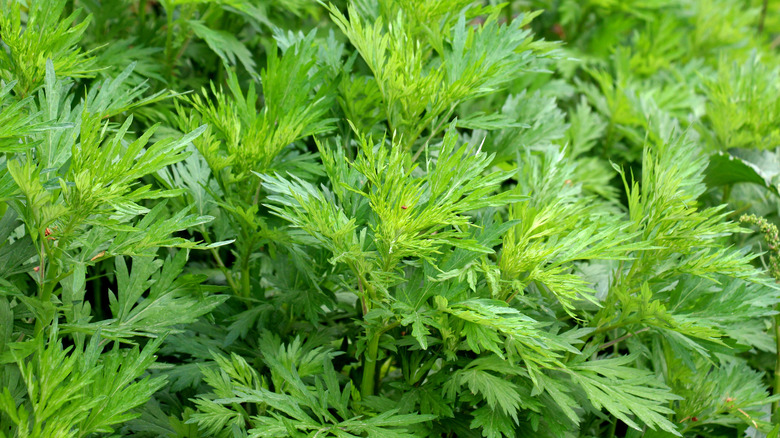
The leaves of a wormwood plant contain several compounds that have natural pest-repellent properties. It is the compound thujone, however, which gives the plant its pest-repelling odor. Furthermore, several host organisms, such as deer and mice, are repelled by absinthin, another chemical present in the plant, which provides an additional barrier to the propagation of these notorious pests. These chemicals not only make wormwood highly potent against ticks but a whole host of other insects, too. For instance, you can use this plant to send wasps buzzing away from your yard just as well.
Studies have shown that the essential oils present inside members of the wormwood family, particularly the common absinthe wormwood, have significant acaricidal properties. The plant also displays antifeedant properties; that is, it can inhibit feeding among insects, like ticks, and cause starvation. According to Scientific World Journal, as low as 5% concentration of ethanolic extract of the plant was found to be 100% potent against the hatching of cattle tick eggs. Some species of wormwood also contain a phytochemical known as artemisinin, which works to inhibit the growth and reproduction of parasites, like ticks, per The Pharma Journal. When ticks digest hemoglobin molecules, this phytochemical reacts with the heme component of hemoglobin and, in turn, changes the structure and function of the parasites.
You may find wormwood to be insufficient to completely eliminate all ticks from your yard, but when planted with other similar tick-repelling ground covers, such as catmint, they are definitely effective in providing a natural relief to this persistent problem. Keep in mind that despite its immense benefits for pest control, wormwood can be toxic to both pets and humans when eaten, so it's best kept out of reach of children and curious pets.