

8 Self-Seeding, Perennial Ornamental Grasses You'll Only Need To Plant Once
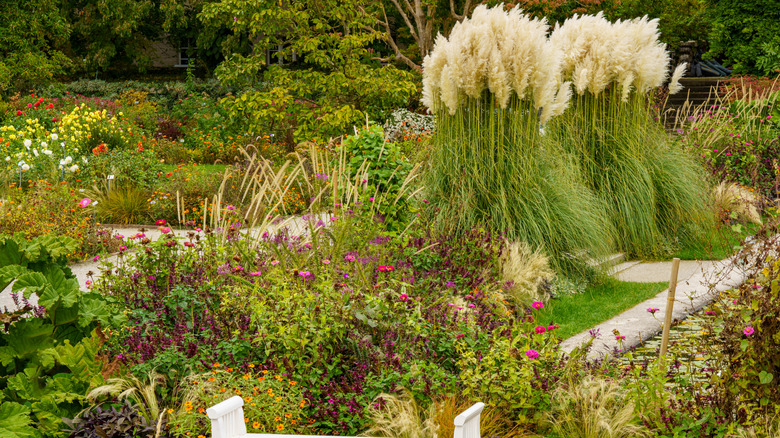
Few things say low maintenance like a garden that's able not only to last year after year but also reseed itself for abundant growth all on its own. Perennial ornamental grasses like switchgrass or tufted hair grass often possess the ability to self-seed, meaning less work on your part to keep these plants thriving in your yard. In fact, in many cases, you can plant these ornamental grasses once and enjoy their eye-catching appearances even long after the original plant has passed.
Ornamental grass is any grass (or even grass-like plant, such as sedge) that is grown for the sake of beauty, rather than utility. While your first thoughts of grass may draw your attention to your lawn, there is a bit of a difference between ornamental grass and lawn grass. For one, ornamental grass isn't as durable, and it's better used sporadically throughout your yard in spots where there is no foot traffic. Ornamental grass can also grow quite large, making these plants a statement piece within your yard.
While self-seeding can be a helpful feature, there is one detail to keep in mind when looking for the perfect ornamental grass for your yard. Many self-seeding plants grow with little to no problems. However, some may be aggressive, requiring regular care to contain, or even invasive in certain areas. Before adding any plant to your yard, always check to see if it's invasive in your area first to avoid potential threats to your local ecosystem.
Fountain grass
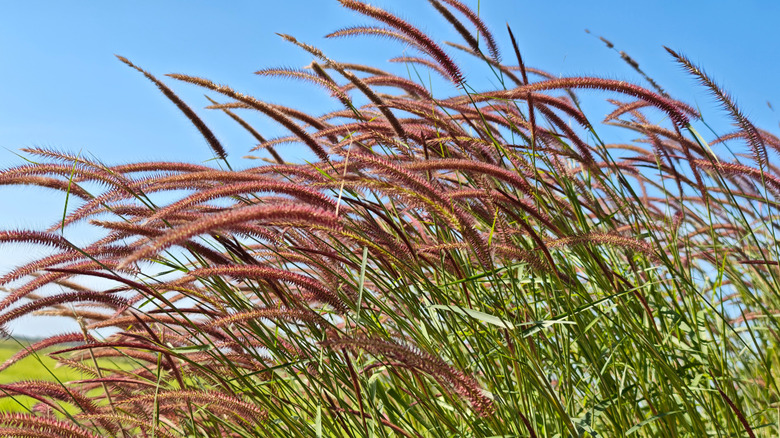
Fountain grass (previously Pennisetum setaceum, now Cenchrus setaceus) can be grown as an annual or a perennial. Unless you live in a warmer region, growing this plant throughout the winter can be difficult, since it's only hardy in USDA Hardiness Zones 9 to 11. However, to take advantage of its perennial growing habits, you can overwinter it indoors in a container. In the garden, you can expect fountain grass to readily self-seed in warmer climates. Fountain grass is considered invasive in several states, including California, Florida, Arizona, and Hawaii, where it's better to use an alternative ornamental grass option.
Blue fescue
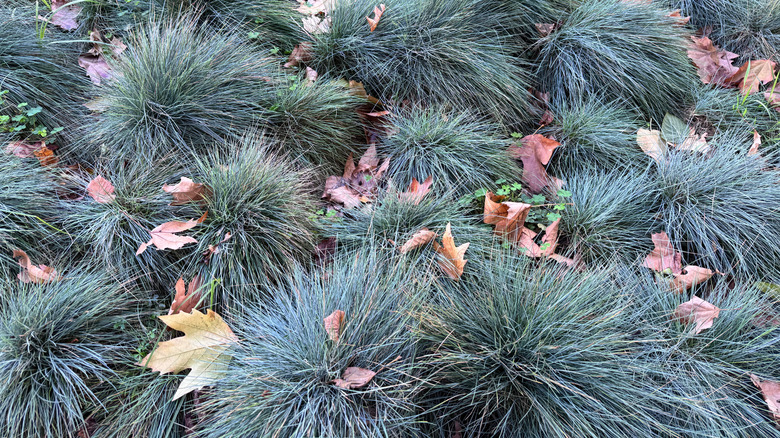
Blue fescue (Festuca glauca) is cold-hardier than fountain grass, growing in zones 4 through 8. It's also not considered to be invasive in any state, nor is it typically an aggressive grower despite its self-seeding capability. It offers a cool toned blue-green appearance that shines in the full-sun spots of your yard, making it perfect for adding color and texture to borders or near walkways. You can also use this ornamental grass as a companion plant for lavender.
Little bluestem
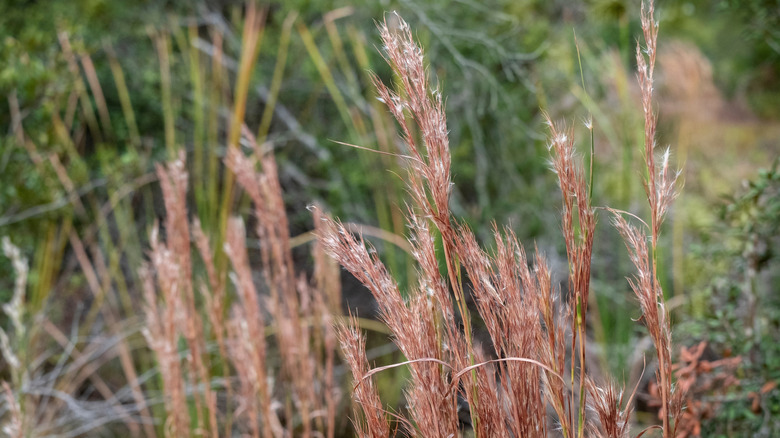
Native to eastern North America, little bluestem (Schizachyrium scoparium) can be the perfect choice if you're looking for a perennial ornamental grass that can self-seed while serving your local ecosystem. One of the most interesting parts of little bluestem is that it can appear to change colors, with a blue tone similar to blue fescue during the summer and a warmer bronze coloration during the fall. It's hardy in zones 3 to 9, where it attracts butterflies and moths. As a result, it can make a solid choice for filler when starting a pollinator-friendly garden.
Greater straw sedge
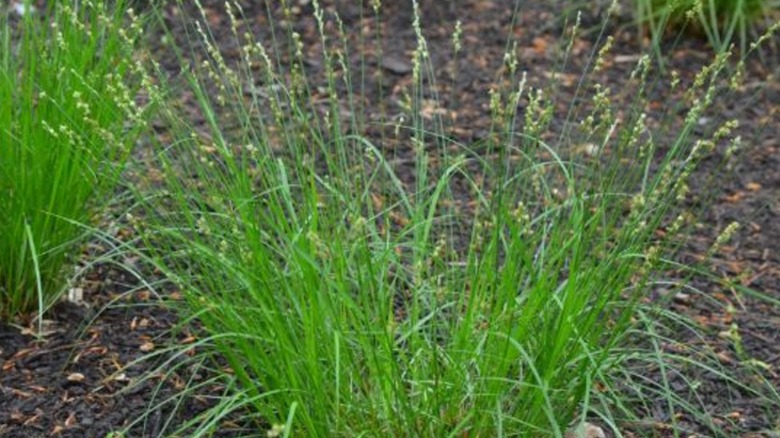
Greater straw sedge (Carex normalis) is another perennial ornamental grass that's native to North America. While it does still fall into the category of ornamental grasses, it's not a true grass. Instead, it's a type of sedge that's hardy in zones 3 through 8. Not only does it self-seed with ease, it can also spread through rhizomes, making the task of filling your garden with these eye-catching plants nearly effortless. Although you can add greater straw sedge to your garden as an accent, you can also use it in larger amounts as groundcover.
Tufted hair grass
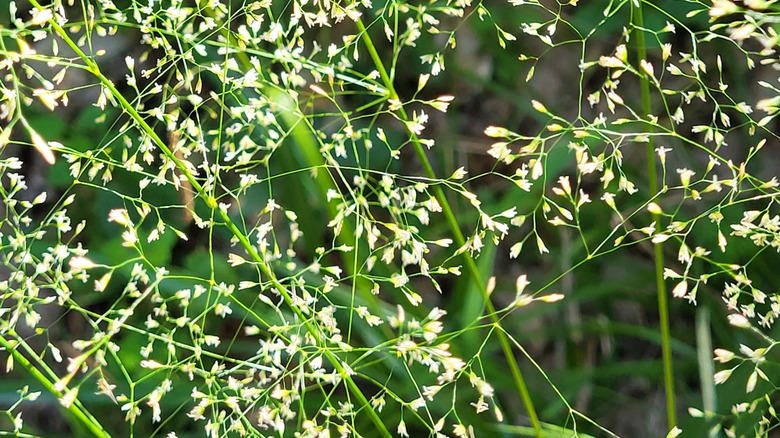
Are you looking for ornamental grass for the shadier parts of your yard? Look no further than tufted hair grass (Deschampsia cespitosa). This self-seeding plant can handle partial shade conditions. However, while it's able to tolerate lower light, too little light can prevent it from flowering well, and its blossoms can be a great way to attract more birds to your garden. Tufted hair grass is hardy in zones 4 through 9.
Mexican feather grass
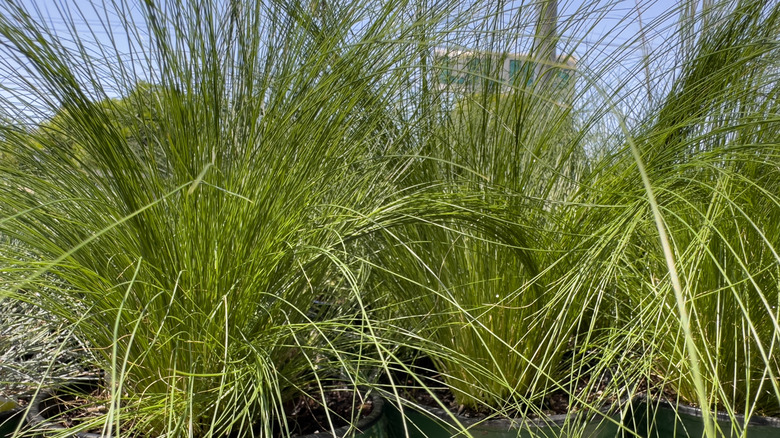
Mexican feather grass (Nassella tenuissima) is native to New Mexico and Texas, as well as Mexico and Argentina. However, in certain regions outside of its native range, such as California, it can grow aggressively, so take care when adding this self-seeding perennial to your yard. If you are planning to use it as an ornamental grass, Mexican feather grass is hardy in zones 7 through 10, and it doesn't grow as well in high humidity conditions. Appearance-wise, this grass sports feather-like seed heads, which give your yard a unique look thanks to its striking texture.
Indiangrass
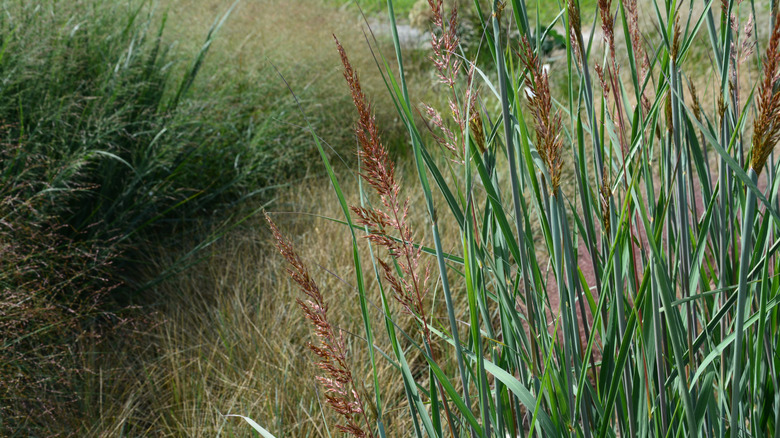
A native to the southeastern United States, Indiangrass (Sorghastrum nutans) is as beneficial as it is stunning. In your yard, this self-seeding ornamental grass attracts a range of species. Birds visit to eat the seeds, while a variety of wildlife uses the long, color-changing stalks for cover. As far as hardiness zones go, you can grow this plant in zones 4 through 9 as a perennial. If you're wondering about how aggressively Indiangrass spreads, note that it can spread beyond its container, so you may wish to leave it out of a smaller garden setup.
Switchgrass
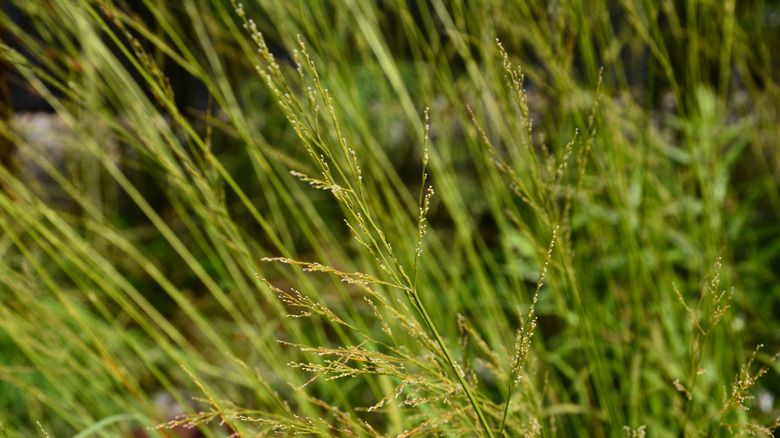
If your goal is to attract more butterflies while also elevating the appearance of your yard, switchgrass (Panicum virgatum) may be an ornamental grass worth considering. When given the right conditions, switchgrass can self-seed and spread throughout your yard. However, this isn't a problem for certain butterflies that rely on this plant as a host for offspring. Once this plant goes to seed, it also attracts a variety of birds and other small animals, making it perfect for a garden that's both visually appealing and functional for your backyard critters. Switchgrass is hardy in zones 5 through 9.