

10 Permeable Paving Types To Try For A Stunning Driveway Display
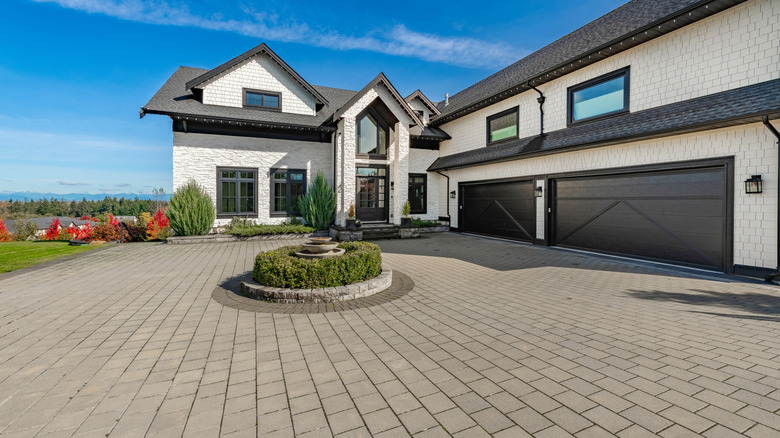
For decades, the driveway was treated as a utilitarian feature, composed of an impermeable slab of concrete or asphalt. While great for shedding water, traditional methods also have some major drawbacks, like localized flooding, polluting drainage systems with stormwater, unseemly stagnant puddles, and unaesthetic cracking. As modern homeowners continuously pivot away from architectural designs that don't serve their lifestyle, the driveway is no exception. Permeable paving is emerging as a solution for balancing high-end curb appeal, with environmental responsibility and practical use.
Permeable paving systems are engineered to allow rainwater and moisture to soak into the ground directly through the driving surface. This process not only naturally filters pollutants out of the water before they reach the water table or sewage system, it also helps to keep your front yard cooler during summer months, preventing heat islands. Beyond these practical and clever driveway layouts, permeable paving shifts the aesthetics of your home as well. Moving away from the standard gray of pavement, these different styles introduce texture, color, and alternative materials to hardscaping. From the rugged charm of cobblestone-like pavers to the fun, seaside cottage nostalgia of crushed shells, many of these permeable paving ideas let you play with design.
Interlocking pavers
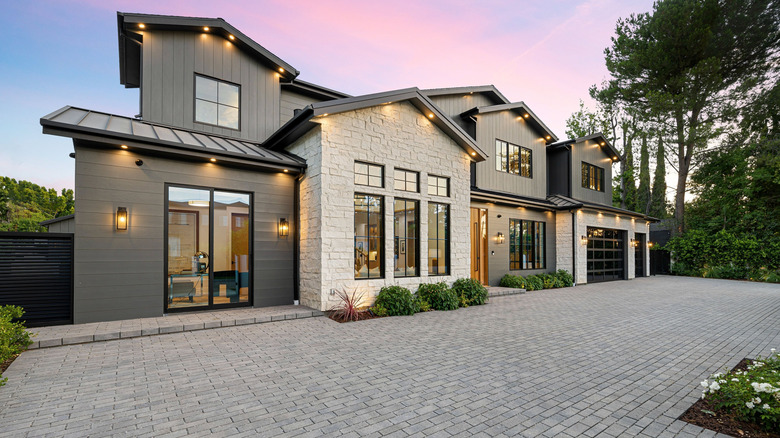
These interlocking pavers are designed with specific spacers that create consistent gaps between the brick-like pavers. The gaps are filled with small, washed stone to allow for consistent drainage. The primary aesthetic benefit is the variety of styles available, ranging from ultra-modern oversized slabs to classic tumbled stones. While they are incredibly durable, they are also easy to repair since you only have to lift and replace a single unit. The initial installation may be labor-intensive, however and over time, you may need to top up the joint stone to maintain the permeability.
Grass pavers and turf grids
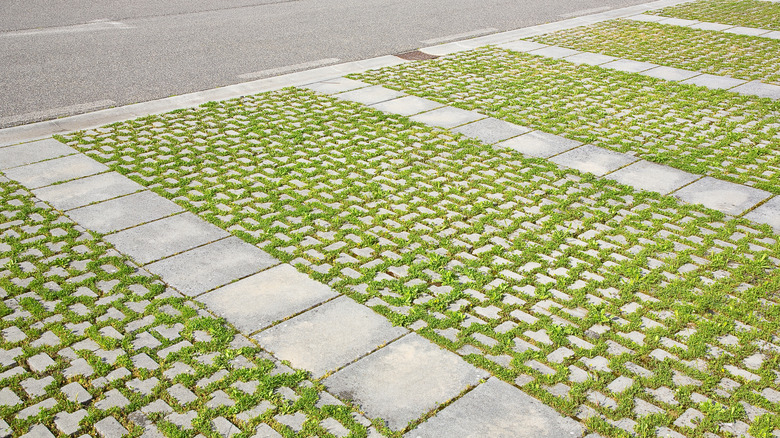
Grass paver driveways usually consist of a grid-like pattern, made from concrete blocks that are laid over a base and filled with soil and sod. This option is perfect for homeowners who want to maximize green space and minimize the heat island effect of a traditional driveway, since grass stays significantly cooler than stone. However, these require the same maintenance as a standard lawn, including mowing, irrigation, and fertilization. They are best suited for areas that need consistent good drainage, and are an eco-friendly, storm-water management-friendly driveway solution.
Resin-bound gravel
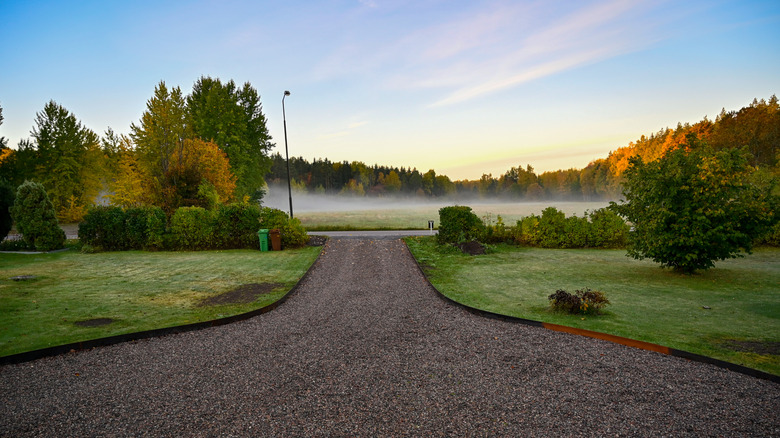
Resin-bound gravel is a system that involves mixing natural decorative gravel with a clear resin, flattening it onto a porous surface for a smooth and seamless finish. It offers a very sleek, yet traditional aesthetic that gives the look of loose stone, without the annoyance of gravel migrating into your garage or house or issues of maintenance. The material is both permeable and slip-resistant, making it a sleek choice for modern homes. On the downside, it is one of the more expensive options and can be prone to cracking or eroding if you experience a lot of traffic on your driveway.
Open concrete units
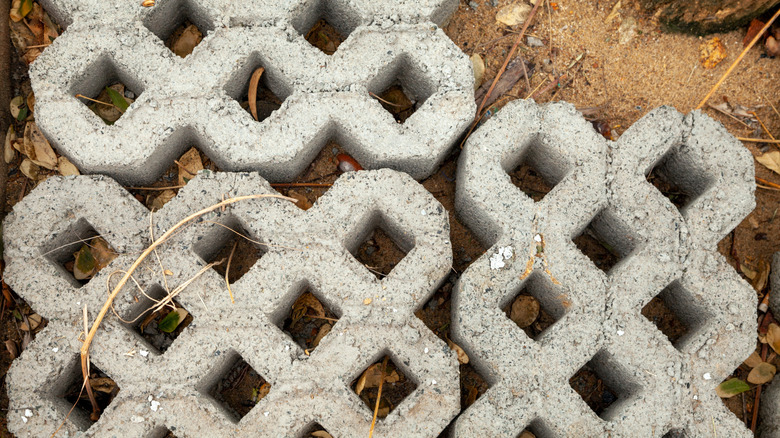
Turfstone, large concrete slabs with geometric, often diamond or square shaped, cutouts, can be filled with either grass or decorative gravel. They provide a charming yet bold architectural look to homes, making driveways feel intentional. It's a material to use on your driveway that goes beyond concrete — it's composed of the same material but designed to be both permeable and incredibly strong. Some of the downsides include that they are not the most walkable surface for thin shoes or high heels, and the cells can also become magnets for stubborn weeds if not properly maintained.
Decomposed granite
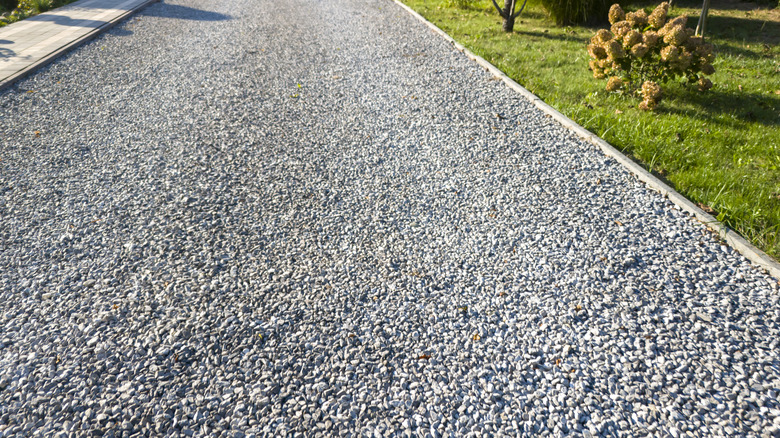
Decomposed granite, or DG, offers a soft and rustic-looking driveway design. When mixed with a stabilizing binder (as with resin-bound gravel), the material packs down into a durable, water-permeable surface that feels more solid than loose dirt but softer than concrete. It is generally one of the most cost-effective ways to achieve that expensive country estate look, though it does have some drawbacks. Even with a stabilizer, DG can track dust into the home on wet days and may require occasional mending and patching after heavy rainstorms or as a result of traffic.
Pervious concrete
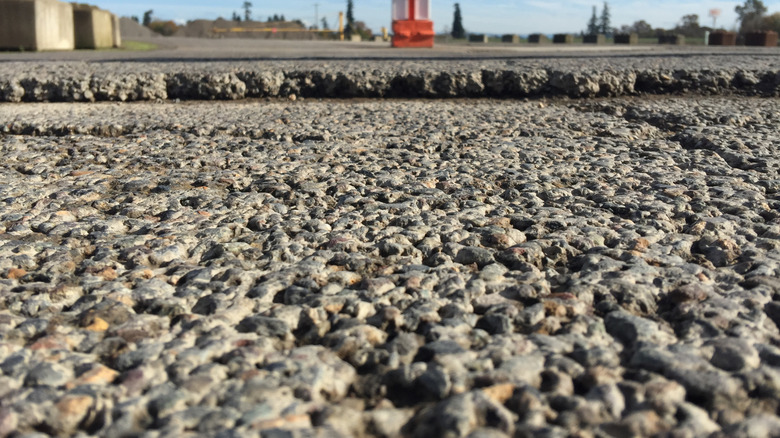
Pervious concrete is engineered without the sand found in traditional mixes, creating a porous structure that looks somewhat like a stony rice cake. It's an excellent choice for those who want the clean lines of a standard concrete driveway while mitigating stormwater runoff from the drive into sewage systems. It is extremely durable and strong, overall economical, and energy-efficient. Some say its industrial texture and look is an acquired design taste. Maintenance-wise, pervious concrete may require periodic pressure washing to keep the textured gaps clear of debris.
Porous asphalt
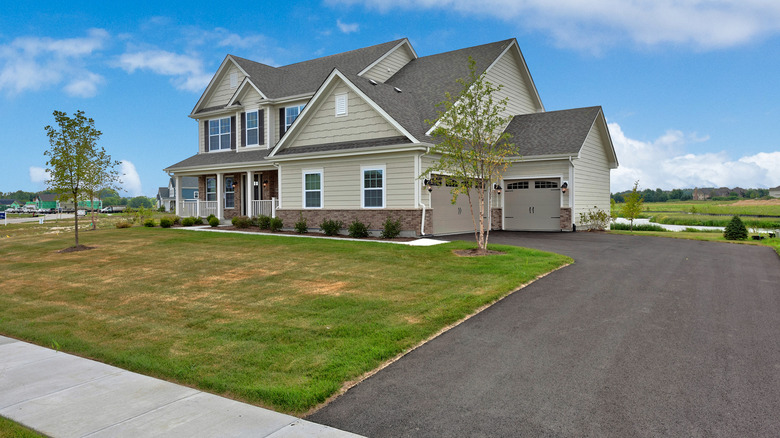
Similar to its concrete counterpart, porous asphalt is a traditional asphalt mix that omits smaller particles to create gaps within the structure for water to pass through, thus making it more environmentally friendly. It provides a clean and traditional aesthetic that hides unsightly things like oil drips and tire marks, much better than lighter-colored materials. While it is often more affordable than pavers or resin-bound systems, it can look a bit utilitarian for high-end residential projects. Maintenance-wise, it must be vacuumed or power-washed to prevent sediment from clogging the drainage holes or getting slimy with buildup.
Plastic grids
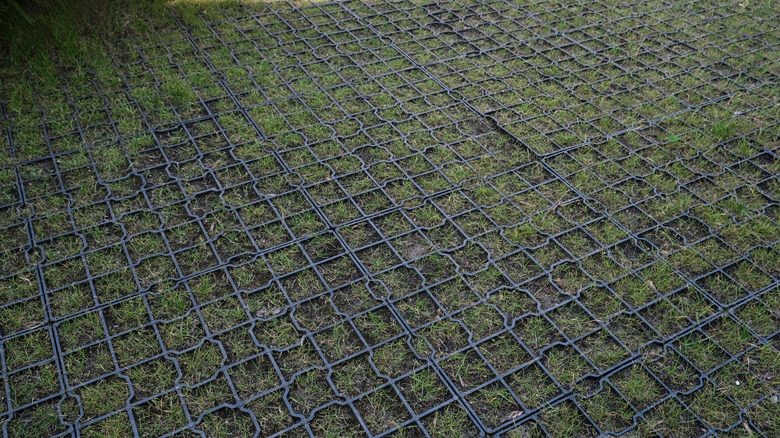
This system uses a rigid, heavy-duty plastic grid that's laid down, and then filled with decorative stones like white marble chips, gravel, or grass. The grid acts as a structural skeleton for the driveway, preventing the stones from shifting or sinking under the weight of a vehicle. It offers a textured aesthetic and is one of the few options that a handy, DIY homeowner could realistically install themselves. The main drawback is aesthetic; if the stone level drops too low or the grass balds, the top edges of the plastic grid will become visible, which can look rough if not maintained.
Cobblestone with permeable joints
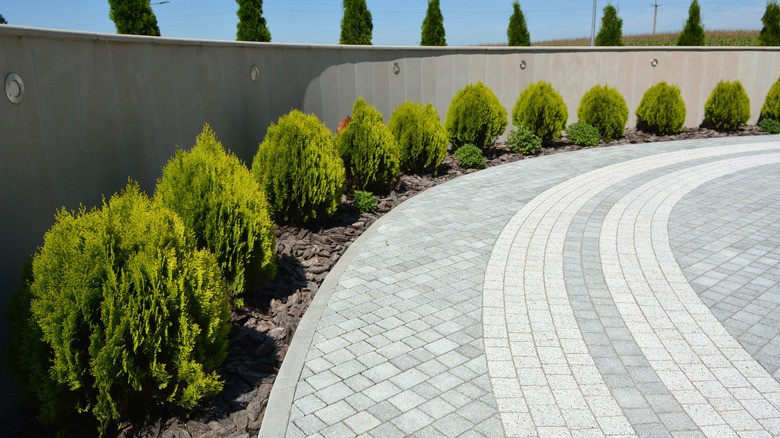
Cobblestones with permeable joints filled with aggregate or grass can create a classic look that still allows water to soak into the earth. This is an aesthetic gold standard for luxury and historically inspired homes, offering a timeless, Old World elegance and a long lifespan. It ages beautifully and can develop a unique patina over time. However, this is by far the most expensive option due to the cost of the stone and the intensive manual labor required. The uneven surface can also necessitate more maintenance than a flush surface, and may be difficult for some people to walk on comfortably.
Crushed shells
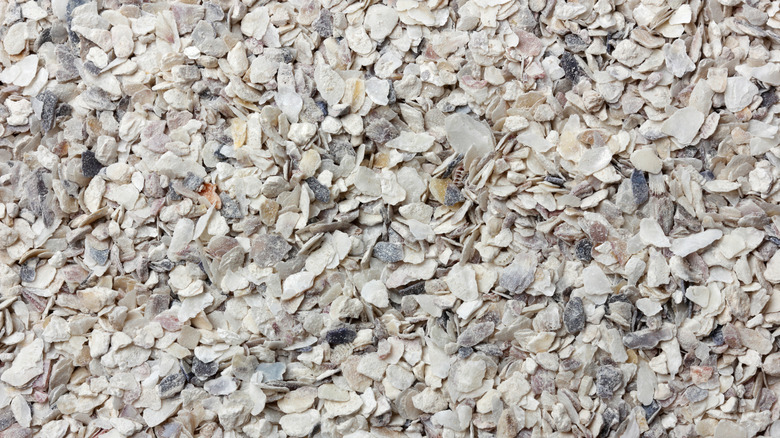
Commonly used in coastal regions, crushed sea shells provide a bright, bleached-white aesthetic that feels airy and relaxed, making them one of the best driveway choices to match your seaside cottage-style home. As the shells are driven over, they naturally break down and interlock, creating a surprisingly stable surface that drains water well. They are relatively inexpensive in coastal areas and add a distinct, beachy charm that stone can't replicate. Unfortunately, the edges of the shells can be quite sharp so walking on them barefoot is a no-no. They can shift over time as well.