

What To Consider Before Hardscaping Your Garden With Modular Brick
People tend to worry more about interior trends going out of style, but outdoor features can also drastically change the feel of your yard, enhancing or detracting from your home's appeal. Hardscaping plays an important role in clever garden design, bringing structure and functionality through pathways, patios, retaining walls, bed borders, fire pits, and more. One particularly popular hardscaping material is modular brick, also known as engineering brick. Many would argue that brick is classic and timeless, and modular brick is versatile, but it has some downsides, too. Before saying goodbye to a concrete porch or incorporating modular brick into your garden, consider your home's overall architecture, the desired landscaping aesthetic, your budget, and your expectations for long-term maintenance.
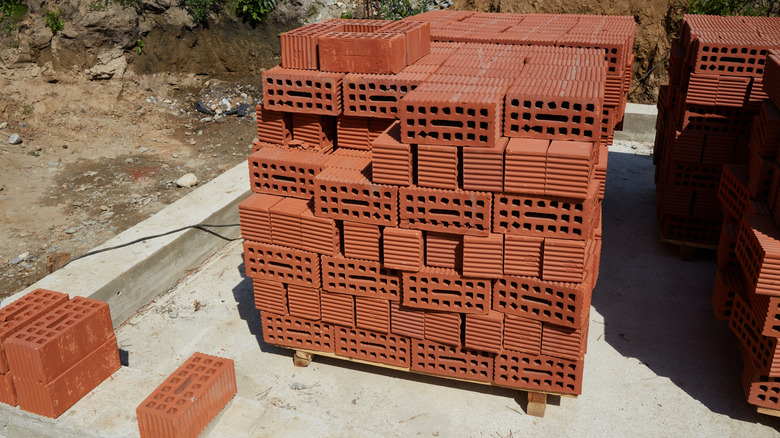
Designed for easier construction that cuts costs, modular brick is much more uniform than traditional brick. The consistent shape, size, and color of each brick make installation a breeze. However, modular brick can feel cheaper and more artificial in natural garden designs. Otherwise, modular brick and authentic, solid brick behave quite similarly in terms of overall maintenance.
Modular brick offers simple installation and low maintenance
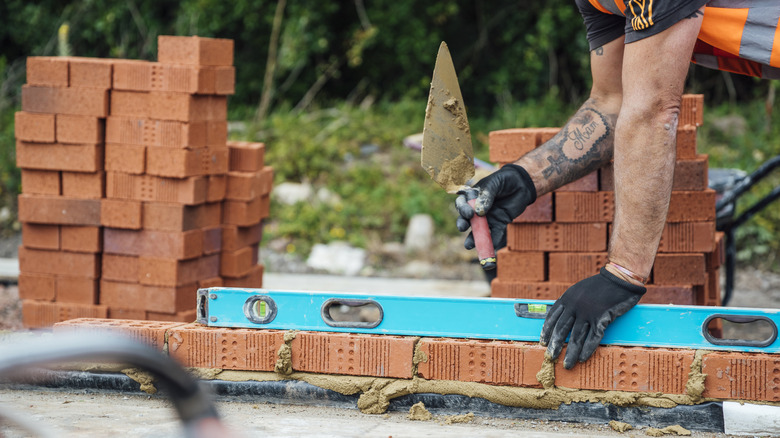
Averaging around $0.35 to $0.90 per brick or $2 to $6 per square foot, brick hardscaping generally has a higher upfront cost than other solutions like concrete, but it requires fewer repairs over time. Choosing modular brick instead of traditional brick can also trim down costs because it's simple to order, deliver, and install. Modular brick is usually slightly thinner and taller than traditional brick, though individual styles may vary. Each modular brick has precisely the same measurements, which makes it easy to plan consistent, even layouts and eliminates the need for tricky cuts. If you're hoping to DIY your own hardscaping or finish the project fairly quickly, modular brick might be more user-friendly than traditionally thick, clunky, and mismatched solid brick.
One advantage of choosing brick hardscaping for pathways is that it's better suited to cold environments. Concrete may crack after a few winters, but brick pavers will maintain their appearance much longer. However, modular brick pavers will not withstand salt treatments, so be prepared to deal with icy walkways on occasion. Brick needs thorough drainage and super gentle power washing, or it may start to crumble, an effect known as "spalling." The sand or mortar between bricks can also sprout algae, moss, mold, and weeds, so it may not be the best choice for folks who prefer a super clean look in their garden.
Appearance and aesthetics of modular brick
Filling a garden with any old modular brick and assuming it will look good is a mistake many people make in backyard design. You might think a modular brick wall will give your garden an old-cottage vibe, but it probably won't, especially if the brick doesn't match your home's architecture or is damaged by poor maintenance. "If you have a modular brick that is faded, it makes [your front yard] feel outdated," retired landscape designer John Algozinni told Homes & Gardens. Luckily, modular brick comes in a wide range of colors, so you can take your time choosing one that suits your home's exterior.
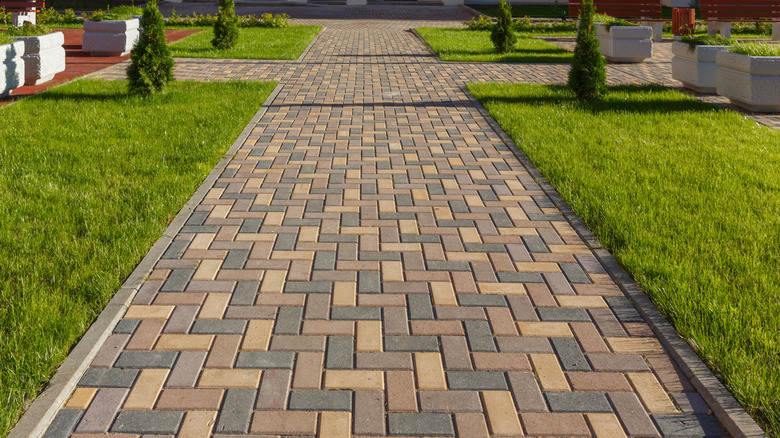
Because of the consistency in each brick's shape, the modular brick is ideal for creating intricate layout patterns in your patios or walkways. The holes in the center of the bricks make them more lightweight and allow them to be filled with concrete or rebar. This means they're a versatile and stable solution if you want to use the same hardscaping material throughout your walkways, steps, retaining walls, and garden beds.
Best for modern builds with clean lines, modular brick hardscaping can lack charm when brand-new, especially when it features crisp, angled edges. If a cozy, vintage feel is an important goal in your garden design, consider using tumbled brick or salvaged building materials. Authentic, standard bricks have variations in shape, size, and color, lending to a more organic feel when they're all put together. If you can build an affordable raised garden bed by reusing old bricks, it will probably look much more worn-in and welcoming — and salvaging old materials could save you a pretty penny.