

Protect Bird Nesting Boxes With An Ancient Solution
We may receive a commission on purchases made from links.
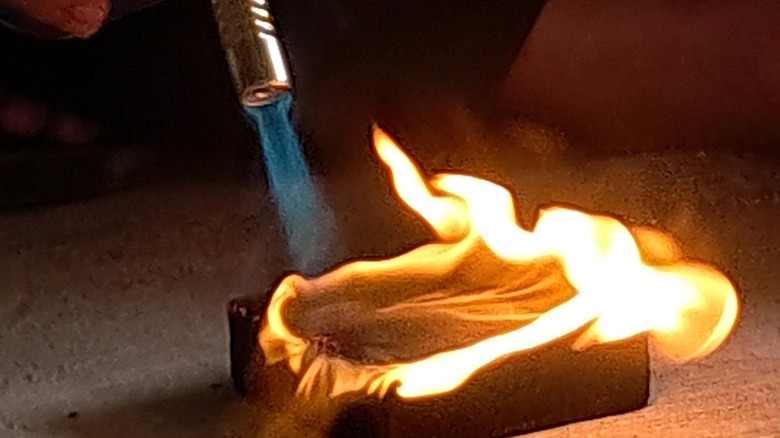
For the lucky among us, we don't need to light fires to prepare meals or stay warm on a daily basis. Despite these traditionally essential needs for fire, we now associate this element with destruction. Still, controlled burning can serve a practical purpose. Sometimes a bit of charring actually improves something, and that's the case with wooden birdhouses. The Japanese practice of Shou Sugi Ban (also called Yakisugi) involves passing a flame over a wood's surface to char it. This burnt surface provides protection for the wood, giving it extra resistance against weather, bugs, and even fire. What's more, the ornithological experts at Cornell Lab recommend giving this process a try.
When you're inviting avian guests to settle into your landscape, it's critical to ensure your house will protect birds while they use it. With the way Shou Sugi Ban darkens the wood, the color itself can lend the nest a degree of protection. Dark gray is among the best colors to use on your birdhouse to attract more flying friends. Natural tones let birdhouses blend into the background, helping their homes stay hidden from predators.
When and how to Shou Sugi Ban a birdhouse
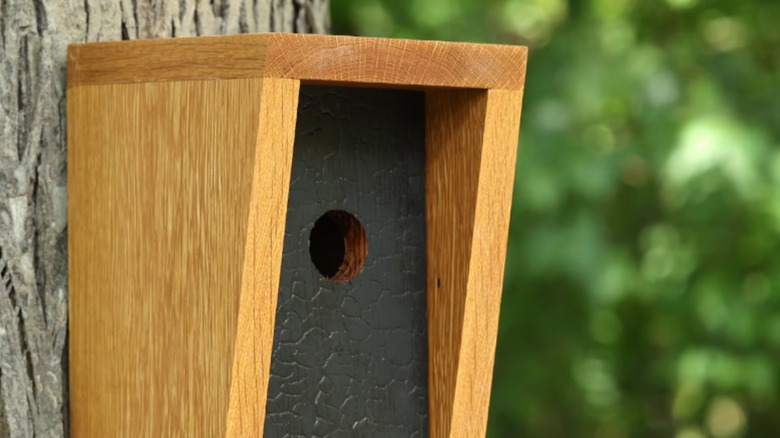
Before trying Shou Sugi Ban on a birdhouse, make sure you're working with the right type of wood. In general, birdhouses should be made from non-treated lumber, despite being exposed to weather and other damaging factors. Pressure-treated wood can contain chemicals that may be harmful to birds. Conveniently, this is also the most important consideration when it comes to whether you should use Shou Sugi Ban on a birdhouse. Only subject a non-treated wood birdhouse to Shou Sugi Ban; putting flame to treated wood releases these toxins further, making the process harmful to both humans and birds.
If you have a bare-wood house nearly ready to hang, do note that you can't Shou Sugi Ban just any wood; soft woods like pine, larch, and spruce are preferable, with cedar as the top choice for traditional Shou Sugi Ban. Before tackling Shou Sugi Ban yourself, there are some common wood charring mistakes to avoid that will both protect your health and leave you with the best results.
Always work outdoors and elevate the wood off the ground while burning. Placing the wood on a few cinder blocks is a good option. Also, keep the area free of other flammable materials. Using a small propane torch, practice on scrap wood to get used to the flame level and proximity to the wood that gives you the best results. After charring the birdhouse to your liking, douse it in water, brush off debris, and hang it in a high spot away from lots of human and/or animal activity.