

The Best Time To Fertilize A Japanese Maple Tree (& Why Timing Is So Crucial)
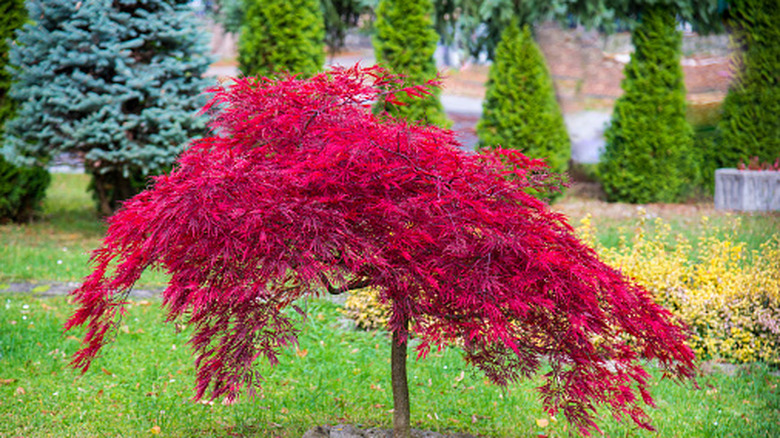
Japanese maples (Acer palmatum) are one of those trees that can really make a statement in the landscape. There are plenty of beautiful varieties that have distinct forms, whether that be upright and spreading or gracefully weeping. As understory trees, they do best in dappled sunlight and will delight you with their brightly colored, deciduous foliage once autumn comes around. Hardy in USDA zones 5 through 8, it's not only paramount to prune Japanese maples, but they should also benefit from the right fertilizer at least once a year, as long as you apply it at the correct time.
The best time to fertilize your Japanese maple tree is early spring, just before the leaves start to appear. This is known as bud burst time, and it's quite crucial to get this timing right if you want your tree to thrive and look its best throughout summer and fall. Ideally, you'll want to use an organic fertilizer with something like a 10-10-10 ratio. But, whatever you do, it's important that you stop feeding your tree around the end of spring – especially if you're using a slow-release fertilizer — and never apply feed in the fall. Remember that maple trees, like many other species, really need that winter rest time to provide you with stunning growth and vigor during summer. Incidentally, the best time of year to plant a Japanese maple is once it's gone dormant.
Why timing is so crucial when feeding a Japanese maple tree
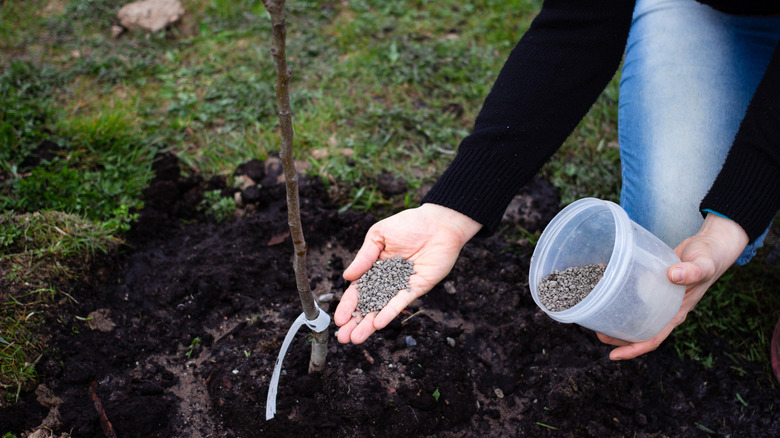
When you apply something like an all-purpose fertilizer to your maple tree, it will stimulate new growth. This is precisely why you want to do this in spring, so that your tree can grow happily through the warmer months. What you want to avoid is promoting new growth in the fall because this tender growth won't have time to harden off before cold weather hits. Plus, the new growth could delay dormancy in your tree. Any young growth is particularly sensitive to cold damage, and that will result in dieback and dead branches, which could affect the graceful structure of your maple. You'll also find that you won't get that spectacular fall color if your tree is still actively growing during this time. This is definitely when you want your maple to head into dormancy.
For the same reason, you also don't want to stimulate new growth before you've experienced the last frost. You really want to be sure to wait to fertilize your tree until all danger of inclement weather has passed. If new growth emerges too early, any late frost will damage it, and your tree is unlikely to recover fully over the warmer months. This means that you're not going to get that gorgeous growth you're looking forward to. Finally, before you decide on the best place to plant a Japanese maple tree, you do need to be aware that these trees are regarded as invasive in certain regions in the U.S., such as Pennsylvania, Virginia, New Jersey, and Delaware. So, make sure you check with your local extension office before planting.