

Why Homebuilders Abandoned Brutalist Homes After The 1970s
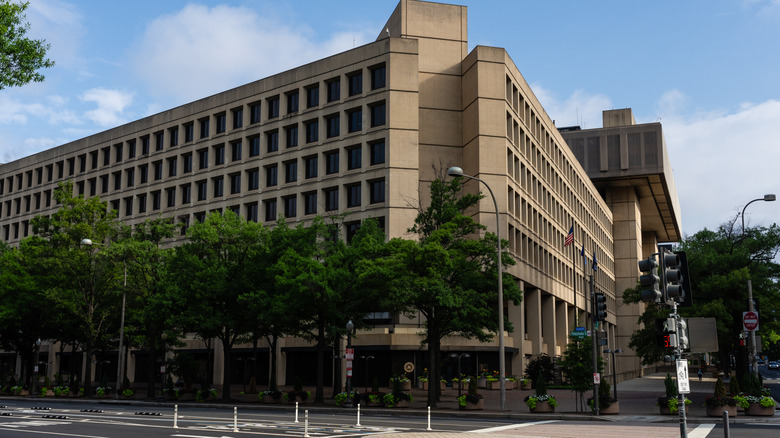
If buildings like the J. Edgar Hoover Building in New York make you cringe because of their in-your-face blandness, you can understand how brutalist architecture fell from grace. Brutalist architecture emerged as a by-product of World War II. The buildings prospered from the '50s to '70s because they focused on functionality and speed to replace the 200,000 homes that had been wrecked in England, and to provide cheap and space-efficient housing to the large number of people suffering from poverty. Architects of the time thought of brutalist homes as beautiful and materially honest, but the primary reason for the trend's emergence was also why it ended.
One of the major proponents of the trend, Swiss-French architect Le Corbusier, coined the term "béton brut" to describe the raw concrete used in these buildings. Other industrial materials, such as wood, steel, and glass, were also used — but there was no finishing or plastering done on them. While homebuilders abandoned atomic ranch-style homes after the '70s due to their poor energy efficiency, brutalist buildings were criticized for being cold, ugly, and symbolic of poverty. Since brutalist homes were primarily made from raw concrete, neglect and deterioration made them aesthetically worse and even less appreciated as time flew by.
Succeeded by the mid-century modern decor, brutalist designs began to be criticized for over-emphasizing function and ignoring form. Difficult to maintain, and seen as manifestations of the social ills of the time, the structures that had resulted from this philosophy were viewed as isolating, depressing, and monolithic. Meanwhile, the mid-century home deisgns that replaced them emphasized things like open layouts, large glass windows, and indoor-outdoor living — providing both a lighter and more livable atmosphere.
Brutalist homes became hard to maintain
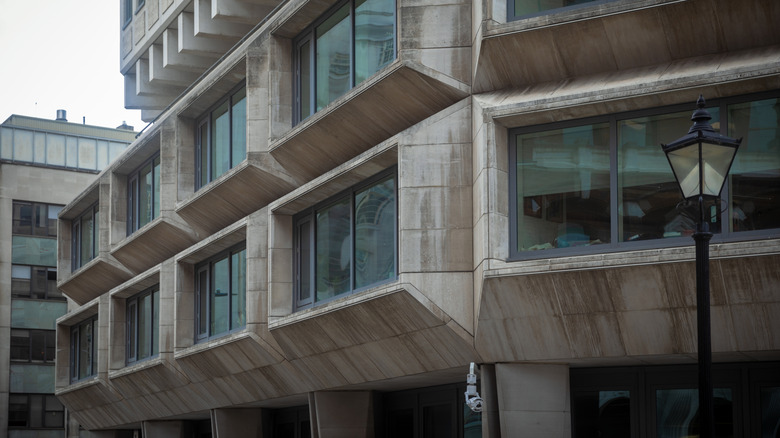
One of the major reasons behind the end of brutalism in home architecture was the lack of maintenance of the structures. Raw concrete houses and buildings began crumbling and turning into grime as time went on. Buildings from this era also suffered from mold growth, rusting metal, and water stains. A famous example is Sheffield's Park Hill, a brutalist housing development in Yorkshire, England, which got the nickname "San Quentin" for resembling the popular U.S. prison. While its walkways were initially called "streets in the sky" — a reflection of its innovative design — its eventual nomenclature was a result of the deterioration the building incurred after a few years.
While British authors like Theodore Dalrymple cited the property of concrete to stain and crumble as the root cause of the "monstrous" conditions of brutalist buildings years later, Henrietta Billings, senior conservation adviser at the Twentieth Century Society, blamed their despair on neglect more than anything else. In a 2015 interview with BBC, Billings said, "Often they've been maligned because of management and maintenance issues rather than because of faults in the actual design." Lack of funds required for maintenance was also a major reason behind the sorry state many brutalist buildings found themselves in only a few decades after they were built.
Brutalist homes got associated with social ills and bad taste
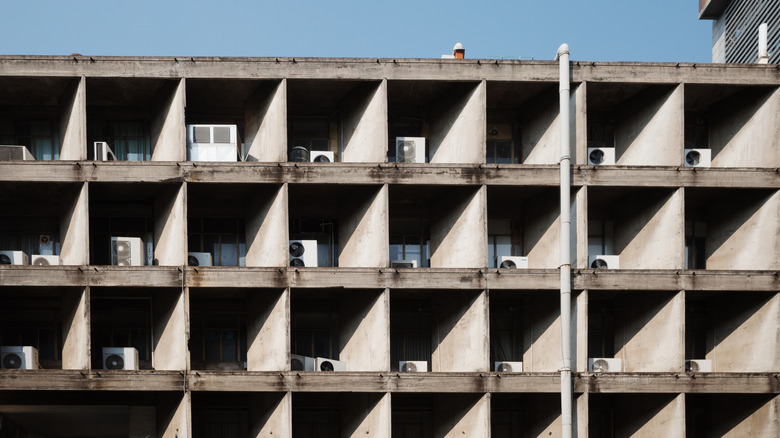
Since brutalist buildings were often set up with social programs in mind, they also got a lot of heat from opposing political camps that linked the design style to socialist ideals. "There are some very, very visible manifestations of the welfare state in brutalist architecture," historian and author, Barnabas Calder, told Dezeen in 2021 while discussing the heat against brutalist buildings like the Trellick Tower in London.
Furthermore, during the '70s, the crumbling concrete walls also allowed free reins for vandals to stain them even more with graffiti art. When these houses began becoming victims of theft and crimes, it was not long before the entire trend became a metaphor for the social ills prevalent during the time. This was also one of the major reasons why other trends such as Deconstructivism, and then later, Post-Modern decor emerged to replace the concrete eyesores.
The trend was already seen with disgust in the East, but soon, people began associating brutalism with poverty and oppression in the West as well. Whatever be the core reason behind their eventual abandonment, the public distaste for brutalist buildings can be estimated from the fact that, even in this era, TV programs like "Demolition" often pick a majority of these buildings to be destroyed.