

The Creative Ceiling Beam Style That Feels More Rustic

If a smooth drywall ceiling feels a bit too polished for your taste, there's one upgrade that instantly warms up a space: reclaimed wood beams. As opposed to freshly milled lumber, reclaimed beams come from barns, historic structures, and factories, which gives them a texture and patina that new wood just can't replicate. Their age and natural weathering is what makes these ceiling beams feel rustic even in modern homes. Reclaimed wood is any wood that is salvaged from a pre-existing site and repurposed for new construction or design. According to the U.S. Environmental Protection Agency, reusing construction materials like reclaimed timber can help lower the demand for newly harvested wood and keep perfectly usable materials from being wasted in landfills.
The environmental perks aren't the only part of the appeal when it comes to reclaimed wood. Since these beams have naturally aged over decades or even centuries, they can feature quirks from their past, like saw marks, holes from nails, tonal variation, and weathering that adds depth to ceiling designs. Ceilings featuring reclaimed wood beams give an authentic and layered impression. They do more than just embrace the trendiest home decor ideas, adding a sense of character and history to any home even if the rest of the space is brand new. Reclaimed beams pair just as easily with minimalist interiors as they do with traditional farmhouse-style homes, adding charm to any space you feel needs a cozy boost. However, like any other addition to a home, there's a lot to learn and consider about reclaimed wood beams before purchasing and installing.
All about reclaimed beams and why they are favored
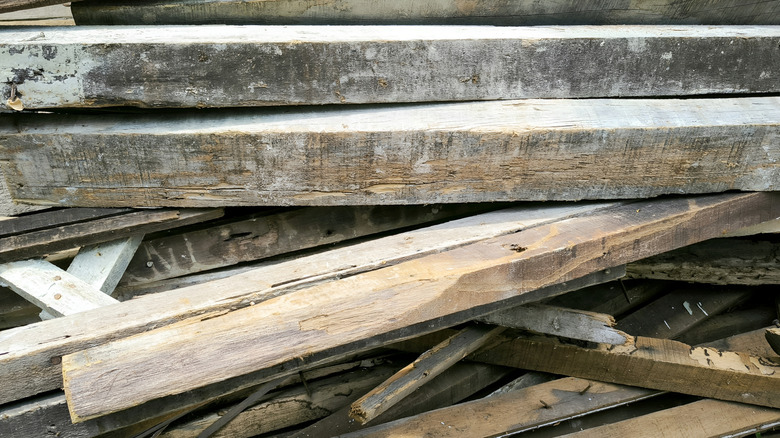
While there are other ways to achieve the reclaimed beam aesthetic, like artificially weathering wood for a more rustic look, there's a noticeable difference between that and real aged timber. The newness of artificially distressed wood is still clear through the more uniform grain patterns and lack of true imperfections. Reclaimed beams are often sourced from old-growth pine, oak, and chestnut, woods that were commonly used in early construction and are still valued today for their density and beautiful grain patterns. Another trait of reclaimed wood that can't truly be replicated is color variation. Exposure to sunlight, moisture, and air changes wood's surface color over time, making it appear lighter or darker. When used as ceiling beams, their color variation makes the space feel more dynamic.
Structurally speaking, reclaimed beams can also be installed in many different layouts to amplify their effect. For instance, traditional parallel runs embrace classic barn construction, while box beam grids or vaulted ceiling applications make more of an architectural statement. Modifications can also be made to the finish of all beams. Light sanding can preserve texture and remove splinters, while a clear sealant can protect the wood without masking its natural grain. To show the beams off in all their glory, strategic lighting — from recessed fixtures to pendant lights — can be installed, enhancing texture and grain patterns.
Reclaimed beams really gained momentum during the modern farmhouse popularity surge in the 2010s, but designers and homeowners continue to add them to current farmhouse, coastal, and mid-century style homes. However, reclaimed beams aren't limited to any specific home styles or layouts. Spaces of many different kinds can visually benefit from them, whether it be for adding rustic decor or softening contemporary decoration and finishes.
Installation, pricing, and how to pick the best beams
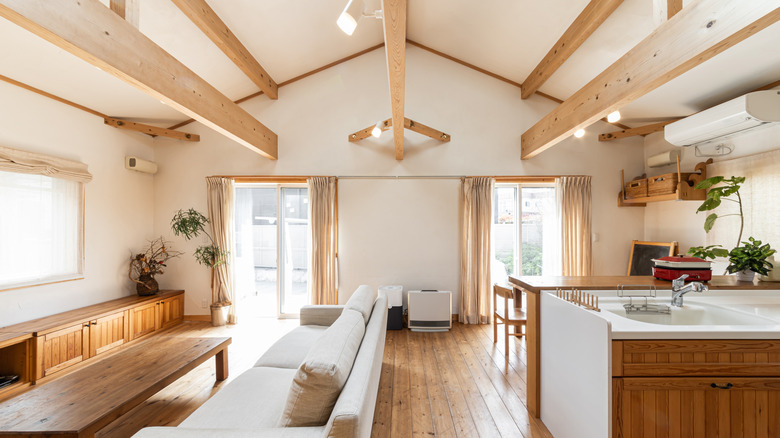
Before adding reclaimed beams, it's very important to evaluate ceiling height and structural support. Solid wood beams can be heavy, and professional installation is highly recommended, as they can be a major safety hazard if put in improperly. Beams should be evaluated for strength and securely attached to existing framework, or carefully built into the frame of any home being newly constructed. In some cases, the best option is for homeowners to opt for hollow box beams made from reclaimed boards, which can achieve the same rustic look with less weight. You can also install decorative beams in a room with a low ceiling. In any case, for safety it's best to work with a professional rather than do it yourself.
Price wise, solid reclaimed beams can be expensive due to weight, installation difficulty, and sourcing, usually averaging around $15 to $50 per linear foot; however, they can be far more expensive depending on size and species. Hollow box beams made from reclaimed boards can be more affordable at times, though depending on their level of craftsmanship they can reach high prices. Reclaimed beams can be purchased from architectural salvage yards, specialty lumber suppliers, or companies that mill reclaimed timber for residential use. When it comes to picking out beams, look for any signs of minimal rot or insect-related damage, as well as proper kiln drying — which is controlled heat exposure to reduce moisture and kill insects — to prevent future warping or pest problems.