

Say Goodbye To Grass: The Fragrant Alternative That Also Attracts Pollinators
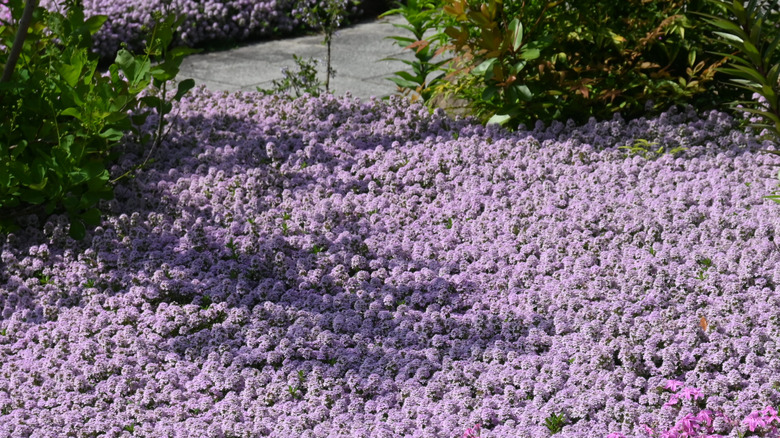
Why have a yard full of grass if you don't plan on walking on it? If this sounds like your yard, consider swapping boring grass blades for bright flowers and fragrant foliage by planting creeping thyme, a low-maintenance ground cover related to garden thyme. There are multiple species and cultivars of creeping thyme, which means you'll have options to choose from when renovating your lawn. These plants grow low to the ground and feature an herbal, earthy scent. In spring, they erupt into bloom with pink, white, or purple flowers. The flowers are a boon to butterflies and bees, providing nectar during the growing season, so if you're looking to bring more pollinators into your yard and garden, then this grass alternative is perfect for you.
Creeping thyme also helps naturally avoid weeds in your lawn and performs well with little maintenance. Creeping cultivars are drought-tolerant after they establish themselves, and they grow well through hot summers. The stems form deep roots as they spread, creating dense patches that are resilient to water stress. When you swap a grass lawn for creeping thyme, you're setting yourself up for irrigation success. You'll have much less watering to do during the growing season!
Creeping thyme cultivars to consider
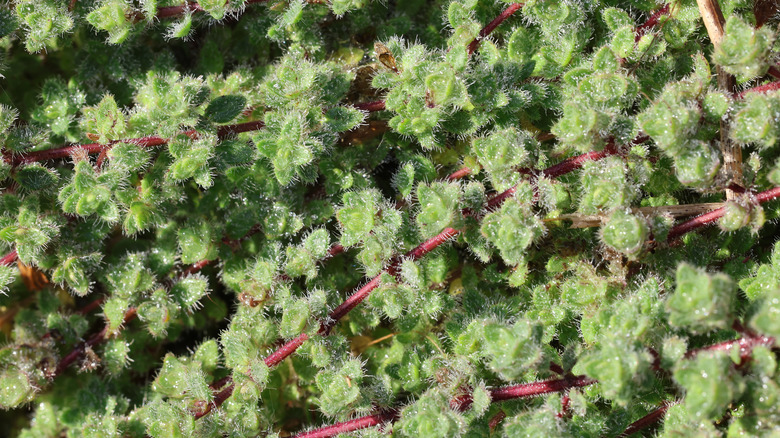
Creeping thyme cultivars come from a range of species in the Thymus genus. Select from varieties of creeping thyme (Thymus praecox) and Breckland thyme (Thymus serpyllum). Both are low-growing, though Breckland thyme is the shorter species at 2 to 3 inches tall. It'll need less trimming than creeping thyme to stay short. If you're looking for a unique-looking ground cover, try woolly thyme (Thymus praecox subsp. britannicus). It's a variety of creeping thyme that features fuzzy, non-fragrant leaves on a dense, short structure. All of these thymes have fuzz on their leaves, but none match the denseness of woolly thyme's hairs.
Are you not convinced of creeping thyme's amazing qualities? Consider the many cultivars, like Thymus praecox 'Albus' and 'Coccineus'. 'Albus' features white blooms on rich green leaves, while 'Coccineus' flowers in rich shades of rose-red. If you're looking for a miniature cultivar, go for Thymus serpyllum 'Elfin'. It stays from just 1 to 3 inches tall, and its leaves are tiny and densely growing.
Before making the switch, ensure the planting site is a good spot. All of the thymes mentioned will grow well between USDA Hardiness Zones 5 and 8 with full sun. Breckland thyme is the winner for cold zones, as it'll thrive from zones 4 to 9. These thymes prefer well-drained soil free from standing water, and they thrive in poor soils where other plants struggle. Outside of the lawn, they work well for rock gardens, rock walls, and between pavers in a sunny location.
How to swap grass for creeping thyme
You'll need to clear the lawn of grass before transplanting thyme. Use a simple cardboard trick to snuff out the plants, layering cardboard and a few inches of compost above the grass. In place of cardboard, you may try occultation or soil solarization, which use opaque or clear plastic tarps, respectively. Smother the lawn, then check on the space after a month to see if the grass is dead underneath.
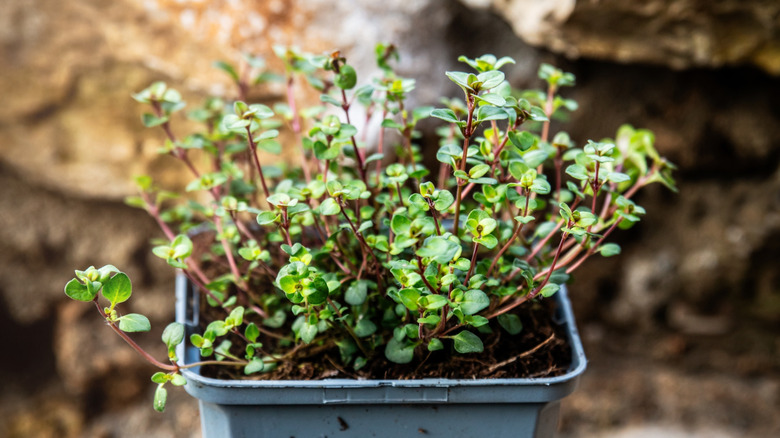
Once the lawn is gone, you may sow your creeping thyme seeds, though they may take about 10 weeks to grow into sizable plants. These seeds need light to germinate, so surface sow them and keep them moist until they germinate. Alternatively, plant plugs, or small potted thyme plants that transplant easily into the yard. They're the best way to get the herb growing quickly.
Plant your plugs so their roots are below the ground, then cover the root balls with soil. Water each plant well and add mulch. Continue watering regularly, keeping the soil moist until the plants fully mature. After that, they won't need much supplemental water. Watch as flowers bloom in the summer, and enjoy all the pollinating bees, flies, and butterflies that will flock to your garden.