

Inexpensive DIY Garden Trellis Ideas You Can Make Using Branches
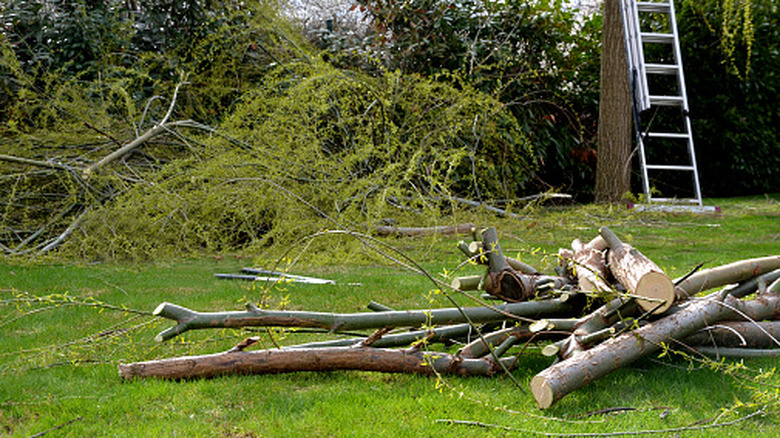
Garden trellises are a whimsical and beautiful addition to a garden, and if you have climbing vine plants or other plants that pair well with a trellis, they can be essential. Unfortunately, trellises can be a bit pricey. The price of a new trellis typically starts at around $10 for a very basic metal option, but can easily climb higher for larger, more stylish, or more complex designs. Even DIY options sometimes require expensive materials, and they can end up looking rather utilitarian. If you prefer a cottagecore look in your garden, though, the perfect materials may already be there. Using tree branches from your own yard to create a trellis can save you money while making something truly unique. Plus, tree branches are versatile, and shape ideas include ladders, obelisks, and A-frame trellises.
The DIY process can take some work, but it is often well worth the effort. Trellises are great for maximizing space in a small garden, and their vertical expansion also makes it easier for plants on the trellis to get adequate sunlight and airflow. Plants growing on trellises are also easier to access and harvest. Finally, because the plant will be off the soil, using a trellis can reduce the likelihood of certain diseases. When you're through with this project, you can reap these benefits — and have a nice-looking trellis to boot.
What to consider when building a garden trellis of branches
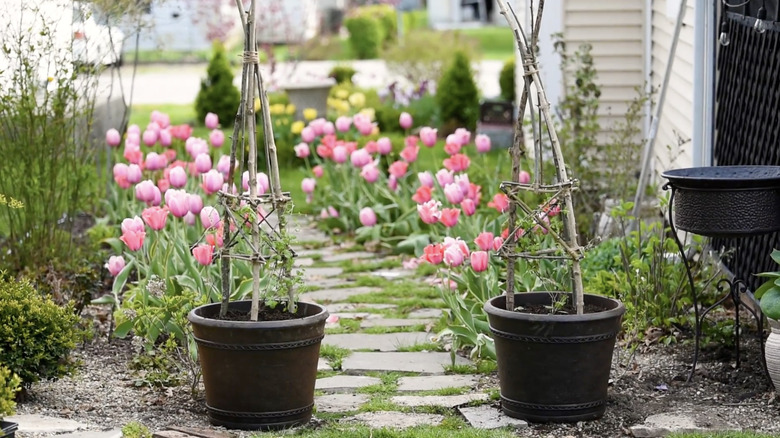
Before you start gathering every branch in your yard, consider the timing, which branches and other materials to use, and the best trellis shape for your garden. While you can build a branch trellis any time of year, just before planting in the spring may be best, so you can get the branches deep in the ground for more stability.
So, as the winter months end, start looking around on your own property for suitable branches to add whimsy to your backyard with the trees that are already there. For a sturdy trellis, it is important to have thick branches that are about 1 foot longer than the height you want the trellis to be, some smaller, perhaps freshly cut, branches for support and decorative details, and wire or rope to hold it all together. Twine, floral wire, jute, screws, or even zip ties can all work for this. Additionally, pruning shears and safety glasses are helpful in the branch-gathering stage.
When choosing branches, it is important to consider both thickness and length. Thicker branches can make for stronger trellises that support heavier vines and crops, such as cucumbers, melons, squash, and more. A branch diameter of 1 to 2 inches should be sufficient, depending on your plant choice. Shape also plays a role here. A ladder trellis is more likely to tip from weighty crops than an obelisk or A-frame trellis that has a three-dimensional aspect to stabilize it, so choose the frame shape wisely.
Building your branch trellis
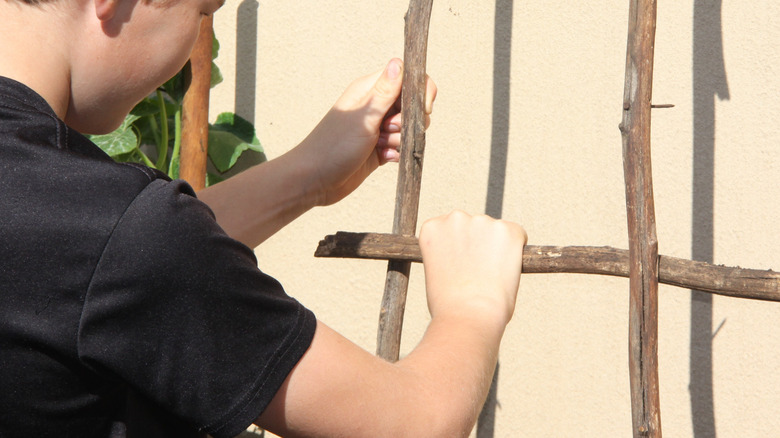
Once you have your branches, you can start building. For a ladder trellis, start by pushing two large branches deep into your garden bed so that they stick straight up. Sharpening the end that will be pushed into the ground can make the process easier. Then, use smaller branches as ladder rungs between the two supports, securing them to the other branches using your rope or wire of choice. The process is similar for an A-frame trellis. You will need four support branches inserted at an angle so that their tops meet and can be secured. Finish it by adding branches on each side of the frame as you would for a ladder trellis and a beam at the apex of the A.
Obelisk trellises are also fairly simple to construct. Just like the other ideas, start by sharpening the ends of the large branches to push them into the ground. Any number of branches works for this, but three is a good starting point. The branches should be evenly spaced to form the points of a triangle, and angled to meet at their tops. Secure the tops of the branches together, and then add smaller branches as support by wrapping them around or creating decorative patterns and securing them.
Making a beautiful garden doesn't have to be expensive, especially when you have a great supply of materials growing naturally in your yard. If you love the whimsical, storybook look in your yard, then you might also want to know how to use tree branches as home decor.