

Start These Seeds Indoors In February For Vibrant, Jewel-Toned Blooms In Your Summer Garden
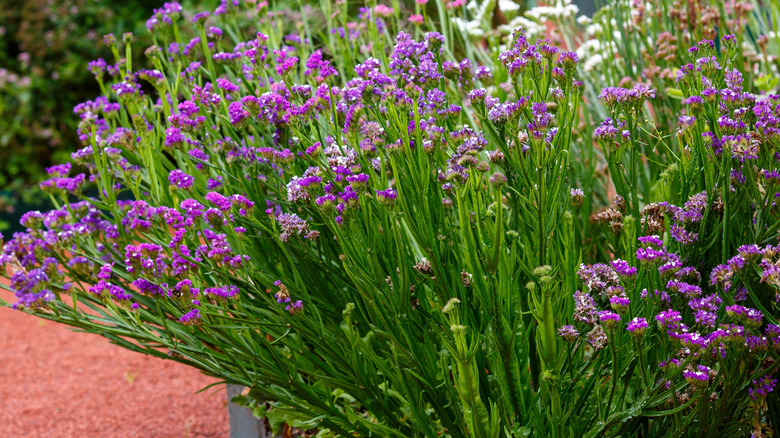
After all the weeding, watering, and raking of the seasons prior, there's no shame in taking a break from your busy garden in winter. But if you're someone who feels happiest when your hands are caked in dirt, gardening never has to end. You can give your spring garden a head start by starting seeds indoors. Statice is one plant that's a perfect candidate for this practice. Statice (Limonium sinuatum) features sturdy stems and tight, small blooms that appear in ruffled, vibrant bunches of pink, purple, blue, yellow, peach, or cream, depending on the variety. Also known as sea lavender, statice is a popular pick for cut floral arrangements, typically serving as an understated "filler" for larger, more showy blooms. In the garden, it's often used in borders or containers and treated as an annual, although it's technically a short-lived perennial.
Statice seeds can be started indoors as early as February, especially if you live in its hardy area of USDA zones 8 through 10. That's because, biologically speaking, statice is eager to go into the ground earlier than many springtime plants. It might sound risky, but statice seedlings can be eased into your garden while winter temperatures and blustery winds are still present. In fact, when the plant is still a seedling, a brief cold period of a few weeks can actually encourage it to bloom faster.
Start, harden off, and transfer statice seedlings in early spring
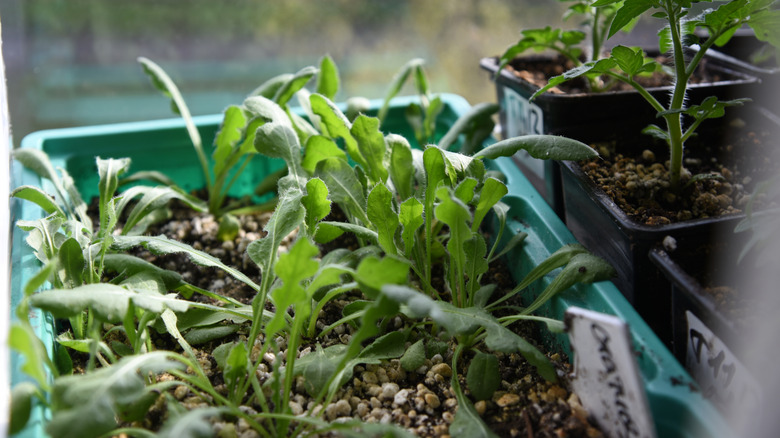
While statice can theoretically be started in February, your specific timing may vary. Overall, you should plan to start the seeds 6 to 8 weeks before the final frost of the season. Set up your seed starter tray with moist soil, a gentle heat mat, and a bright, sunny window or grow lights. Gently place two or three seeds onto the soil in each tray cell. The seeds can be covered very lightly, but be careful not to bury them. Maintain a soil temperature around 70 degrees Fahrenheit to encourage healthy germination. Within two weeks, you should see seedlings start to emerge. They can now be separated if needed, and the soil temperature can be lowered to around 60 degrees Fahrenheit.
Remarkably, statice seedlings could be ready for their garden debut within just 4 to 5 weeks. But before transplanting them, it's a good idea to harden off your seedlings for up to 10 days. If you aren't sure what it means to harden off plants, it's basically just slowly adjusting them to their new environment. Move the seedlings to a shady, slightly cooler spot outdoors for a few hours each day, gradually ramping up the duration and conditions until they can handle the full sun without getting scorched.
Accustomed to the hot and dry climates of northern Africa, western Asia, and Europe, statice is one of the few plants that thrive in sandy soils. Full sun is a must for this plant, but it might have some trouble in extremely hot climates. It may take up to 3 months for your statice to produce its iconic jewel-toned blooms, but its greenery will brighten your garden in the meantime, and they will be well worth the wait.