

The Pruning Method That Gives Your Hydrangea Bigger (But Fewer) Blooms
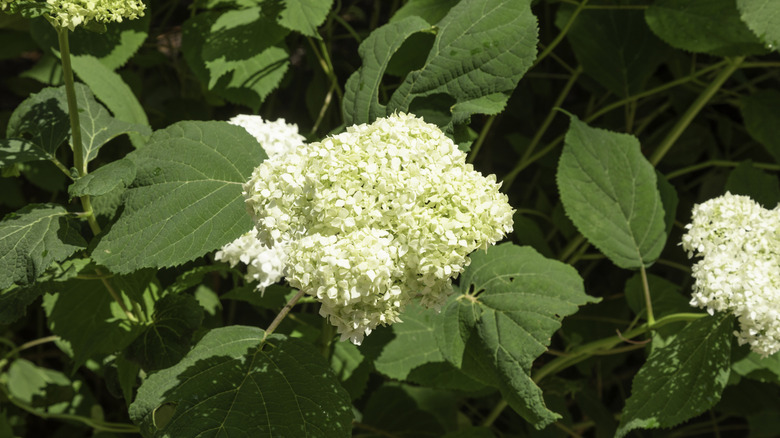
Hydrangeas are a staple perennial in many gardens, with their beautiful blooms exuding timeless charm. If you have a hydrangea in your yard, you probably want to ensure that it looks its best and is healthy as the years go by. As you don't really need to prune your hydrangeas, you may have left them to do their own thing in previous years. But did you know that there's a pruning method for hydrangeas that promotes bigger clusters of flowers? By pruning stems near the ground, you can cause certain hydrangeas to produce bigger blooms in the summer. This will usually cause the number of flowers to be fewer, but each cluster of flowers will be bigger in size.
However, before you get your pruning shears out and start to cut back your shrubs, you need to make sure that the type of hydrangea you have is suitable for this pruning method. Hydrangeas that bloom on old wood, such as bigleaf and oakleaf varieties, may not do well from hard pruning, as getting rid of old wood can also get rid of their blooms. Instead, this method is better suited for hydrangeas that bloom on new wood, like smooth or panicle hydrangeas. The age of your hydrangea is also something to consider when using this method. You shouldn't do any hard pruning of smooth hydrangeas for the first couple growing seasons, and instead allow them to establish themselves. Finally, consider the overall health and environment of your hydrangea before doing any hard pruning. It will need enough light to thrive, as well as enough water and nutrients to produce big blooms.
How to prune your hydrangea for more robust blooms
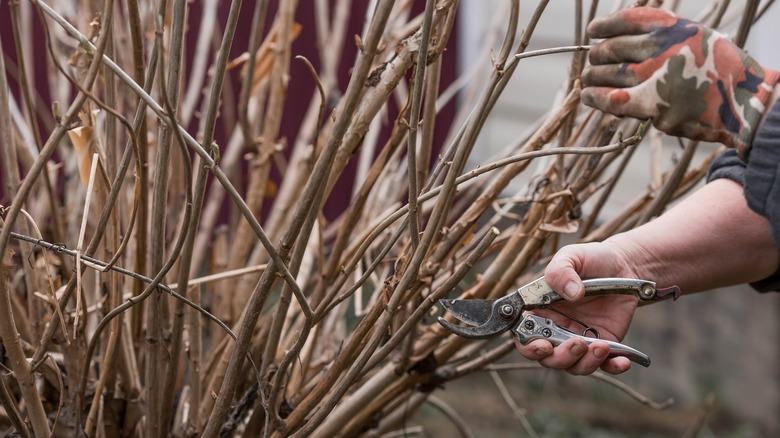
When pruning your hydrangeas for bigger blooms, make sure you wait until late winter or early spring to do so, as this is the optimal time for cutting back these shrubs. Then, with clean and sharp pruning shears, cut back the plant to around 12 inches from the ground. This will then stimulate regrowth.Since the plant has fewer total shoots, it will be able to concentrate its energy on growing new shoots, which will then produce more robust, larger blooms. Your hydrangea might look a little bit sad after you've cut it back, but it's important to remember that these plants are fairly fast growers and will start really flourish once their growing season kicks in around March.
As your hydrangeas start to grow, keep an eye on them and make sure they have everything they need to thrive after the hard prune. You will need to fertilize your hydrangea plants in both spring and early fall, and ensure that they have enough water throughout the growing season. By supporting your hydrangea after you've pruned it, you'll get bigger blooms that fill your yard with color and beauty.