

Smart Ways To Make Raised Garden Beds Self-Watering
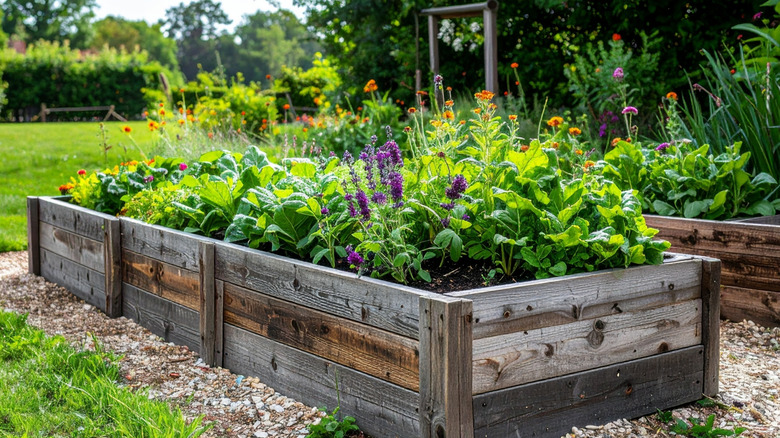
Raised garden beds have been making gardening easier for a long time, but there's a function they still haven't mastered on their own: self-watering. Raised beds already have a watering advantage because plants are grown close together and shade the soil, reducing evaporation. Fortunately, several smart self-watering approaches are available for raised beds.
Many ailing plants can trace their health issues to overwatering. While self-watering systems don't completely eliminate the risk of overwatering, they make it less likely. The science behind this overwatering protection varies by method, as we'll see.
Smart ways to make raised beds self-watering systems fall into three categories — ollas, drip-irrigation systems, and sub-irrigation systems. Ollas and sub-irrigation systems work their watering magic below the soil, while drip irrigation operates just above the soil. None of the systems is completely "set it and forget it"; each requires a small human intervention — turning on the water for drip irrigation and filling ollas and reservoirs for the olla and sub-irrigation methods.
Bury ollas in your garden for slow-release self-watering
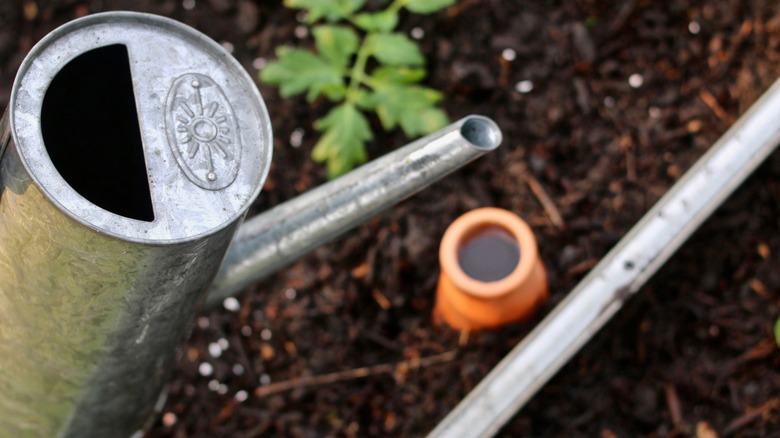
Your first self-watering option is to water your raised garden bed using an olla. The use of ollas for plant irrigation dates back to ancient times and can reduce water waste by up to 70% compared to conventional overhead watering. Ollas are unglazed clay or terra cotta pots that have been mostly buried in the soil. Since they are porous, water slowly seeps through the pot wall and into the soil.
To create an olla that will irrigate a 4-by-4-foot area, cover the bottom of an 8- to 10-inch terra-cotta pot with a piece of tile affixed with adhesive. You can make a larger olla by gluing two pots together at the rims and covering both drain holes. Bury the pot in the soil with the opening exposed by up to 2 inches so you can refill it, but keep it covered when not filling to prevent evaporation.
Plant roots in the soil will take up water as they need it, which is key to the success of ollas; plants don't get overwatered or underwatered because they have a consistent amount of water available. Olla users have indicated that an olla can accommodate the watering needs of plants within twice its diameter. Monitor ollas closely, especially at first, to see how quickly they empty and need to be refilled. The plants you have, the soil type, and the weather influence how often you'll need to refill the pots.
Self-water using a drip-irrigation system
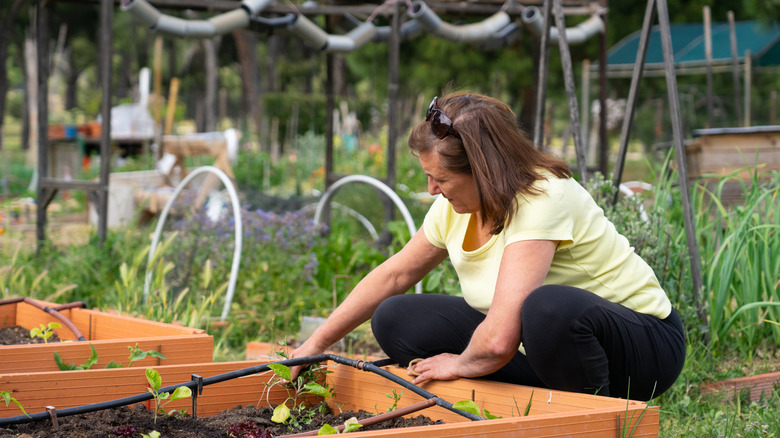
Drip irrigation is a smart choice because far less water is wasted with a drip system compared to overhead water. That's also one of the reasons overwatering is less likely with a drip system; with an overhead system, water is evaporating, running off, and percolating deeply into the soil to the extent that gardeners overwater to ensure full water coverage. Those water-loss effects are greatly reduced in drip-irrigation system, which delivers a controlled, steady drizzle of water near the base of your plants.
A drip-irrigation system can be as simple as putting a faucet with a connected drip hose on a timer. A more elaborate setup requires a point of contact to a water supply, timer, filter, pressure regulator, a main hose line, branch hose lines, and an end cap. Drip-irrigation kits especially made for raised beds are also available. A variation on drip irrigation that uses PVC pipe instead of drip hoses is a raised bed watering system that will keep your plants refreshed and hydrated. Another variation is a drip-tape system, which is said to be the easiest system to install. You can even combine a drip system with ollas for a more automated olla system that uses drip hoses to fill the ollas.
Create a sub-irrigation system for smart self-watering
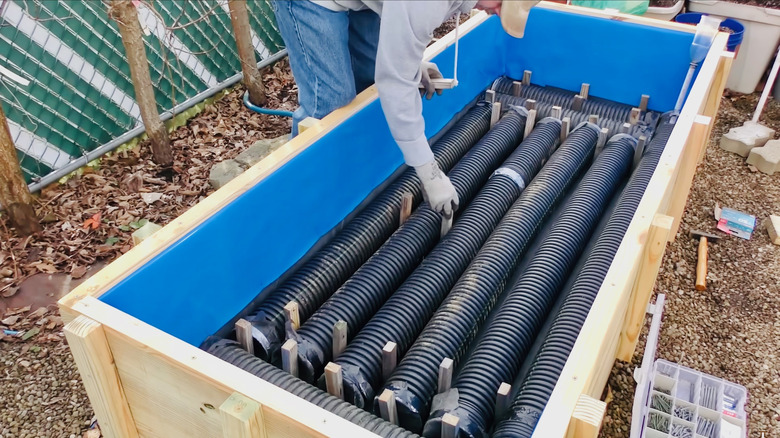
Sub-irrigation literally means "watering from below," and sub-irrigated raised beds enable water to be wicked through the soil using capillary action to reach plant roots. The result is more robust root systems and improved ability for plants to retain nutrients. A sub-irrigation system reduces the likelihood of overwatering, similarly to the way ollas do — a consistent supply of water combined with plants' natural tendency to regulate their water supply as their roots reach for water.
Install a sub-irrigation (wicking) system during new bed construction with an optimal depth of 16½ inches. First, ensure the bed is watertight using a pond liner, then install an overflow drain and a fill pipe. To build the reservoir, lay 4- to 6-inch perforated pipes at the bottom (spaced no more than ¼-inch apart) and cover the ends with porous fabric to keep soil out. Layer a vermiculite and peat mix over the pipes. Test the reservoir by filling it until the drain overflows, then finally add your potting soil and plants.
Variations on sub-irrigation systems include commercial products, such as TikTok's ingenious gardening solution, which uses four plastic trays, each holding 5 gallons of water, as its reservoir. Another option that reuses 5-gallon buckets to DIY a grow table is a variation not only on the reservoir concept but also on raised beds; you can purchase a system that turns the buckets into a sub-irrigation system.