

What To Look For In Rattan Furniture For A True Thrift Store Score
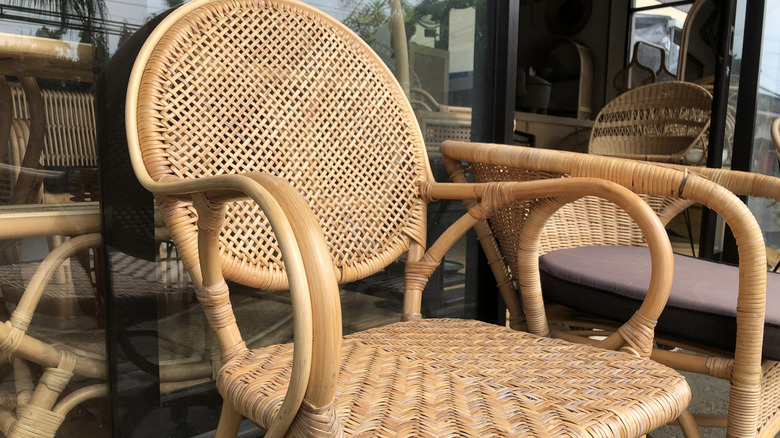
Beloved in the 1970s, rattan is a furniture design trend making a big comeback, meshing with a modern-day preference for natural elements, earth tones, and handcrafted details. Some turn to rattan for the sustainability of the material, which is made by weaving or bending the vines of a climbing palm grown in tropical rainforests in Southeast Asia and Africa. The plant is fast-growing and quick to regenerate, and harvesting its vines doesn't involve cutting down a whole tree. By thrifting for vintage rattan, you can be even more sustainable while saving on pieces that can top $1,000 if sold new, but knowing what to look for can help you know when you've found something truly valuable. Look for rattan furniture with stable joints, an even weave, and a warm, light color to know that you've truly scored at the thrift store.
Before you shop, knowing the difference between wicker and rattan can help you decode labels in the shop or descriptions on resale websites. Wicker refers to a certain type of weaving used to make furniture and housewares, so if you see something labeled "wicker," it may or may not be made of genuine rattan. Another piece of shopping advice is that there's a time and place for non-natural rattan. If you're trying to furnish an outdoor area, where a table or chair is at risk of getting damaged by the elements, you're better off choosing synthetic rattan, which is often made out of high-density polyethylene.
How to spot quality rattan furniture -- and avoid red flags -- in a thrift shop
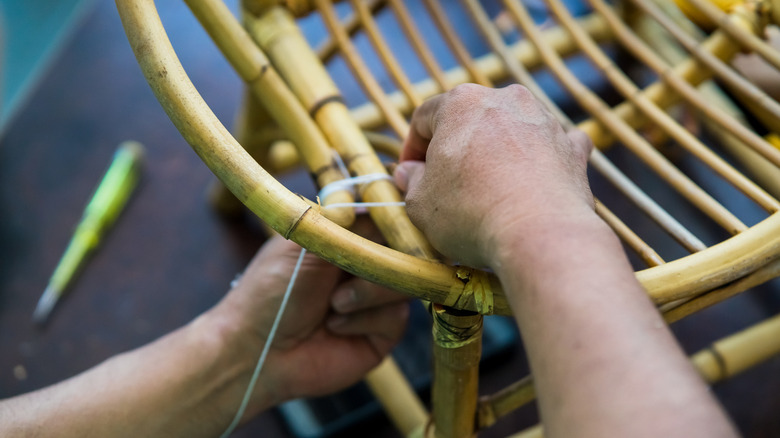
A visual inspection of the rattan furniture at a thrift store will give you a lot of information about what's on offer. If you're perusing natural rattan for your home's interior, take note of the color and feel the woven parts. Quality rattan is light-colored with a warm tone and without any dark spots. Whether the piece you're considering is synthetic or real rattan, a tight weave with a distinct pattern is another quality indicator. Finally, run your hands across the firm parts: Smoothness is a sign indicating you've found a good piece.
Red flags may also emerge as you check out the rattan. If the weave has gaps, unevenness, or frayed edges, it may mean the piece needs to be repaired and isn't worth taking home. Restoring this type of furniture can become pricey due to the cost of replacement cane and the labor involved in weaving it back into a pattern. If the furniture's joints are stapled or glued together, that's also a bad sign; welded joints are more stable.
A tip for avoiding worn-down rattan is to keep an eye out for side tables. Interior designer Benji Lewis of the U.K. told Homes & Gardens, "I would likely look for side tables rather than chairs, notably 1920/30s tables that have a panel of chinoiserie lacquer set into the tabletop because tables don't get sat on and have to withstand the wear of wriggling bottoms."
Tricks to finding vintage and designer rattan furniture
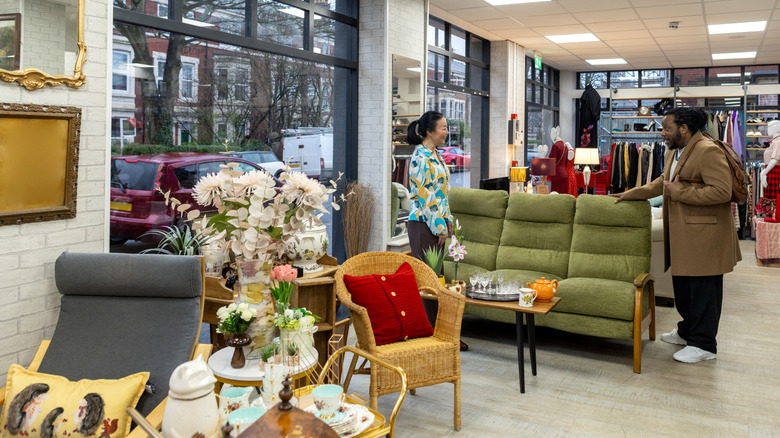
Although rattan is a furniture trend that's so easy to thrift, finding iconic designers' work is more of a challenge. You can narrow your search to the material's most recent heyday of the 1960s and '70s or scout for furniture from the Art Deco period for the best chance at finding gems. If you're eager to own a vintage piece, regardless of the designer, physically pick the furniture up and inspect it closely. Vintage pieces are known to be heavier and possess decorative details that may be woven in by hand, and the color of the rattan may have taken on more of a yellow tone over the years.
When it comes to rattan from makers like Ritts Furniture Company, Franco Albini, and Paul Frankl, study the design characteristics and any distinct quirks of your favorite style so you can better identify it, rather than relying on maker's marks, which are rare for this furniture type. Frankl, for example, shaped rattan strands into sculptural forms with flowing, curved edges. There's also a tell: The supporting strands usually start at the top and run to the bottom on real Frankl pieces. When you're not sure, you can get clarity by asking a professional or taking your search from a thrift store to an auction website or reputable online reseller platform. These online alternatives to find high-quality secondhand items often have pieces identified by their designer and time period.