

Don't Worry About Cracks With These Low-Maintenance Driveway Materials
We may receive a commission on purchases made from links.
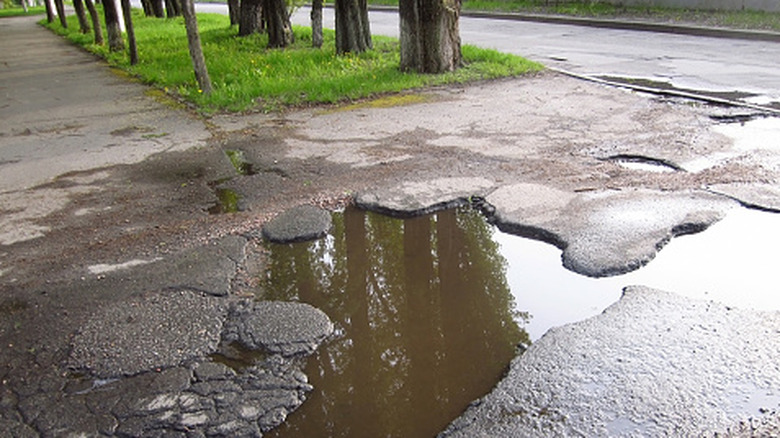
You probably want your home's driveway to look great, but you don't want to spend a lot of time keeping it that way. Concrete might be a popular driveway material, but it's susceptible to cracking because of weather variations and the weight of vehicles. Not only do the cracks look ugly, but they can sprout weeds, forcing you into perpetual maintenance mode. Despite solid concrete driveways being a trending material that looks so upscale, you may want to choose something that cracks less frequently, like pavers, asphalt, or resin-bound natural stone.
It's difficult to prevent concrete driveways from cracking. This issue can appear a few weeks after installation or several years later. Problems during installation can increase the risk of cracking, such as not taking time to compact the soil underneath the driveway, using too much water in the cement mixture, or failing to give a freshly laid concrete driveway enough time to cure before using it. Exposure to widely varying temperatures can place the concrete under stress, increasing the chance of cracks down the line. When a driveway is already weakened by these problems, the concrete becomes more likely to crack under the stress of heavy vehicles parking and driving on it. Although concrete is enduringly popular for driveways due to its low maintenance needs, these drawbacks are well worth considering — and may lead to you choose a different driveway material.
Pavers slightly shift under stress, so are crack resistant

A paver driveway is arguably one of the best-looking options available to homeowners today, thanks to the many shapes, patterns, and colors the pavers come in. As long as you follow proper installation techniques, a paver driveway is a proven option that resists cracks. The interconnected yet separate pavers shift slightly under the weight of vehicles, meaning they're less likely to crack compared with a large slab of solid concrete. The latter just doesn't have the same level of flexibility. Should a single paver crack, it's easy to repair. You can just pop the broken paver out of place and install a new one.
Paver driveway maintenance is minimal compared with concrete, too. Weeds may occasionally grow between the pavers, but you can limit them. Proper installation techniques, like adding sand between the stones, should prevent significant weed growth. Paver driveways do not need specialized cleaning techniques, either. A quick rinse with a garden hose or even nature's cleanser — a thunderstorm — should wash them clean. You also don't need to reseal them every few years, as you likely have to do with your concrete driveway.
Small cracks in asphalt driveways are simple to repair
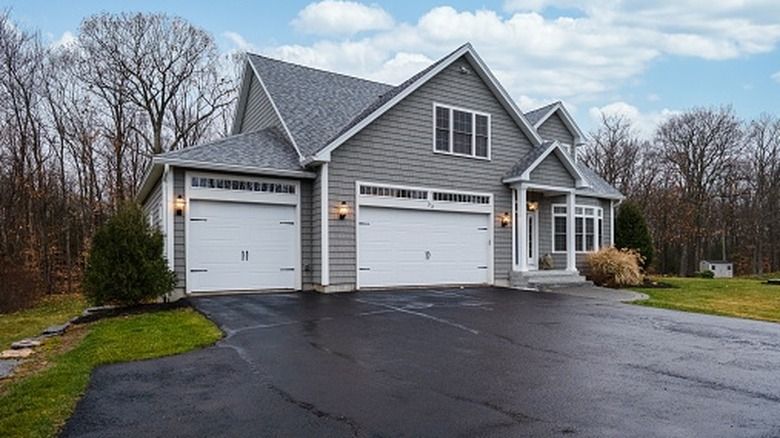
One of the best reasons to install an asphalt driveway is the low cost of installation. Additionally, over the years that you own it, the cost to maintain and repair this type of driveway is lower than you probably expect. What to know before you buy an asphalt driveway is that it offers a higher level of flexibility than concrete, reducing the chance of it cracking under stress.
Proper installation is the best way to prevent cracks in asphalt driveways, although occasional maintenance work helps, too. You should remove leaves, rocks, and other debris from the surface of the asphalt as they are deposited. Leaving them in place can speed up the deterioration of the material. To prevent cracks, reseal your high-traffic asphalt driveway every two years, particularly if you live in an area with extreme climate fluctuations. You can reduce resealing to every three years for low-traffic driveways. Sealant protects the asphalt from bad weather and UV radiation damage.
The best way to maintain the asphalt driveway's integrity and prevent larger cracks is to fix any small ones as soon as they appear. If your asphalt driveway develops a pattern of cracking that resembles alligator skin, you can use a patching product to fix it. To fix a larger crack, remove any loose debris and use an asphalt crack filler, like Wadities Blacktop Concrete Joint. For long-lasting results, consider hiring a professional to repair large cracks. If weeds begin growing in a crack, pull them out as soon as they appear and fix the crack immediately.
Resin-stone driveways easily resist cracking and weed growth
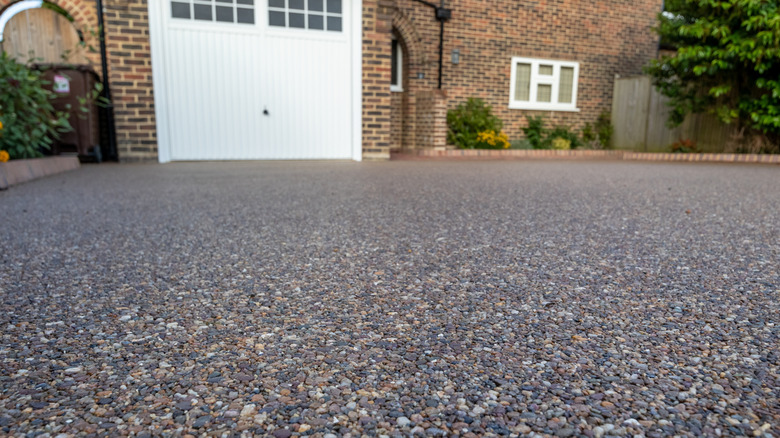
When you want a permeable driveway material that's low maintenance and weed-resistant, resin-stone is a good choice. To create a resin-stone driveway, you blend gravel or pebbles with a polymer binder to create a smooth, durable surface. It easily supports the weight of vehicles, has no seams, and is basically weed- and crack-proof. Resin-stone driveways are also a popular choice because of the many color and design options available.
To maintain a resin-stone driveway, occasionally sweep debris for the surface and spray it with a pressure washer set to low a couple of times per year. Although it's rare, weeds may sprout through the resin or, more commonly, along the edges of the driveway. Apply weed killer or pull them by hand to get rid of them.
Because polymer resin is permeable, water drains through the coated gravel down into the subsurface, which is also made of permeable materials. You don't have to worry about water pooling on your driveway and causing damage over time. Cracks are rare with resin-stone, as the material flexes under the weight of vehicles instead of cracking. Should cracks appear, you probably have a problem with the base material. If the cracks are severe, you'll have to hire a professional service to remove the driveway surface, repair the base layer, and pour the resin-stone mixture over it again.