

Can The Soil You Left In Storage All Winter Still Be Used In Your Garden This Spring?
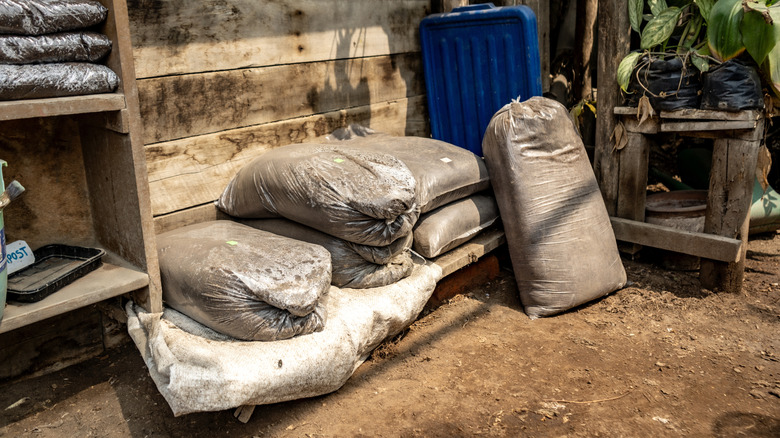
You didn't use up all the soil you bought for last year's growing season, and you felt bad just throwing out the remaining bags after paying for them. Perhaps you stuck it in the garage and forgot about it. Maybe you went the extra mile and stored it in a temperature-controlled room. Either way, you're probably wondering whether that excess soil is any good now or if you need to go out and buy all new bags.
The good news is that technically, soil doesn't go bad as quickly as, say, an old gallon of fresh milk in your fridge does. (Milk is only good for seven to 10 days.) However, the longer a bag of soil has been sitting around unused, the more likely it is to lose some of its beneficial qualities — especially if it hasn't been stored well. As the soil ages, certain ingredients in the mix might change, as might the pH levels. The soil might lose nutrients, or it might not be able to hold moisture as well as it was designed to.
Depending on the particular mix inside the bag and how it was stored, it might be better to toss the old stuff and get fresh gardening soil this spring. On the flip side, a bag of soil leftover from last season is often salvageable. You just need to know how to assess it before adding it to your garden beds, outdoor containers, or houseplant pots.
Signs your stored soil has gone bad (and how to fix it)
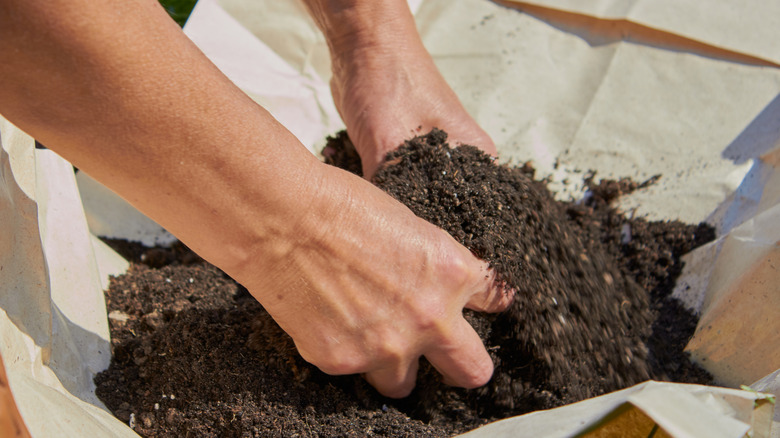
The biggest risk factor in bagged soil going bad is if you bought a mix that contains organic ingredients, which more easily decompose. For example, mixes that contain peat should be used within nine months of the manufacturing date, while bark-based mixes should be used within two to six months. Aside from organic ingredients breaking down, you also have to worry about compaction and contamination.
When a bag of soil is left to sit for months on end, it can settle. If the mix feels compacted, break it up with your hands or a tool as you add it to a garden bed or container. You can also mix in a bit of fresh compost to help loosen it up. If you see insects (usually fungus gnats), consider your bagged soil contaminated. The same goes for mold or rot. In all these cases, Don't throw out old potting soil if it shows signs of contamination, it's likely not a lost cause. Instead, you should sterilize the potting soil before using it.
If you have the space outdoors, solarization is an easy, practical soil sterilization method. If the potting mix is still in a bag, tie the bag shut and lay it down in the sunniest part of your yard. To kill most fungi and diseases, the soil needs to reach 145 degrees Fahrenheit for at least 30 minutes. To kill weed seeds and insects, it needs to reach at least 180 degrees Fahrenheit. You can also spready it thinly on baking trays and bake it in your oven at 200 degrees Fahrenheit for 30 minutes.
Tips for safely storing leftover soil until next spring
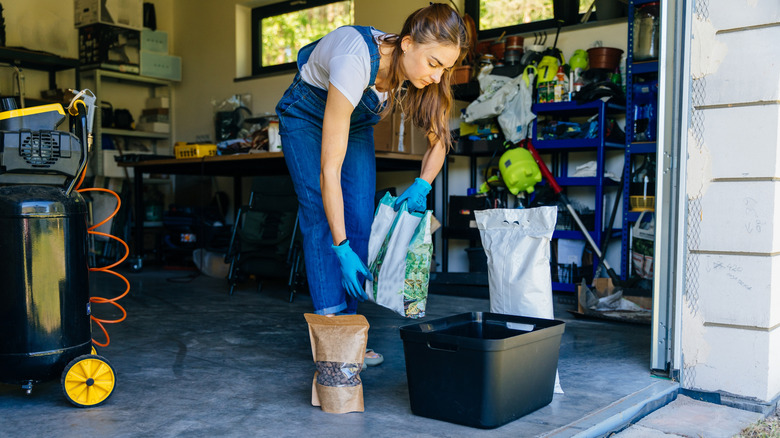
If you have leftover bags of soil after filling your containers and garden beds, there are ways to reduce the risk of contamination. Regardless of what it's made of, the best way to store any unused soil is to transfer it to a storage container with a tight-fitting lid. This will keep it dry while also preventing pests and weed seeds from contaminating it during the off-season. You're lowering the risk of it going bad before the next growing season. Once spring rolls around again, you'll still want to check bagged soil for the signs of compaction and contamination before using it. If the worst happens and your soil isn't usable, add it to your compost pile.
Another way to get around this problem is to not buy pre-mixed potting or garden soil in the first place. Instead, take advantage of bulk pricing and buy individual components separately to make your own easy DIY soil mix that helps plants thrive without waterlogging or leaving excess potting mix in your garage to rot. A good soil mix is made up of about half organic and half inorganic materials. You can, for example, stock up on inorganic ingredients that don't decompose, like perlite or sand, or ones that biodegrade very slowly, like peat. Wait until right before the growing season to buy perishable ingredients like bark or compost.