

8 Pruning Tips & Tricks That Keep Your Succulents In Tip-Top Shape
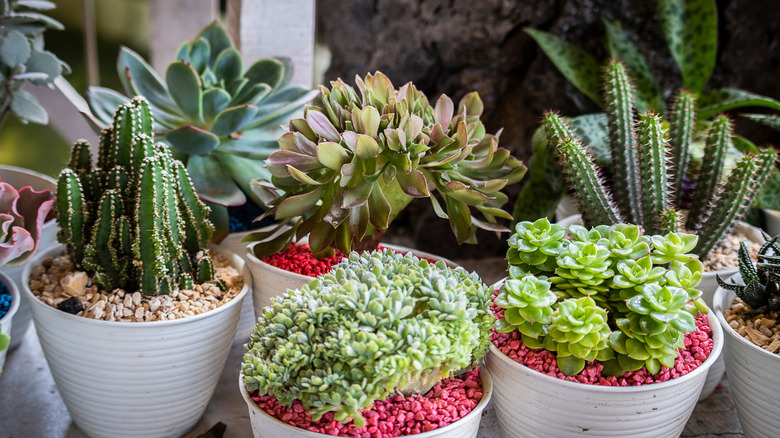
If you have a lovely collection of succulents in your home, you're probably aware that they really don't demand that much attention to stay in tip-top shape. As long as you know how to water succulents for the best success and have them situated in a spot that suits them, they should be happy. While succulents don't generally require a lot of pruning, there are reasons to tidy them up from time to time.
For starters, if one of your plants has developed some diseased growth, you'll want to remove those damaged sections. Similarly, succulent stems and leaves sometimes die, and these pieces are best removed. Some species may also have a tendency to become a bit leggy. Pruning these the right way can often improve their growth and produce a slightly fuller plant. The final reason you might want to trim your succulents is to propagate more plants for your collection or give them away to family and friends. Many species are actually quite easy to propagate, as long as you follow some pruning tips and tricks to ensure your plants remain healthy and thriving.
Make sure your pruning shear are clean
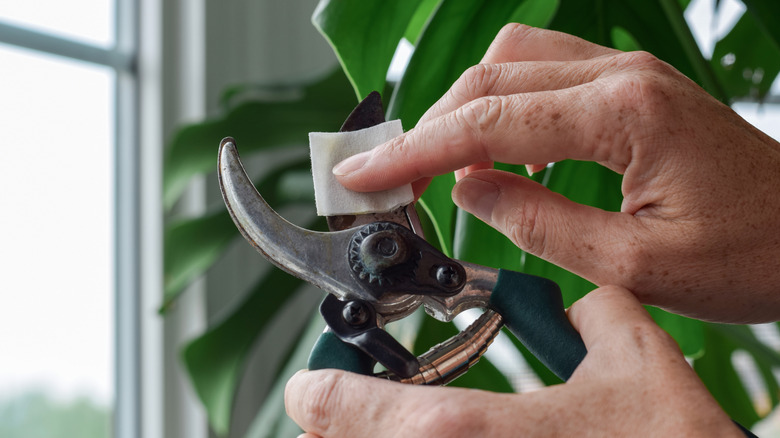
Before you even think about making any cuts on your succulent, you want to ensure that your pruning shears are scrupulously clean. This avoids introducing any disease or bacteria to your plant. The easiest way to clean your snips is to just wipe them over well with some isopropyl or rubbing alcohol. You also want to give them a wipe every time you move from plant to plant. You can also disinfect your garden tools in a snap using Clorox wipes.
Wear gloves when working with succulents
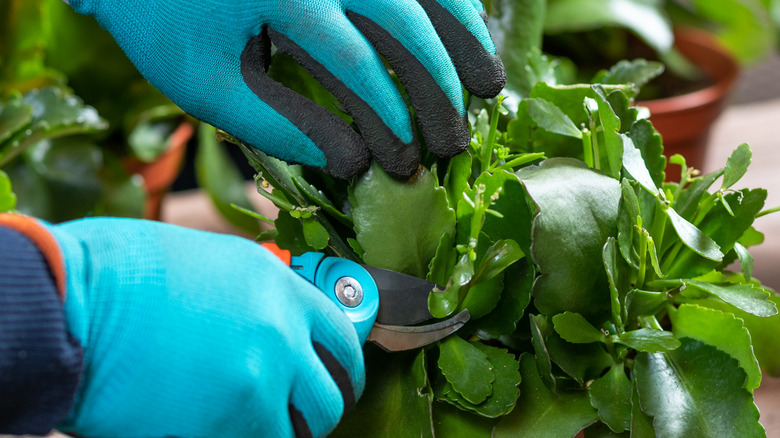
As you know, there are many different types of succulents, and some of them, especially the cacti, have sharp thorns or spines. Other types will exude a sticky sap that can be irritating to the skin. For these reasons, it's always a good idea to wear gloves when you're working with succulents to help protect your fingers and the skin on your hands.
Choose the right time for pruning

Depending on your reason for pruning, you should only trim your plants during their active growth times. For many, this will be during spring and summer, but some species are dormant during this time and are better trimmed in the colder months. Pruning during active growth periods ensures that the cuts heal faster and new growth is stimulated much more quickly.
Remove dead and diseased foliage any time
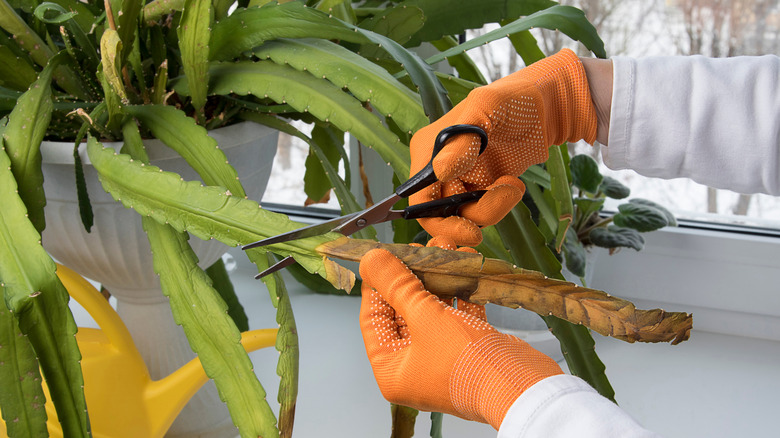
Dead and diseased foliage can be removed from your plant at any time of the year as soon as you spot it. This will keep your plant looking good, and removing diseased sections means that the problem won't be able to spread to other parts. It's common for some species to develop dead leaves at the base as newer ones grow further up, and these should be cut off to keep your plant thriving.
Always cut just above a node
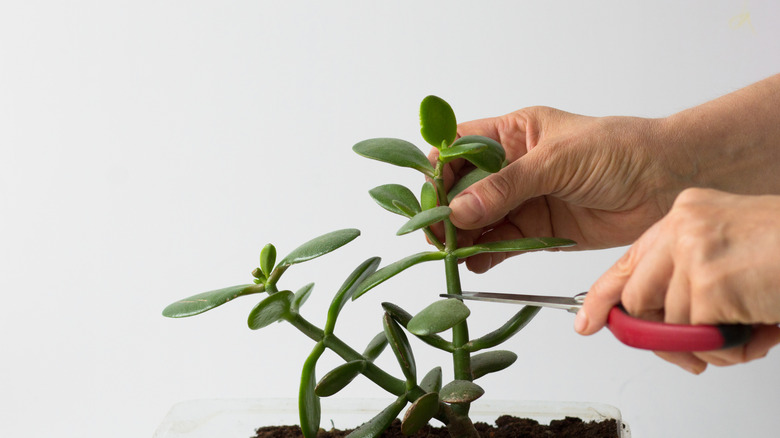
When pruning your succulents to encourage bushier or fuller growth, it's important that you cut just above a node, which is the junction where a leaf meets the stem. These are the precise points where new growth will appear in pretty much all plants, not just succulents. Making the cuts here also avoids having bare stem sections that will just die back anyway.
Try to make each cut at a 45-degree angle
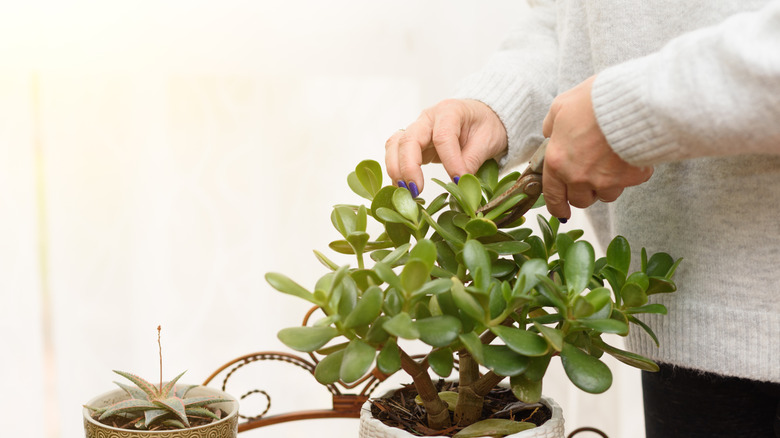
When you're pruning your succulents, apart from ensuring that you always cut just above a node, you want to try to make the cut at a 45-degree angle. This prevents water from sitting for any period of time on the actual cut itself, which will stop it from drying out effectively and callusing over to heal.
Deadhead spent flower stems down to the base
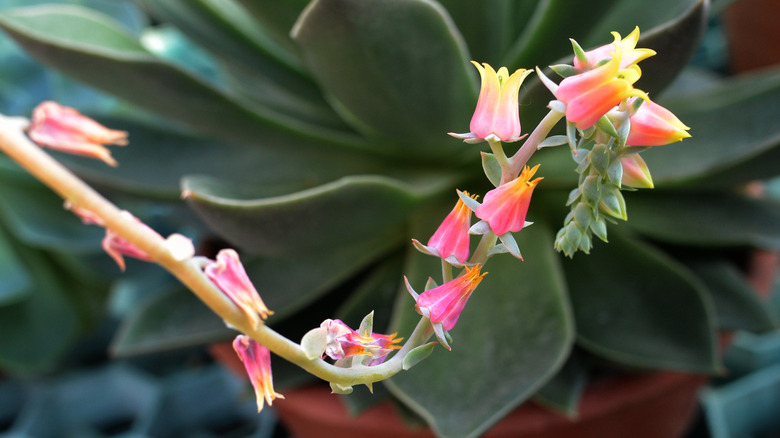
If you have succulents that bloom, they will likely send out tall or long stems, often with multiple flowers on them. These should be cut back once flowering is finished. Wait until the blooms are completely spent, and then cut the stem right down to the base. This will improve the appearance of your plant.
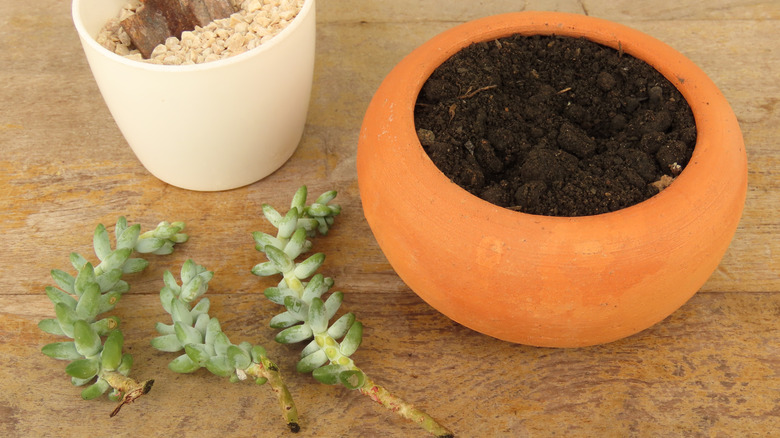
Use the cuttings to propagate new plants
Don't waste those stems that you've trimmed off your succulents to improve their shape and stimulate better growth. You can easily use healthy stems to propagate new plants, as succulents do strike quite easily. In fact, they're some of the easiest houseplants to propagate. All you have to do is let them sit in a warm, dry spot for a day or so to allow the cuts to callus. You can then put the stems into a propagation mix, and pretty soon you'll have new plants to pot up.