

Wait, Why Are Gardeners Putting A Wedding Veil Over Their Plants?
We may receive a commission on purchases made from links.
Growing your own vegetables is both satisfying and rewarding. It's so nice to go out to the garden and pick a few salad greens so that you can throw together a delicious bowl of homegrown goodness, but it can be quite devastating and concerning when you go out into the garden and see that all your greens have been devoured by garden pests. Upon closer inspection, you see caterpillars happily munching away on the leaves and leaving their droppings everywhere. Now your crop is ruined, but it doesn't have to be this way if you take note that some gardeners are putting a wedding veil over their plants to banish some of the worst garden pests in their yards.
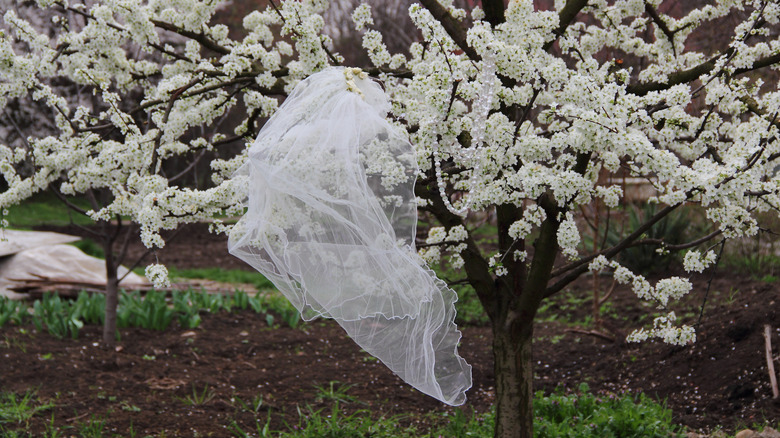
More precisely, savvy gardeners are going to their local fabric shop and buying lengths of tulle — the same fabric that wedding veils are made from. Tulle is an open-weave fabric that's see-through and still allows sunlight and water to penetrate. It's perfect for draping over your vegetables and protecting them from the moths and butterflies that like to lay their eggs on your greens. It's these eggs that turn into those hungry caterpillars that you found devouring your crop. Keeping your crops covered is an eco-friendly way to keep bugs out of your garden because you don't have to spray them with harsh chemicals.
How to cover your treasured plants with a wedding veil
While you could actually repurpose your own wedding veil in the garden or purchase one or more from your local thrift store, it's just as easy and probably more affordable to buy tulle from a fabric shop. You can even get a full Threadart Tulle Bolt (20 yards) from Walmart for just $18.99. This may also be more affordable than buying row covers or agricultural mesh from a garden center, and does the same job just as well. You'll find that the best time to install insect netting of this type is immediately after you've transplanted the seedlings or sown the seeds.
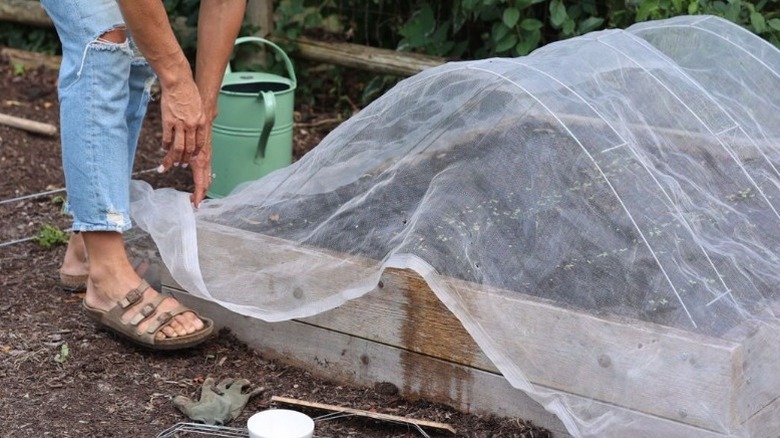
Once you have your tulle, you'll want a way to drape it over your garden bed and secure it in place. You could simply place it over your crops as it's light enough not to damage them, but it can easily get blown away if there's a storm. One of the best and easiest ways to secure the fabric is to construct a hoop frame using PVC pipes, black plastic irrigation piping, or electrical conduit. Then, you can just attach the fabric to the frame using cable ties. You also want to be sure to weigh the ends down using stones, bricks, or pegs, so that the wind can't pick them up and create gaps for pests to get in. Make sure you inspect the fabric regularly for holes — you'll be amazed at how persistent those cabbage white butterflies can be in getting to your plants. Clothespins can be used to take care of small holes, but you will need to replace the tulle from season to season, as it will start to deteriorate from constant exposure to the elements.