

Say Goodbye To Concrete & Meet The Eco-Friendly Alternative That Makes Your Driveway Look Good
You're making great strides on greening up your lifestyle. You've eliminated single-use plastic from your home, you line-dry your laundry, and you've bid adieu to your lawn in favor of eco-friendly landscaping. Okay, even the most ardent tree huggers will have a hard time achieving all of these things. One way we can make an environmental impact is by resurfacing driveways with recycled asphalt.
Recycled Asphalt Pavement, or RAP, consists of milled asphalt harvested from prior projects combined with a binding agent. Not only does it prevent waste from going to the landfill, but using RAP is both more energy- and water-efficient than producing brand-new material. The resource savings also translate into less pollution, making this an even greener project upgrade you can do to keep your home sustainable and attractive at the same time. Sometimes planet-friendly options are less attractive than conventional ones, but RAP's smooth finish makes no compromises in the looks department.
Concrete is a ubiquitous material that blends easily into the background. However, concrete is something you should stay away from buying for a more sustainable home. It can only be manufactured by burning fossil fuels, making concrete production guilty of just under 10% of the world's carbon emissions. When your driveway is due for a refresh, steer clear of energy-sucking concrete in favor of recycled asphalt. This repurposing will save you lots of money and ease your conscience.
RAP vs concrete driveways: more pros than cons
Before you say "farewell, solid concrete driveway," there are a few drawbacks to driveways made of RAP over concrete ones. However, you may find that the overall financial and ecological savings of a RAP driveway make it a no-brainer over a concrete one. Asphalt in general doesn't last as long as concrete; where asphalt driveways' lifespans tend to max out at between 15 and 30 years, you could eke another 10 out of a concrete one. It also needs less maintenance than asphalt in general. However, when damage does occur to concrete, it's also expensive to repair.
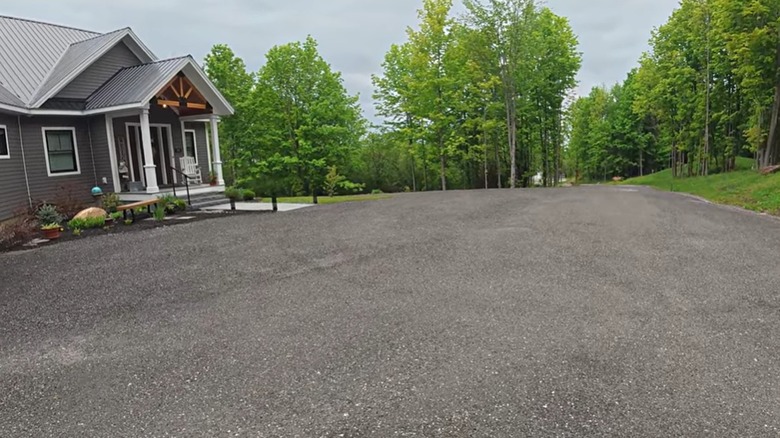
Driveways made of RAP have a gravel-like appearance that hides imperfections better than concrete, and RAP (and asphalt in general) is sturdier in the face of temperature fluctuations, making it a better choice for four-season climates. The clincher is that RAP driveways are significantly cheaper than concrete ones. Forget concrete when it comes to cost savings. At as much as $20 per square foot, concrete is the costliest driveway material of the two. The same amount of RAP will set you back an average of $7.50.
As if you weren't already sold on a RAP redo for your driveway, you may be able to score more savings if you have an existing asphalt driveway. If the contractor can reuse the material from the old driveway, it could save you over $1,000 on the project, along with the energy savings of reduced transportation and production of new materials. And think of how much better the stuff will look on your driveway than in a landfill.