

Don't Touch That Baby Deer! What To Do If You Find One Alone In Your Yard
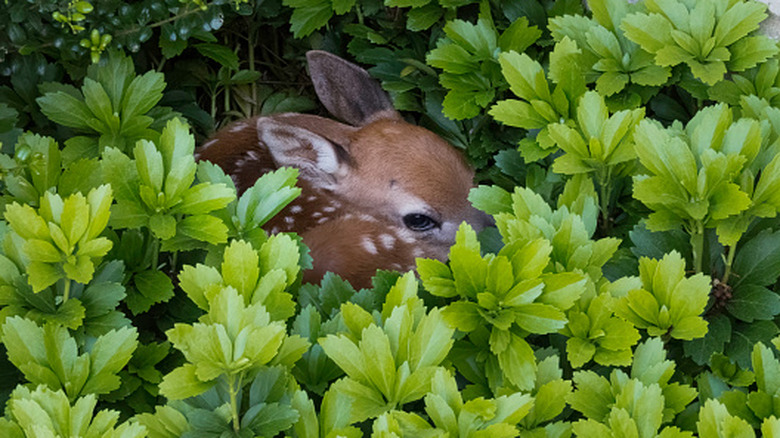
As winter turns into spring, snow will start to melt, flowers will begin blooming, and animals will become more active. Depending on where you live, you might be lucky enough to see nature's reawakening with newborn animals, including deer. Most gardeners, however, prefer to keep wildlife, even cute baby deer, out of their yards. While you might already use natural ingredients that can repel deer from your yard, you still might find a fawn resting in your garden — and you should never touch the baby if this happens. You might expect to see a baby deer walking with its mother, but it's actually more likely that the fawn will be left alone to hide.
It is a common misconception that a lone fawn is abandoned. In reality, what you are likely witnessing is a perfectly natural — and vital — survival strategy, with the mom trying to keep the baby unnoticed by predators. While it's incredibly tempting to want to "save" a baby deer you find alone in your yard, do not touch it. Touching a baby deer that was left alone can put the fawn at risk by drawing unwanted attention from predators or causing the mother to stay away out of fear. Plus, it could be illegal in your state, unless you have certain permits or licenses to handle wildlife. If you have found a fawn in your yard, the best thing you can do is give it space so the mom can take care of it in her own way, which is not necessarily the way you'd think. It's critical that you avoid using the best ways to keep deer out of your yard until the doe has collected the fawn, usually a week or so later.
How to keep a baby deer safe in your yard
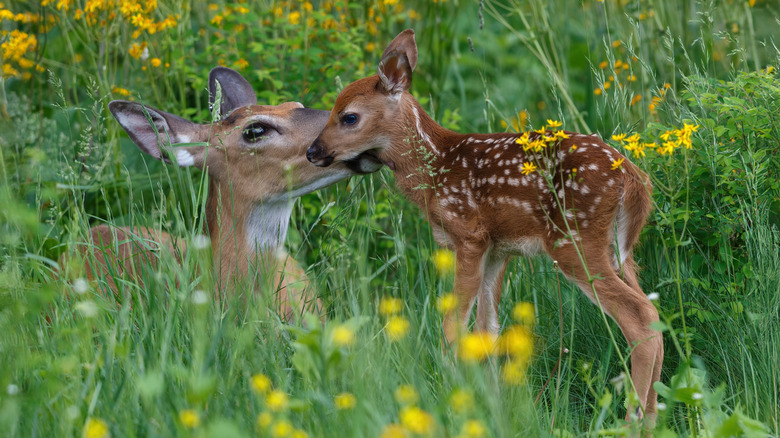
A mother deer leaves her fawn alone primarily as a survival strategy to protect it from predators. Because an adult deer's scent and movement are strong magnets for danger, she stays away to avoid drawing attention to her baby's hiding spot. It's important to not touch or move the fawn, since doing so can leave your human scent on the baby, potentially leading predators directly to it. Equally as important is to keep pets and children away from the baby deer. Keep your dogs leashed if you need to pass by the baby, and explain to children that the fawn needs quiet and distance. While you might think that it needs nourishment while its mama is away, never attempt to feed a fawn water or food. They have highly specialized dietary needs, and human interaction or improper feeding can be fatal.
What you can do if you see a lone baby deer is monitor the area from inside your home. If the baby deer appears healthy and is not crying for hours on end, the mother is almost certainly nearby and will return, even if you don't see it. There are very specific situations where intervention by a professional may be necessary. This includes if the fawn is visibly injured, resulting in bleeding or limping. Another sign that you should seek help is if the mother deer is known to be deceased, like if you saw a road accident involving the doe, or if the fawn is crying constantly for many hours. If any of these things happen, contact a licensed local wildlife rehabilitator or your state's wildlife agency for help. Finally, if you have a history of deer in your yard, consider planting deer-resistant plants that can save your garden without the need for harmful chemical repellents or conflict with local wildlife.