

3 Types Of Permeable Driveway Materials For Easier Maintenance

Permeable driveways are great at providing multi-faceted benefits to homeowners. Whether you're worried about rainwater eroding your property, or you want to contribute towards a better eco-system and reduce drainage costs for municipalities, the range of options you get for a permeable driveway is vast. Materials like permeable concrete pavers, plastic grid pavers, and resin-bound stones are popular driveway options that are also permeable.
Permeable driveway paving helps support sustainability efforts since it allows water to pass through, naturally replenishing groundwater reserves. And because contaminants get filtered through the ground sublayers below the soil's surface, the environment benefits from healthier groundwater reserves when you install permeable pavers on your driveway.
Apart from this major eco-friendly feature, permeable pavers are also great at dissipating heat and regulating temperature in urban areas from getting out of control. But what makes these driveway options even better is their ease of maintenance. The materials offer excellent aesthetics with low maintenance requirements, while solving runoff problems. These materials are highly durable and save you from the troubles of constant repairs as well.
Plastic grid pavers
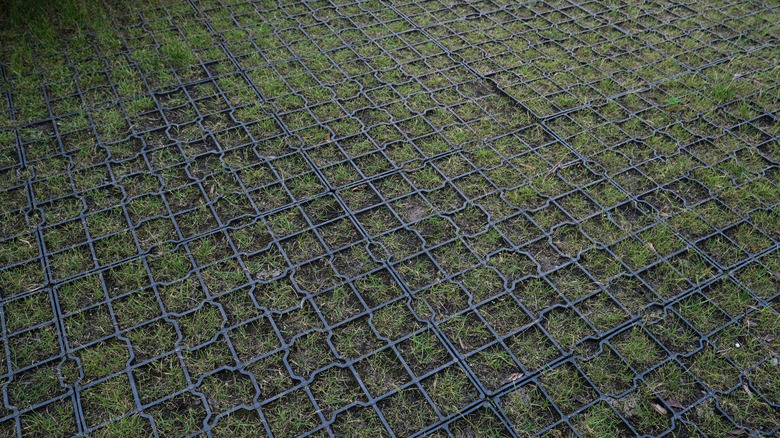
Plastic grid pavers are extremely cost-effective and highly durable. Once the grid is installed over a substrate, you can fill these pavers up with either gravel or grass. In fact, filling these pavers with grass is a great way to seamlessly integrate your driveway with your lawn. Plastic pavers also allow a higher rate of drainage since they have larger voids available for water to seep through to the ground when compared to other types of permeable pavers. Several manufacturers make these grid pavers from recycled plastic, which further adds to their eco-friendliness. Grass pavers may require periodic reseeding to keep the grass cover even, with regular mowing and watering to maintain the grass. However, you only need to do a deep inspection once a season.
Because of the inherent strength of the plastic grid, the underlying grass and soil do not get damaged easily with the movement of vehicles. For pavers filled with gravel, since the plastic grids keep the gravel in place, you do not have to worry about spending hours replacing washed away stones. You can regularly drive heavy vehicles on this kind of driveway and not worry about the pavers getting damaged. In case certain parts eventually get stained, some manufacturers allow you to replace individual pavers and not deal with the hassles of renovating the entire driveway, as you would with traditional asphalt or concrete.
Resin-bound pavers
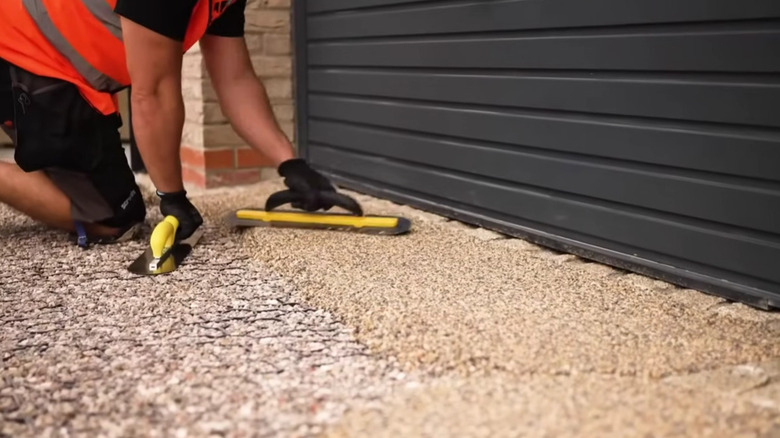
Resin-bound paving is an unconventional and visually attractive driveway option, which is also highly durable. It consists of stone aggregates (such as crushed stone, kiln-dried gravel, or glass) bound together with polyurethane resin. The popularity of this kind of driveway does not only stem from the unique look that the resin provides but also the permeability for rainwater it offers. The gaps present between the stone aggregates allow runoff to soak into the ground. Meanwhile, the resin present in the material is itself is also highly permeable.
Although the installation of resin-bound pavers can be a little heavier on your budget, the ease of maintenance they provide more than makes up for this initial investment. All you need to do is power-wash the driveway about twice a year, and you're good. Resealing the driveway during this time would also protect the resin from the sun, although some manufacturers already offer fade-proof, UV stable resin for this purpose.
Furthermore, once you install these pavers, you can completely forget about the problem of removing weeds from your driveway. Since the resin and the aggregates are completely bound, there is no gap for weeds to emerge from the layers underneath. In fact, if you catch a weed springing up on occasions on the driveway, you can rest assured that it is a seed blown over by the wind that has germinated. While the upkeep on resin-bound driveway is low, keep in mind that you can not drive a lot of heavy traffic on these pavers. Any load up to 7.5 tons is alright, but if you go beyond, you would have to compromise with maintenance as the resin would begin degrading far more quickly.
Permeable concrete pavers
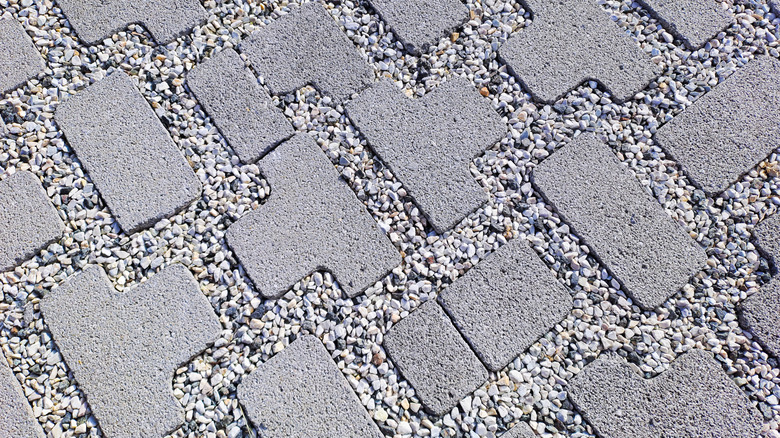
Unlike their traditional counterparts, permeable concrete pavers allow rainwater to pass through gaps between them and reduce the possibility of erosion. However, these pavers are just as durable as normal concrete, alongside being crack-resistant. Since the pavers can interlock with each other, they do not get displaced in heavy rain or fade easily. All you need to do is make sure the joints between the pavers stay clean and free of debris.
Ideally, the permeable interlocking concrete pavers design (PICP) demands sweeping of the surface about twice a year with a regenerative air sweeper to suck out dust and sediments from the joints. When present, you should also top up the aggregate material, like gravel or other types of stone in the joints, whenever its level goes down below half an inch.
With this kind of driveway, even if you neglect regular cleaning, you can power wash these concrete pavers to restore the permeability of the surface. Permeable concrete is also extremely suitable for cold regions, since it resists any damage from freeze-thaw cycles. Because the drainage of the material is so good, water immediately seeps through and does not freeze during the time it stays in the voids.