

The Classic Shrub With Colorful, Rose-Like Blooms That Thrives In Sunny Gardens
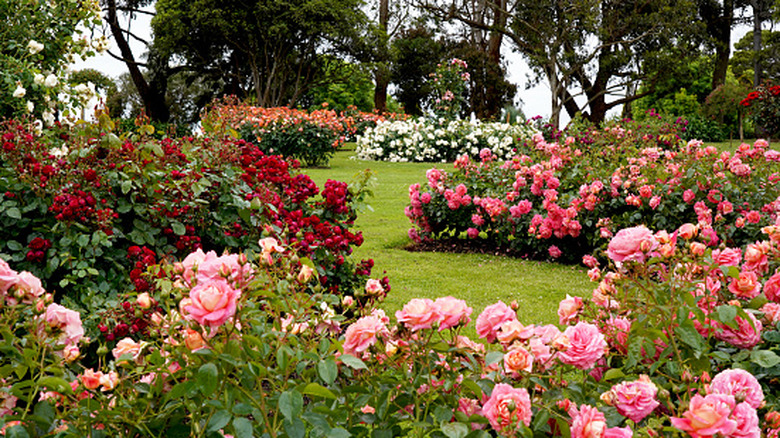
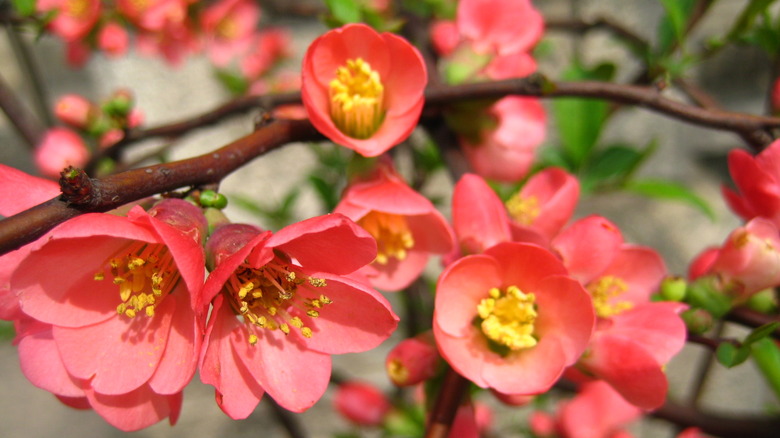
Roses are a classic garden addition, but we must admit, they are not for everyone. They are heavy feeders and are prone to numerous diseases, such as black spot and dieback. So, if your rose bushes are spending every year dying, looking sad, or generally causing you a headache, you may want to bring in something that has that classic rose look but without the drama. One low-maintenance flowering plant that will thrive in the sun and give us that rose vibe is the flowering quince (Chaenomeles speciosa). This shrub has beautiful blooms in shades of pink, red, and white, that are simple yet elegant, and really bring that classical rose look into your yard. Although most varieties are five-petaled blooms, there are stunning cultivars that have clustered flowers, such as Orange Storm (Chaenomeles speciosa 'Orange Storm'). These have more of that traditional rose shape, with their bold blooms really making an impact in a garden.
Flowering quince gets covered with blooms in March and April, with the flowers then making way for small, yellow-green quince fruit (although some cultivars, like the Orange Storm, do not produce fruit). They mature to a height and spread of around 6 to 10 feet, but you can keep them a more compact size by pruning. If you let it grow big, your flowering quince can become a beautiful privacy shrub or hedge and even serve as a nesting spot for birds.
How to care for flowering quince
You can plant flowering quince in USDA Hardiness Zones 4 to 8, with this shrub being incredibly tough and adaptable. They can grow happily in a wide range of soils, except in those that are overly wet or alkaline. Although your flowering quince will bloom more profusely in the full sun, it can tolerate some shade. Ensure that the soil is well-draining and aim to keep it moist when it is settling in. Once it has established itself, your flowering quince will be fine with some dryness.
In terms of ongoing care, flowering quince is pretty relaxed and tends to look after itself. As it blooms on old growth, you can prune it after flowering in the spring to maintain its shape and improve next year's blooms. This, however, will reduce the amount of fruit it will produce. To keep a compact shape, you can cut flowering quince back to the ground every three years. Root suckers may start to pop up around the shrub, so you may want to remove these to control its spread.
Although fairly hardy, flowering quince is susceptible to fungal leaf spot, especially during a rainy spring. If leaf spot is wreaking havoc on your plants, treat your flowering quince to ensure that it bounces back in the summer months.