

Level Up Your Kitchen Garden With 12 Helpful Tips From Martha Stewart

Nobody curates a kitchen garden quite like Martha Stewart. Even if your vegetable or herb garden isn't quite as expansive as hers, you can still take a few cues from the queen of homemaking herself. Whether you have a small window box or several raised beds, there are many things you can do to make the most of your tasty greenery. Small adjustments in maintenance or layout can have a surprisingly big impact on your harvest. Whether you're a beginning gardener or a seasoned expert, you will see rapid improvements by following consistent habits.
A kitchen garden is a small garden where you grow delicious vegetables, herbs, and fruits for cooking. Rather than just for aesthetics, these gardens have a practical purpose. If you're currently trying to optimize and properly cultivate your own kitchen garden, Stewart has several crucial tips. For a kitchen garden that produces a plethora of healthy greens and beyond, consider Stewart's professional advice.
Make sure to harvest and replant regularly
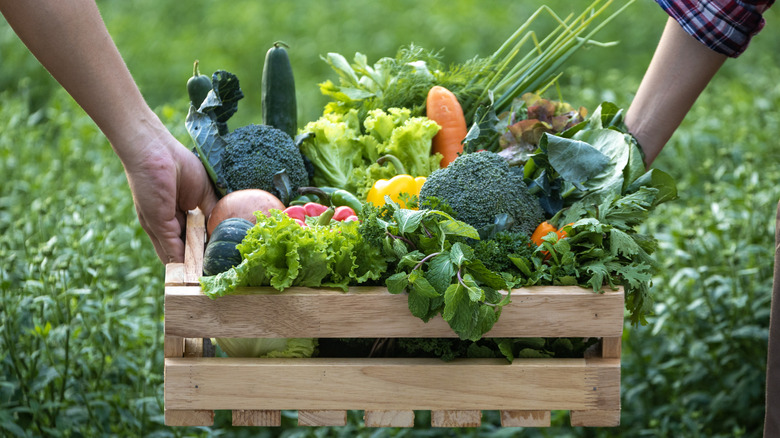
Once your garden has already been planted, the work doesn't end there. A healthy kitchen garden means committing to regular maintenance and regularly assessing your plants. Stewart is begging you to avoid the beginning gardener mistake of waiting too long to start harvesting. She writes on her blog: "In order to have delicious, beautiful vegetables, it's important to harvest and replant, check on what's doing well and remove what is not." Your crops are at a higher risk of rotting if you wait too long to collect your vegetables and plant new ones. Remember, your vegetables can always ripen on the counter — but they can get ruined if you wait too long to harvest.
It can be tricky to decide on the right time to harvest your vegetables from your kitchen garden. Bigger doesn't always mean better, and there's only one way to be sure that your herbs or vegetables are ready to take to your kitchen. The best method is to taste the fruits — or vegetables — of your labor! If you sample your plants, this will give you a good indication of whether they are ripe enough to pick. Don't forget to use this harvesting trick that will increase the bounty of your garden.
Keep your tomato plants off the ground
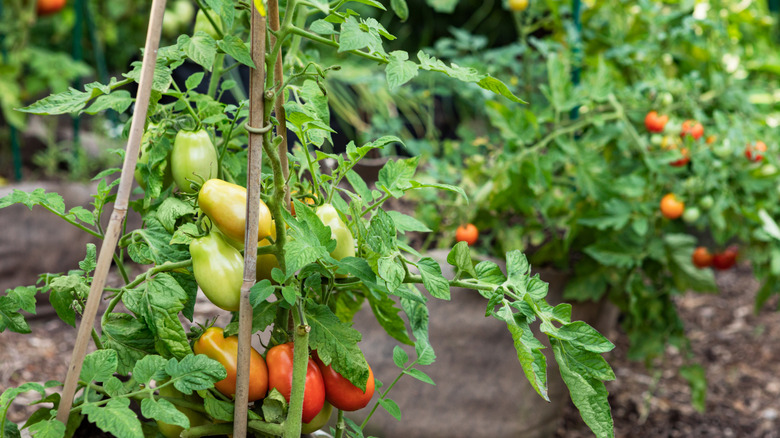
If your kitchen garden gets lots of sun – six to eight hours to be exact – tomatoes are a great cooking staple. However, it is crucial to make sure they aren't pressed against the soil. Stewart explains this tip on her blog: "My tomatoes are growing beautifully, and every single one is off the ground. Keeping tomato plants off the ground is important to prevent fruit rot and the spread of disease." Healthy tomatoes are an instant kitchen garden upgrade.
There are several ways you can make sure your tomatoes don't get too close to the soil. You'll need to use either cages or stakes to keep them from sagging down. An added benefit to propping up your tomato plants is that they will be harder for pests to reach. Stewart uses the staking method, and she shares this additional tip on her blog: "Each one is pushed into the ground about eight to 10-inches deep. The important thing is to place them deep enough, so they remain secure for the duration of the season."
Use different stakes depending on the weight of your vines
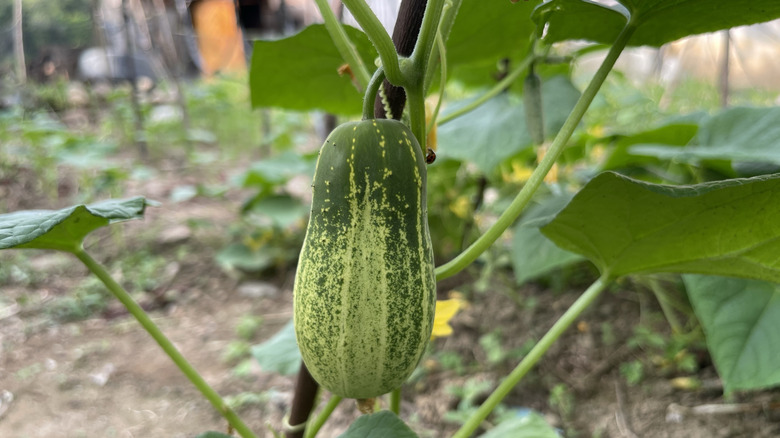
Speaking of stakes, Stewart recommends using different stakes for different kinds of vegetables. It all depends on the level of support they need. She elaborates on her blog: "I use bamboo stakes to support the vining plants. The horizontal and vertical canes are very sturdy. I also use bamboo for the peppers and eggplants — upright supports that are placed around all the growing plants." She goes on to say that she opts for wrought iron stakes for eggplants due to their weight. The right stakes will ensure healthy and happy vegetables.
In addition to the stakes, you can tether twine to the ends of each row to help support the branches of your heavier crops. There are a few other considerations to keep in mind when it comes to choosing the best stake for your veggies. If your garden is exposed to harsh elements, consider fiberglass stakes for optimal rot-resistance. For those who value an eco-friendly approach, follow Stewart's advice and go with biodegradable bamboo stakes. Keep in mind that the height of the stake should be somewhere between one-third and one-half of the full-grown stalk.
If you don't know which vegetable to grow, consider lettuce
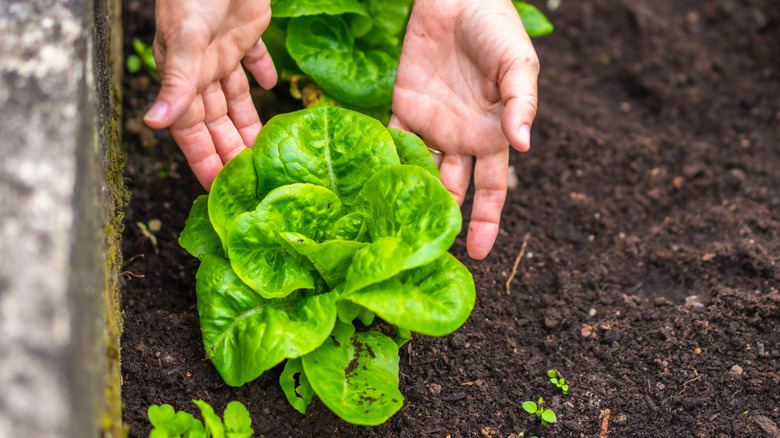
Whether you're ready to add your first vegetable to your kitchen garden or you're looking for an easy way to level up your existing selection, there's one vegetable Stewart recommends to everyone. In a YouTube clip, Stewart says, "A great vegetable to grow is lettuce. You can plant all kinds of lettuce, and there are hundreds of varieties. Lettuce is so rewarding because you can pick it as a leaf, or you can let some of them go to heads and get delicious, healthy greens for your salad bowl."
If you don't have a lot of space to spare, consider planting Monte Carlo romaine lettuce. They grow vertically rather than expanding outward, meaning they won't crowd your compact garden. If your priority is a fast-growing plant, Buttercrunch is a speedy grower and can be ready for your salad in as few as 28 days. To aid in your selection, check out these 10 heirloom lettuce varieties, perfect for a delightful summer harvest.
Master a manageable garden first and don't overexpand
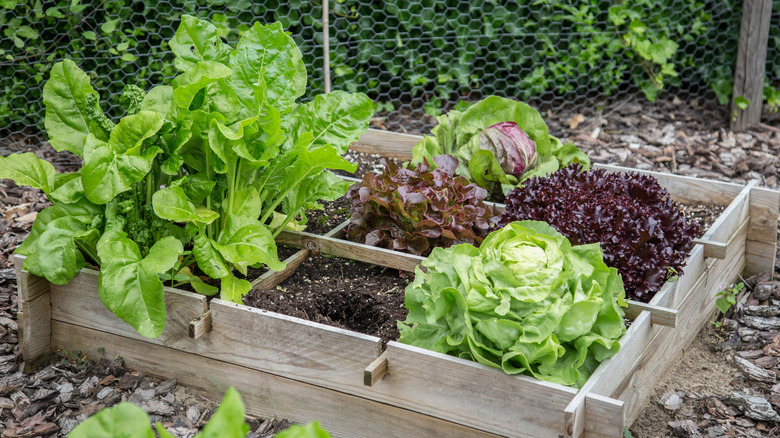
If you're struggling with space in your kitchen garden, don't get too ambitious. It's better to keep things sparse, instead of trying to add more vegetables and herbs. In a video on her YouTube channel, Stewart explains why a small and manageable garden is key: "The biggest mistake is starting too big. If you start with a smaller plot of land, you can really master the art of growing. Then you can get bigger and bigger and dig more and more and make a more elaborate garden." This tip can help you upgrade your garden in the future, without biting off more than you can chew.
A vegetable garden should be consistently productive, and overplanting can actually backfire over time. If your vegetables are ready all at the same time, it will cause waste in the long run. With fewer plants overall, you can focus on cyclical planting for a more consistent and controlled harvest. Start small and gradually add plants as others start to reach maturity. That way, your garden won't be crowded and you will ensure fresh veggies more often.
Don't forget to add berries for delicious jam and jelly
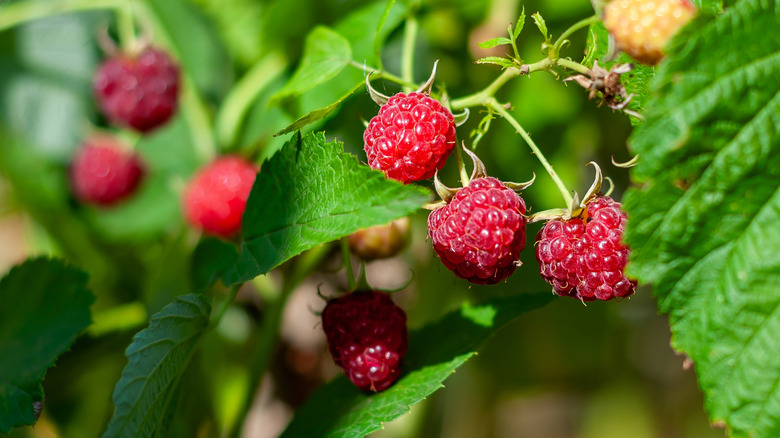
Vegetables are a great addition to your kitchen garden, but don't forget about how sweet treats like berries can take it to the next level. Stewart says in this clip from CBS Sunday Morning: "Every yard should have a berry bush or berry bushes. This makes the best jam in the whole wide world. Black raspberries!" Keep in mind that raspberries will only produce leaves in their first year, and fruits will likely start appearing in the second. Although they take a while to become fully established, they will keep producing fruit every year after.
Even if you're lacking space, you can grow berries in containers. Although Stewart recommends black raspberries, strawberries and other summer fruits are the easiest to grow in pots and containers. They can even thrive in hanging baskets if your garden is already full. Blueberries are also self-fertile, which means you only need a single plant to be able to produce a harvest. Before you start planting, make sure to review the pros and cons of growing berries in your garden.
If your space is small, adopt the French technique of thoughtful planting
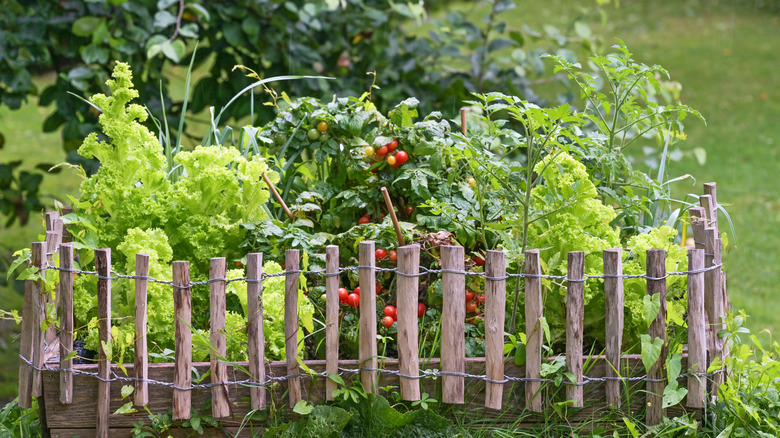
If you have a window box or balcony garden and you're struggling to choose the right plantings, Stewart recommends a genius method to make the most of your compact space. She explains the French technique, which prioritizes thoughtful planting. Stewart tells Homes & Gardens: "Potager is a little vegetable garden where you grow just enough for your everyday cooking. It's a very nice thing to do in this pot. Here we have a caprese salad growing, we have a tomato, we have our fresh basil. We even have a little bit of oregano. And when this is ripe and full-grown, you'll have meal to meal a lovely salad." She says that the only thing missing is the cheese!
Traditional potager gardens are meant to change with the months, so that you can harvest different vegetables according to what grows seasonally. In the summer, tomatoes and basil might be your focus, whereas in the winter, carrots and spinach may be the stars of your potager. You can also fill your small garden with flowers, as potager gardens can have aesthetic elements, in addition to prioritizing functionality. Don't be afraid to let your potager garden get a little messy, as an organic, unplanned appearance is a part of its charm.
Not all herbs should be watered the same amount
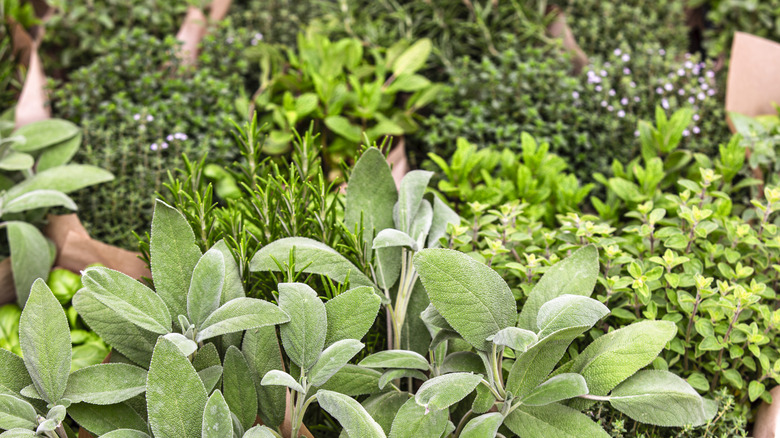
Although many herbs can grow happily beside one another, they shouldn't all be tended to the same way. Stewart warned TODAY viewers in this YouTube clip: "You have to be careful. Herbs don't need a lot of water, but they don't need to be starved of water either. A woody herb like a rosemary or an oregano needs less, they grow in rocks." She explains that rosemary, marjoram, and oregano grow organically on the rocky hillsides of Italy. Leafy herbs, like parsley, need much more water that reaches all the way down to the roots. A healthy herb selection is key to a successful kitchen garden.
To avoid over- or underwatering, consider the best companion plantings so that you can better control how much water your herbs are getting. Thyme and sage can both get by with minimal water and prefer well-draining environments. When it comes to herbs that require more regular watering, dill and cilantro are the perfect pairing. Basil and parsley also need frequent drenching. If your garden gets proper sunlight and you're trying to save water, rosemary and thyme are ideal companions. For those working with a very small herb garden, this is Stewart's guide to growing herbs in a windowsill.
Don't forget to keep clipping your herbs
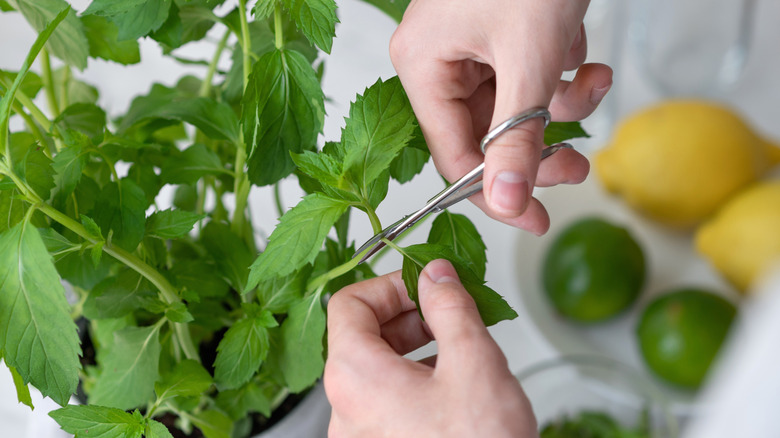
There's one detail Stewart pays extra attention to in her garden, specifically when it comes to tending to her herbs. Her advice is simple: If you don't clip your herbs, your kitchen garden will stop flourishing. Stewart explains this crucial tip for consistently healthy herbs in a YouTube interview for TODAY: "The more you clip the herbs, the more they grow. It's clip and grow, clip and grow," Stewart shares.
There are a few ways to trim your herbs to ensure healthy future growth. First, make sure to avoid using dull scissors. You can put your plants at risk for diseases if the cuts aren't clean. The other trick is to be careful not to over trim. Don't cut more than one-third of the plant and always maintain some visible leaves. Just like other plants, herbs can become leggy if not trimmed correctly. This is the most effective pruning technique that prevents your plant from becoming long and leggy.
Use mustard greens as flea beetle-repellant
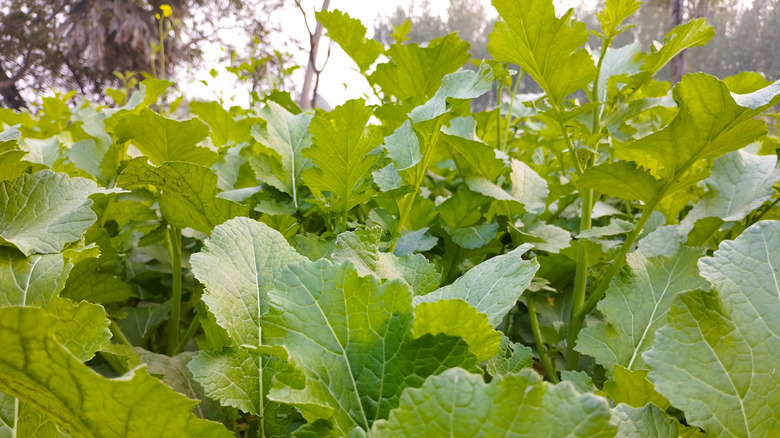
Stewart said on Martha Stewart that she plants mustard greens in between her cole crops like kale, Brussels sprouts, cabbage, and broccoli. She also specified that the mustard greens are a great trap crop for flea beetles. Stewart explains that the flea beetles go for the mustard greens first, which allows for the other crops not to get attacked by the pesky pests. This is a great hack to implement if you find that flea beetles are ruining your greens.
There are many benefits to adding mustard greens to your kitchen garden. Beyond repelling pests, they can produce many more leaves than other greens like spinach – particularly the Japanese Giant Red variety. Keep in mind that their flavor tends to be stronger when they are grown in warmer climates. After the harvest, you can actually chop up any leftover stems or greens and use them as pest-repellant in your soil.
Plant your mint separately from your other herbs
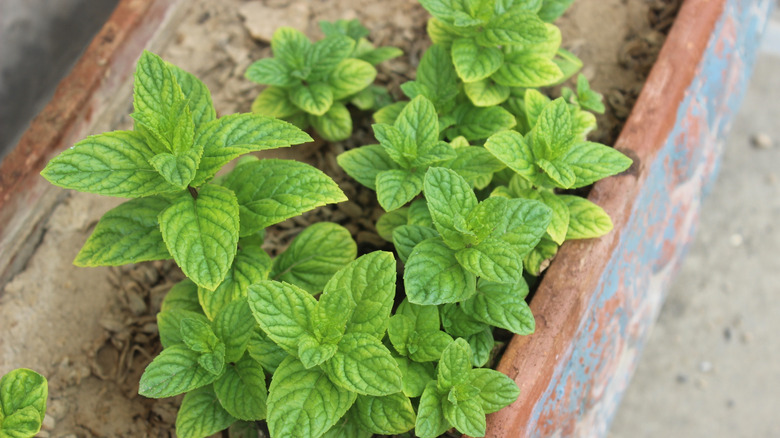
When adding new additions to your current herb garden, be mindful of each herb's neighbors. While a lot of herbs can play well together, mint is one of those tricky herbs that shouldn't be planted directly next to others. Stewart echoed this on Martha Stewart: "Our planter has rosemary, sage, parsley, thyme, oregano, basil, and chives — all readily available in nurseries and versatile in the kitchen. Any herbs can be used. If you want to grow mint, plant it on its own in the top pot, since it can overwhelm other herbs." Mint can be a great addition to your kitchen garden, but only if you don't let it take over.
As you're planning your herb garden, these are the five essential herbs Stewart grows in her garden (and what you should plant with them). As she mentioned, mint can be considered invasive and may overtake your other plants. You can, however, plant mint with lemon balm, since they are a part of the same family. Don't forget to divide your mint plants every year by cutting through the roots to create sections of the plant, and then planting the sections in new pots or empty areas of your garden to watch it multiply.
Make a map of your kitchen garden and keep track each year
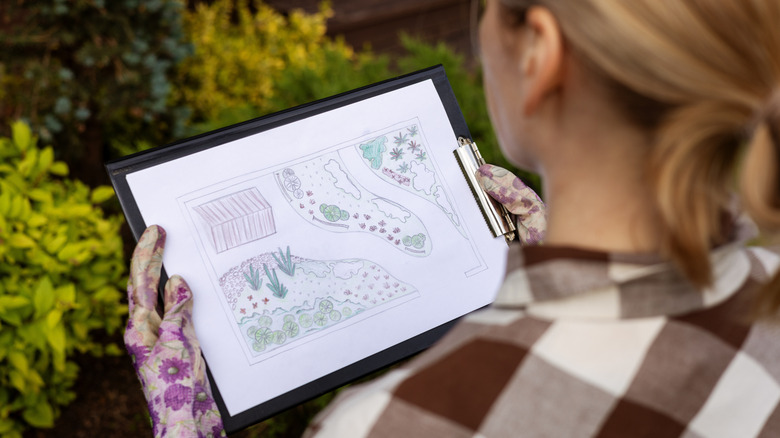
Don't wait until next year to start drawing up plans of your current kitchen garden. Stewart always makes a map of her garden, so that she can easily track what worked and what didn't in seasons past. She drills down on the importance of this tracking method in this YouTube interview on Miracle-Gro: "No matter how big your property, it's good to make a map of your vegetable garden. This is last year's, and keep a record!" This advice can help you upgrade your kitchen garden season after season.
There are a few easy ways to design your kitchen garden plan for the following year. In fact, you may want to create a plan multiple times a year if your kitchen garden changes based on the seasons. Make a list of each vegetable, herb, and flower that you want to plant based on its seasonal growth cycle. Once you've determined which plants you want to grow throughout each season, you can move on to sketching the actual layout. Try planting herbs and flowers around the perimeter and using your root vegetables to separate larger fruit and vegetable plants. The key is to keep notes based on what was successful and what wasn't during the season prior.