

It's Not Too Late: How To Revive A Pothos Plant
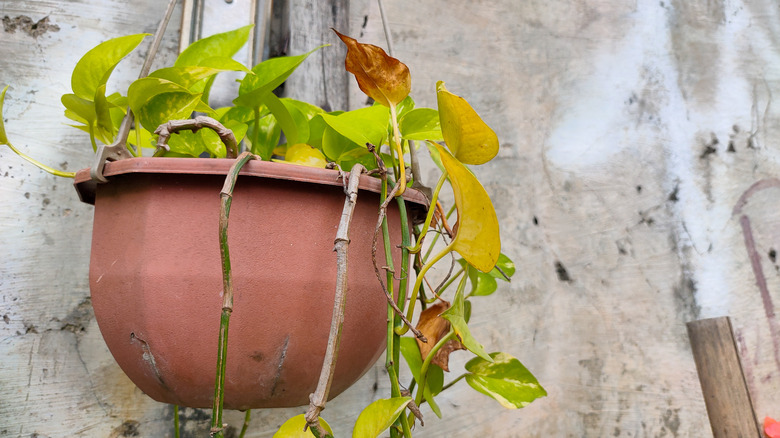
If you have a pothos plant (Epipremnum aureum) in your home, you may have been admiring it every time you pass your bookshelf, marveling at its ability to thrive despite neglect -– until, all of a sudden, it's not thriving anymore! A distressed pothos plant is a sorry sight, especially since they're known for being hard to kill. While there are several tips and tricks for saving your dying plants, in the case of a dying pothos, you need to immediately inspect the roots for signs of life, get rid of any lingering pests, and separate out the healthy stems. After you plant the healthy stems in a fresh, healthy potting medium, your pothos should rejuvenate.
Pothos plants belong to the arum family and are native to tropical forests. They're extremely easy to grow, a favorite among beginners because of their ease of care, and highly popular in North America. Ideally, a pothos plant will receive filtered light and high humidity, but it can be quite hardy in a range of environmental conditions.
Despite its hardiness, this evergreen climber can struggle if it doesn't get the right conditions for growth. Overwatering, underwatering, lack of drainage, lack of sunlight, and bad soil are some of the common reasons why you might find your pothos plant in a mess. Signs of a struggling pothos include yellowing leaves, wilting, drying stems, and stunted growth. Thankfully, there are measures you can take to bring it back from the brink.
Inspect your pothos plant's roots for signs of life
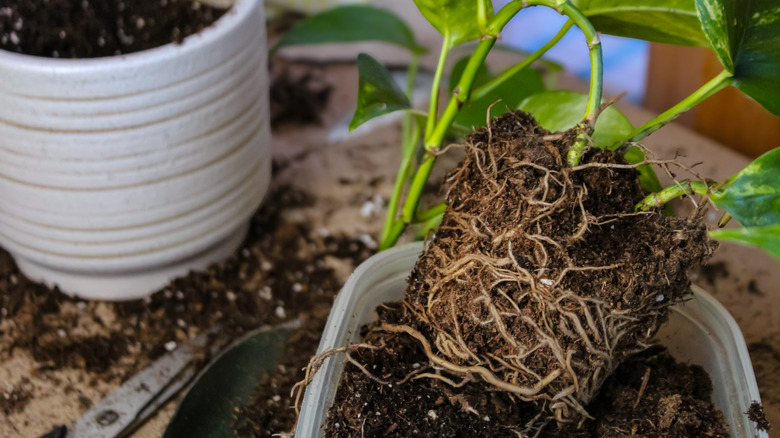
Whether you can successfully revive your pothos plant or not depends a lot on the state of its roots, especially if the plant has suffered from root rot. This is why you need to depot the plant and look for the presence of healthy roots in the potting mix. However, before you take it out of its pot, you should eliminate any dead parts of the plant above the soil. Take a pair of pruners and cut off all the dried leaves and stems. Make sure you do not disturb any stems that still seem green, healthy, and full of life.
At times, pests and infections can be a major cause behind a dying pothos plant. If you see signs of pest activity damaging the plant, such as spotted leaves with webbings, immediately treat the plant with a pesticide. You can also use a neem oil solution to treat it.
Next, gently pull the plant out of the pot and shake off the soil, then closely inspect the state of roots. Look for stems that have viable roots attached to them and separate them from the rest of the plant. Make sure you get rid of any rotten roots to prevent fungal infections on the fresh plant. If your pothos plant has been struggling due to overwatering, you'll need to use a pot with drainage holes when you repot it. Changing the potting soil is also important to avoid the possibility of fungal infections spreading from the previous soil.
Replant healthy stems with viable roots in a new medium
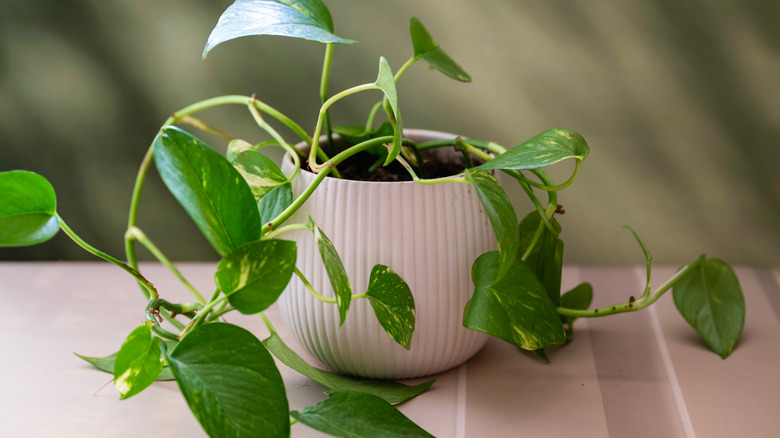
Once you've identified them, place the rooted stems in a bowl of water for about a day before putting them back in soil. This step is crucial since it allows the stems to soak up water before the plant pushes its energy downwards again for root growth. Otherwise, the leaves on the stems may wilt after repotting.
Once you're done soaking the stems, you can begin to plant them in a new potting medium. The composition of this potting medium will largely depend on the state of your pothos plant. For instance, if your plant has suffered from overwatering, you should include more airy substances like perlite, which will compensate for this flaw. On the other hand, ingredients such as coco coir, peat moss, and vermiculite can help increase moisture retention.
Once you've planted the stems, put the new pot or container in a cool, bright place. Make sure you water the plant thoroughly and replenish the moisture whenever the top few inches of soil dries out. You should begin to see signs of new life in the plant after a few days. And while you should definitely try to revive it, pothos plants are so easy to grow that you may also want to consider giving your dying plant a new life with propagation. This involves simply taking a few cuttings and growing fresh plants from them. It's an especially helpful solution if your current plant has deteriorated significantly, but still has a few green stems with viable roots and a couple of nodes for future growth.