

How Often Should You Visually Inspect Your Fridge's Water Line To Prevent Leaks
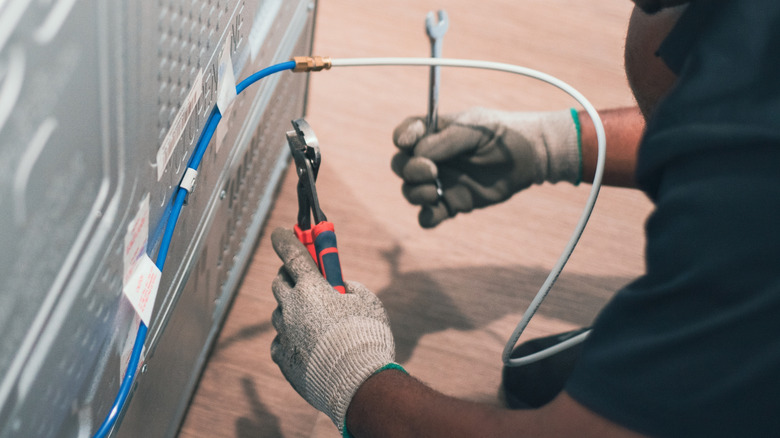
Doctors often recommend drinking plenty of water every day to maintain your health. Since buying single-use plastic bottles causes major problems for the environment, one of the best ways to get cold, refreshing water at home is to use a dispenser in a refrigerator. It's a more affordable option than bearing the cost of installing a whole-house water filtration system. When you use the built-in filter on the refrigerator's dispenser, it's important to understand the maintenance requirements for catching and preventing leaks along the water line. You should check your refrigerator's supply line every six months for the early signs of a leak as part of regular maintenance.
If the line develops a leak, it won't provide a warning. The line has constant water pressure, so it will continue leaking if the line cracks, even if you aren't making ice or accessing the drinking water dispenser. If you don't catch the leak quickly enough, it might damage flooring and walls, meaning you may need to perform major repairs.
To simplify maintenance when you have a water dispenser on the refrigerator and run a supply line to the appliance, consider avoiding a plastic line. If you're worried about forgetting to do maintenance twice a year, copper or stainless steel water lines will need less maintenance because they're leak-resistant. However, they cost more for the materials and installation than plastic.
How to check a refrigerator water supply line for leaks
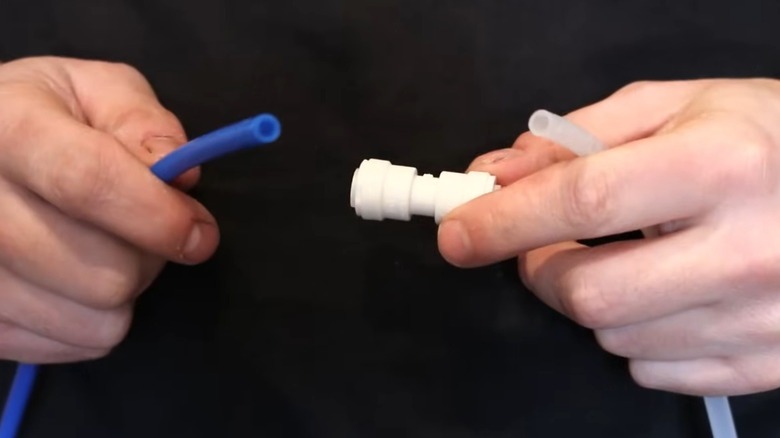
To determine if the refrigerator's water line is leaking, unplug the appliance and carefully slide it away from the wall. Gently run your fingers along the length of the line and feel the fittings and connectors, looking for any signs of moisture. Look for water spots or other signs of past leaks on the floor or drywall behind the refrigerator.
Next, check for loose connectors or damage to the line. Using your fingers instead of a wrench, ensure that all of the connectors are screwed tight. Inspect the line for any irregularities that indicate cracked plastic or kinked tubing. If the tube has a slight kink, you can potentially straighten it to prevent the pressure buildup that is causing (or will eventually cause) a leak. The safer option is to just replace the kinked line with the help of a professional or as a DIY job. Plastic water supply lines last only five to 10 years, so it may be time to replace it anyway.
At the same time you're checking for leaks, you should take steps for cleaning your fridge's water dispenser, replace any water filters inside the refrigerator, and clean the line by pouring distilled vinegar in it. Then, restore the water supply, and flush the line of all the vinegar before accessing ice or drinking water again.
How to reduce the risk of leaks in your fridge's water line
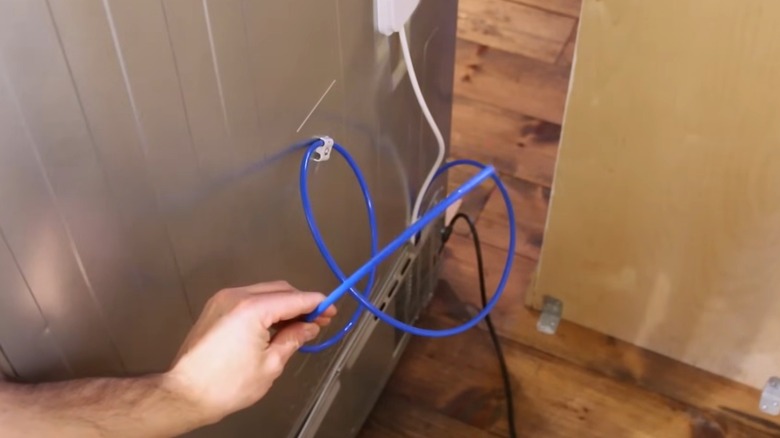
Beyond regularly inspecting the supply line, one of the surest ways to reduce the risk of leaks in the future is to hire a plumber when installing your refrigerator's water line. Some people feel comfortable installing a refrigerator water supply line as a DIY project. However, the plumber will ensure the connections are tight while preventing problems with leaks or blockages. DIYers might not have the plumbing tools necessary to manage the installation, either, especially if they have to tap into a copper water supply pipe.
Because plastic water supply lines are susceptible to cracking and leaking, you may want to consider using a copper or stainless steel water line, which has better durability. Use high-quality connectors with the copper or stainless steel line to reduce the chance of leaks from these parts; in other words, don't automatically select the cheapest connectors. When installing the line, make sure it has protection from becoming pinched in case the heavy appliance gets pushed backward toward the wall.
When deciding where to place the refrigerator and water line, be certain that there's no chance of the line freezing, or it could crack and leak. This shouldn't be a problem for most people, but if you're installing the fridge in an unheated garage or along a thin exterior wall, take steps to ensure the line doesn't freeze during winter by using insulation or a heat cable.