

11 Perennials To Fertilize In March For A Jumpstart On Your Spring Garden
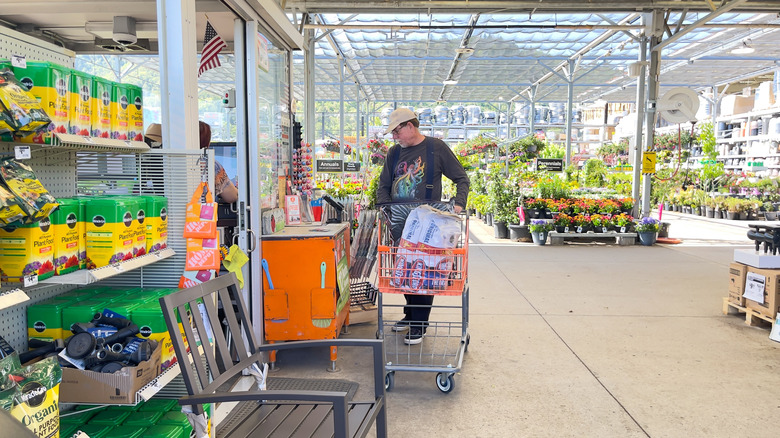
Most gardeners get excited when March rolls around. The garden is waking up from its winter slumber, and plants are starting to put out new growth. Early bloomers like daffodils are always a welcome sight, but in our excitement to see them, we often forget that some of our perennials are getting ready to bloom a little later in spring. While there are plenty of must-know tips and tricks to keep your perennials blooming longer, you don't often come across advice on giving them a bit of a jumpstart in spring. In fact, many of your plants — from roses and delphiniums to bearded irises, hostas, and astilbes — will benefit from an application of fertilizer in March.
While some perennials are happy to take their time, providing late-season flushes of spring growth, others are eager to get going. It's the latter that need an extra boost of nutrients to spur them on. Knowing the best organic fertilizers to use in spring for your garden is vital — you need a formulation with the right amounts of nitrogen, phosphorus, and potassium for the particular species you're feeding. At this time, applying a slow-release fertilizer is ideal. It will feed your plants for three to six months, depending on the product you use. First, focus on perennials that are considered heavy feeders, such as hibiscus, phlox, daylilies, hydrangeas, peonies, and dahlias.
Roses
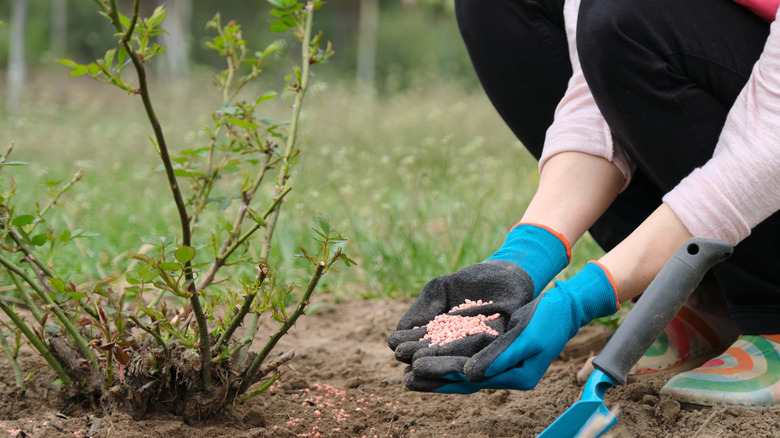
It's no secret that roses are heavy feeders. These flowering perennial shrubs and ramblers will definitely benefit from a good dose of fertilizer in March, just as they begin budding with new growth. Ideally, you'll want a balanced fertilizer with a 10-10-10 or 12-12-12 ratio to ensure new growth and plenty of blooms. Avoid anything too high in nitrogen, as this will encourage the plants to put on lots of green growth at the expense of flowers.
Hibiscus
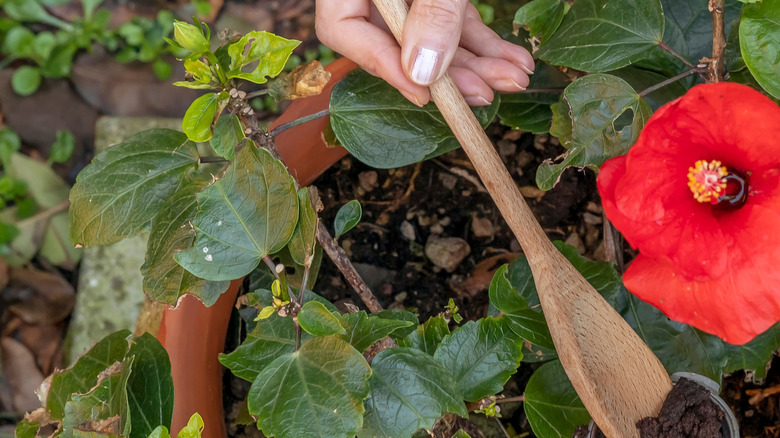
Nothing is quite as spectacular as those stunning hibiscus flowers that only open for a day and then close up and drop off again. To get plenty of vibrant blooms in summer, you'll want to feed your hibiscus with a balanced fertilizer — a 20-20-20 or 10-10-10 formula — in March. Then, continue feeding your plant every month through the rest of spring and into summer. This will ensure lots of healthy growth that can support the stunning flowers that will appear later.
Tall garden phlox
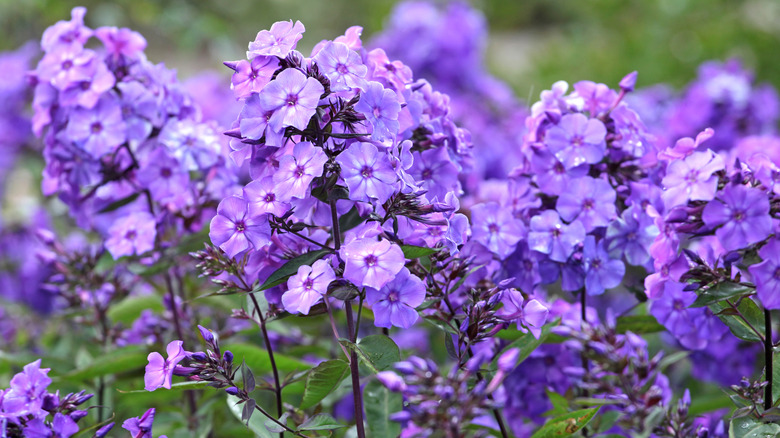
Garden phlox (Phlox paniculata) is a vigorous grower with long-lasting flowers in a variety of shades, including purple, pink, orange, and white. Since these plants grow to a height of 2 to 3 feet, they need sufficient nutrients to support all that tall, dense growth. Provide them with a balanced 10-10-10 fertilizer in March, and then add another application just before they start to flower.
Daylilies
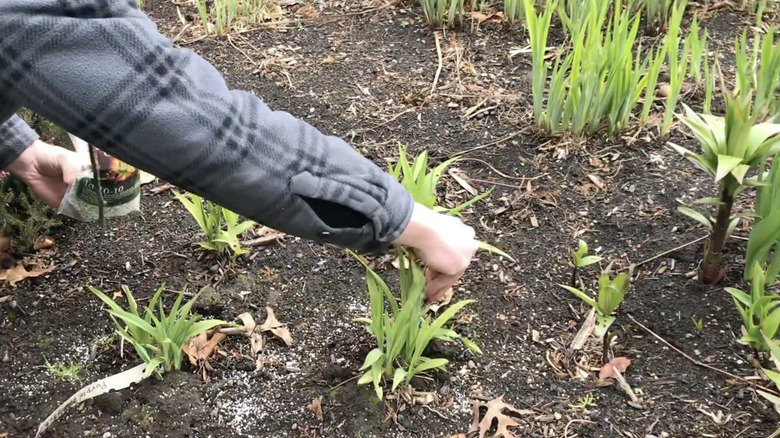
Colorful daylilies are a gardener's best friend because they reliably provide plenty of blooms for a long time and are pretty much trouble-free. They're drought- and heat-tolerant, and they're not bothered by most common garden pests. In fact, many gardeners think of daylilies as the perfect pair for their spring bulbs. To give these plants a spring jumpstart, provide them with a light application of slow-release fertilizer that has higher phosphorus and potassium and a moderate amount of nitrogen in March. Then reapply the same formula in midsummer.
Hydrangeas
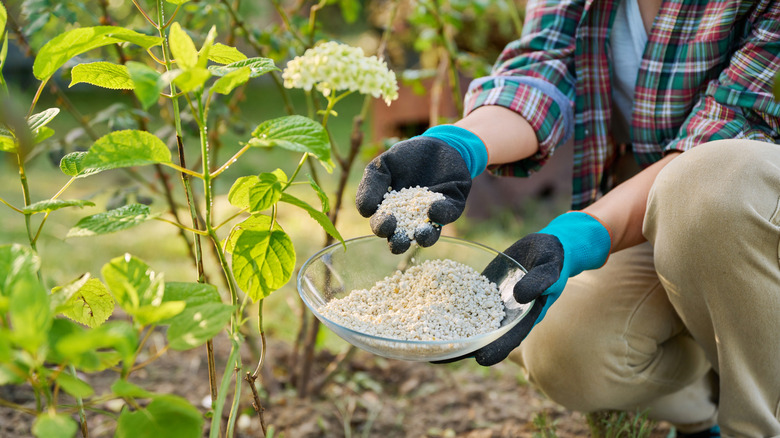
Do you prefer blue, pink, or white hydrangeas? Perhaps you have a non-color–changing variety? Either way, a hydrangea shrub is can help fill your garden with vibrancy if you look after it well. Giving these hardy perennials some nutrients in March will get them off to a good start where blooming is concerned. If you want blue flowers, your soil should be acidic. This makes the aluminum in the ground available to the plant, prompting a color change. Also, use a low-phosphorus fertilizer with a ratio of 12-4-8, as too much phosphorus can limit the plant's uptake of aluminum.
Peonies
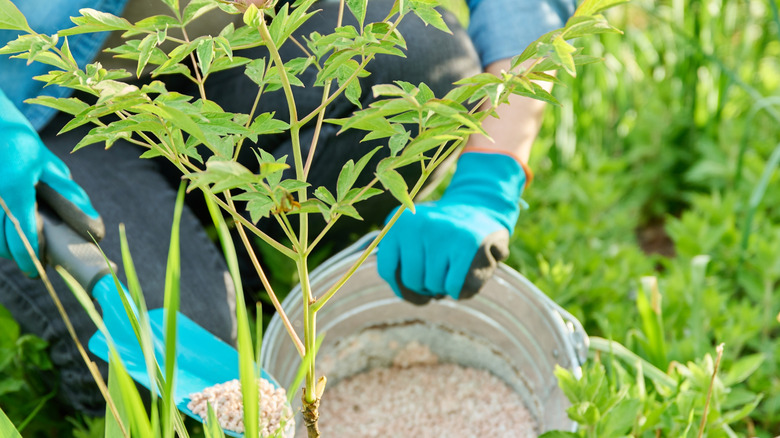
Peonies are delightful plants that will fill your garden with blooms without demanding too much attention. In fact, they can survive for many years with good care, and they are often passed along from one generation of gardeners to the next. To give your gorgeous peonies the nutrients they need to thrive, feed them with ¼ cup of a 10-10-10 slow-release balanced fertilizer in March and watch as they later put on a magnificent display. Just make sure you apply the granules at least 6 inches from the plant's crown, which is susceptible to fertilizer burn.
Dahlias
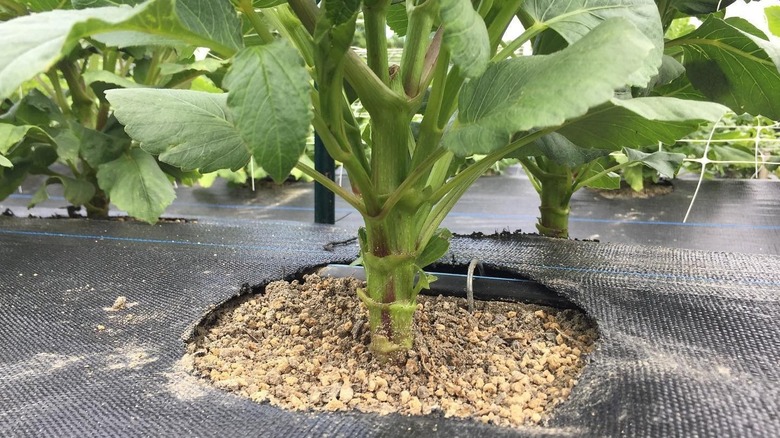
Dahlias are another one of those decidedly unfussy garden perennials that will spring back to life every year and reward you with the most stunning blooms. They require little care beyond full sun, well-draining soil, and a little plant food. There are even dwarf varieties that do really well in pots. New growth emerges from the underground tubers as soon as the ground warms, and that's when you want to give your dahlias a dose of low-nitrogen fertilizer. Too much nitrogen prompts the plant to prioritize foliage growth over flower production.
Astilbes
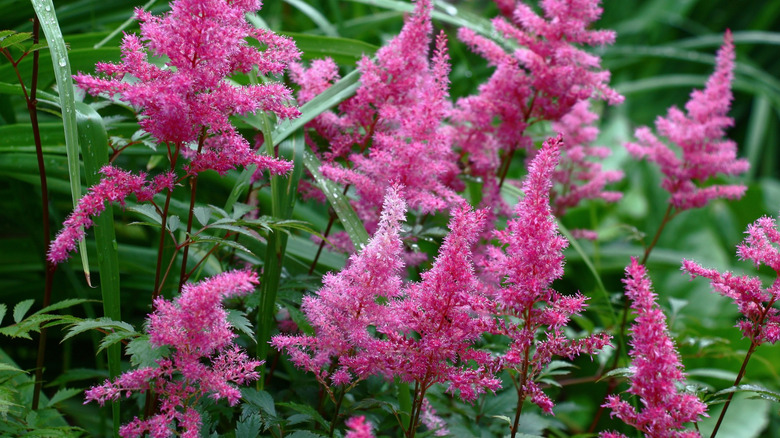
Astilbe (Astilbe japonica), also commonly known as false spirea, is an outstanding flowering perennial suitable for shady spots in your garden with plenty of moisture. Its daring floral plumes stand out dramatically against its soft, fernlike foliage. The perennial looks particularly beautiful when mass-planted. Astilbe is a heavy feeder and needs an application of balanced fertilizer in early spring (ideally, in March) and again in fall, which is when it sets its flower buds for next season.
Delphiniums
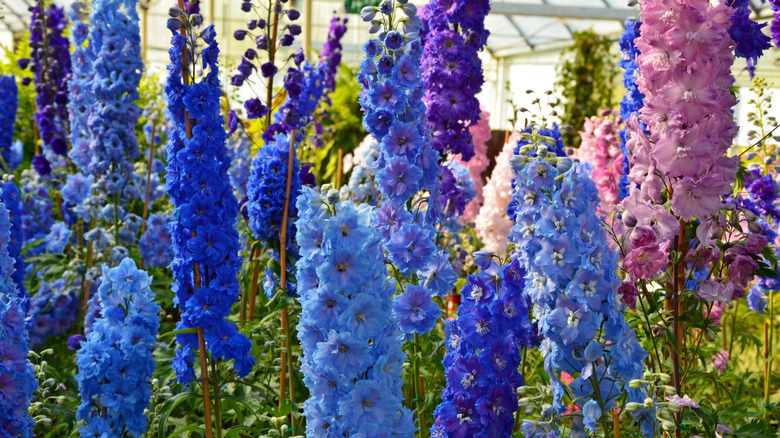
Nothing is quite as striking as a bunch of tall delphinium flower spikes adorning the back of a bed. The colorful inflorescences of some of these hybrid perennials reach 6 feet tall, making them a dramatic addition to any garden. If you're growing a tall variety, remember to stake your plant and give it a dose of balanced fertilizer in March to get it off to a good start for the growing season. Delphiniums are quite heavy feeders, so if you notice yellowing foliage or stunted growth, give them another application of fertilizer.
Bearded irises
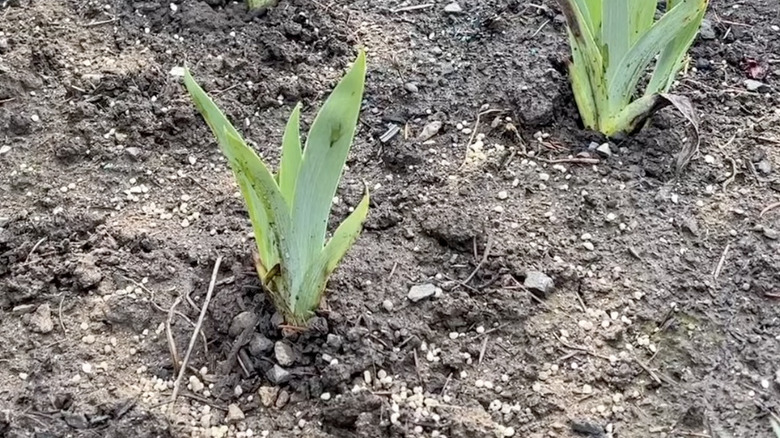
Come spring, avid gardeners check their bearded irises with bated breath to see how many flower stems are emerging. These rhizomatous plants — they're not bulbs, despite what many think — can be a little temperamental when it comes to blooming. They need the perfect planting spot and proper feeding. To give them a helping hand, apply a low-nitrogen fertilizer with a ratio of 5-10-10 in a ring around the plants in March, right when your irises are waking up after winter.
Hostas
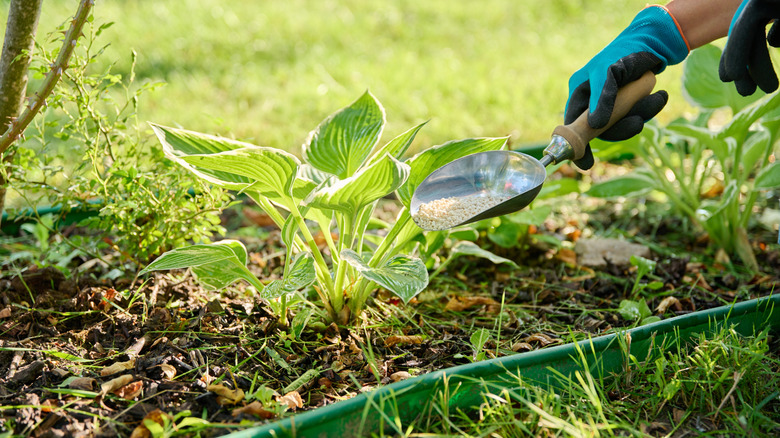
Hostas are primarily grown for their stunning foliage and are the ideal perennials for shady spots in your garden. They come in a whole range of leaf colors, and to keep those often large leaves looking lush, the plants benefit from an application of balanced slow-release fertilizer in March, just as leaves are starting to emerge. Bear in mind that these plants aren't heavy feeders, so use a light touch when fertilizing.