

Tips You Need To Avoid Damage During A Roof Reno
We may receive a commission on purchases made from links.
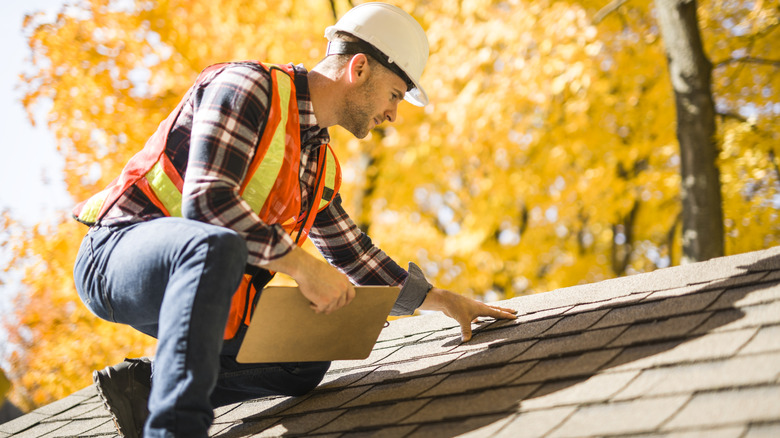
Roof renovations are notoriously messy and chaotic. From removing the old roof (and the avalanche of dust and shingles that comes with it) to hauling in heavy bundles of construction materials, the potential for a stray nail or roof tile falling into a flowerbed below is high. While this project is the key part of your home you should always splurge on in a renovation, even the pros cannot prevent incidental debris or intense vibrations. A roofing professional will take every precaution to minimize property damage, including draping protective tarps over landscaping and using a magnetic sweep to clear stray nails. However, there are also steps you can take as the homeowner to safeguard your property, valuables, and peace of mind throughout the process — covering landscaping features with tarps, removing artwork from walls, and parking cars on the road are just some examples.
There are three main zones of vulnerability to prepare before the roofing crew arrives: your home's landscaping, the perimeter of the home, and the attic. Knowing what to protect starts with a walk-around inspection of these zones, looking for potential hazards. You'll also need to ensure your children — particularly if they're very young — and pets stay out of those areas during the project. Falling hazards and sharp debris are inherent to construction sites, putting your smallest family members at risk of injury if they wander into the work zone. Should they stay or temporarily move out when you're renovating your roof? To ensure their safety, keep them indoors or relocate them to a safer home until the roofing and cleanup are complete.
How you can help prevent roofing renovation damage to your home
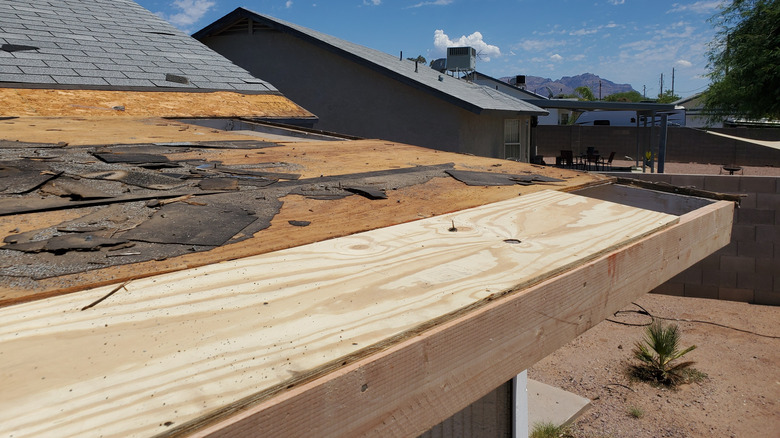
The cost to get a new roof is high; all homeowners should treat roof renos as major financial investments. Gravity ensures that anything that slips from a roof will land on the ground — or your belongings — below. Protecting your home during construction is your best defense against unexpected repair and replacement costs. Your home's landscaping is where most of the debris — like construction materials and old shingles — will fall. Mow the lawn before the tradespeople arrive. Cover bushes, flowerbeds, and immovable furniture with plywood or Xpose Safety Heavy Duty Mesh Tarp with Air Flow to prevent crushed branches and flattened bulbs. Move fragile garden décor, like unsecured lawn ornaments, indoors temporarily. A good rule of thumb is if you can lift it, move it.
Prepare your home's perimeter next. During a roof renovation, the area immediately surrounding your house becomes an active construction zone — damage can occur at any moment. Park your cars on the street or in the garage rather than in your driveway. Not only does this protect them from falling debris, but the contractors have space for their dumpster, supply trucks, and work vehicles. Roofing work creates heavy vibrations that can rattle a picture frame right off its hanger. Take down mirrors, wall art, and loose shelving on the floor closest to the roof. Finally, protect the interior of your attic — it could get very dusty, particularly if it's unfinished. Use plastic drop cloths to cover storage boxes and stored property. If you have an AC unit in the attic, wrap it, too, but not so tightly that it can't vent if it turns on.