

9 Shallow-Rooted Trees That Can Damage The Pipes In Your Yard
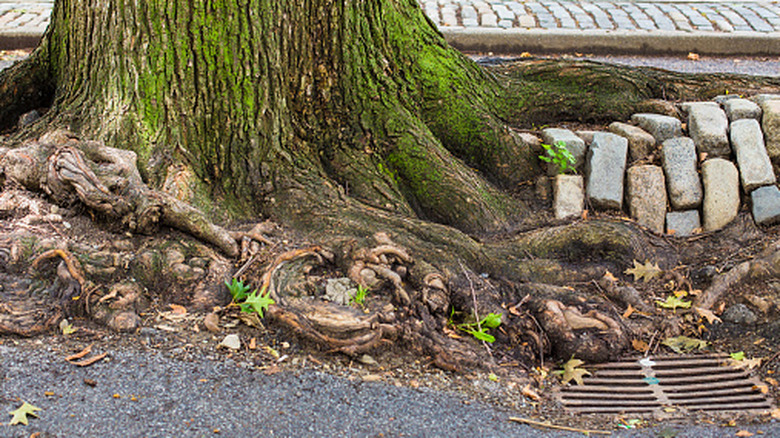
While growing large trees in your yard is beneficial for shade, aesthetics, and wildlife, there are some species you should keep well away from your house and perhaps avoid planting in your yard at all. The trees in question all share one feature — shallow roots that can damage your underground water and sewer pipes. Troublesome species include aspens, elms, poplars, silver maples, and oak trees, just to name a few.
Tree roots, like all plant roots, slowly dig through the soil, seeking out nearby sources of water and nutrients to support above-ground growth. Unfortunately, when these roots encounter older, weakened, cracked, or leaking pipes, they make their way inside, attracted by even just a little water escaping. This causes the cracks to open further and, in the worst case, the pipes to burst.
On top of that, tree roots in your pipes can cause blockages — a huge problem if we're talking sewer lines. Not only can the invasive roots of some shallow-rooted tree species damage your underground plumbing, but they can also damage landscaping and structures, such as paths, driveways, and even your home's foundations, which can crack as the roots grow. Careful planning and thoughtful species selection are required when choosing trees for your yard.
Quaking aspen
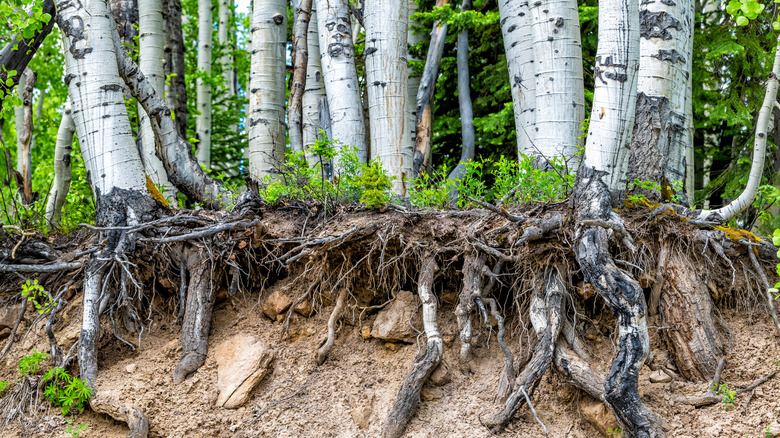
The quaking aspen (Populus tremuloides) is a native deciduous tree that can only survive in USDA Hardiness Zones 6 and below. These trees have extensive root systems that travel horizontally, sending up new saplings along their length. They also grow extremely fast, making them even more of a problem in a residential yard. Although they're quite unique, with leaves that flutter — or quake, per their common name — in the breeze, they're not an ideal tree for gardens with underground pipes running through them.
Elm trees
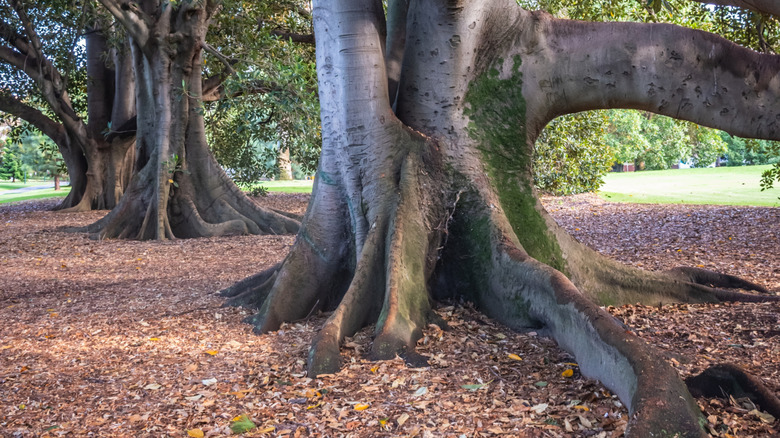
There are many elm tree species in the Ulmus genus, with the American elm (Ulmus americana) being native to eastern North America. These trees have a shallow, expansive root system with roots that thicken substantially as they age, giving them the potential to cause quite a bit of damage to underground pipes. In fact, American elms are rather notorious for their ability to seek and infiltrate both drain pipes and sewer lines. Avoid planting this species in your yard.
Poplar trees
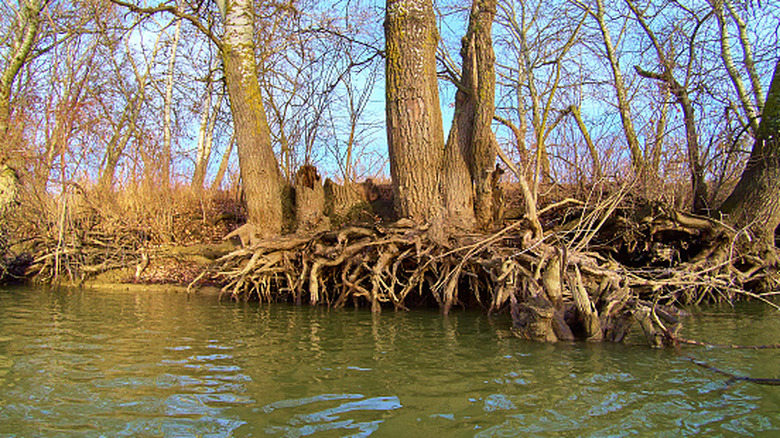
Although poplars (Populus spp.) are prized for their speedy growth and shade creation, they also unfortunately boast a vast, quick-spreading root system that can travel a long way in search of moisture. The wandering roots will damage your underground pipes — including your sewer lines — if they encounter them, as well as pathways and driveways. In other words, avoid planting these popular trees too close to your house. On top of that, poplar wood is dangerously brittle, meaning branches can break in heavy wind and ice, and some species are weedy, producing many root sprouts.
Silver maple
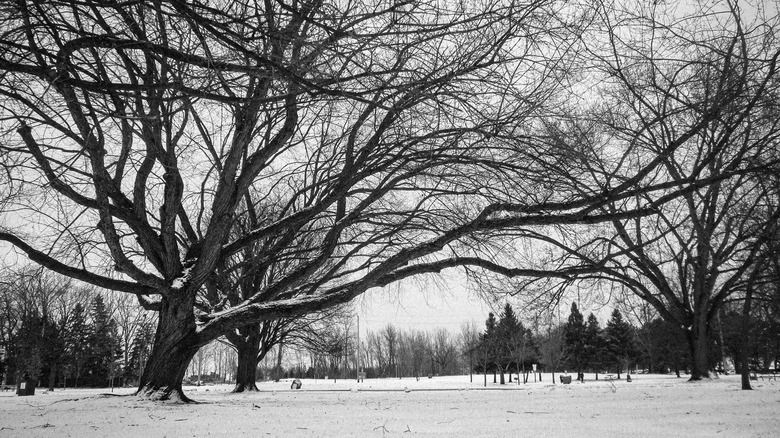
With a highly aggressive root system, the silver maple (Acer saccharinum) is another messy tree that you never want to plant in your yard. Its shallow, invasive root system will seek out your pipes and even septic systems. While this is quite a majestic tree that can grow 80 feet tall, it does far better when planted in wide, open areas away from homes. There, its roots have no chance to cause damage to infrastructure, including pipes and paths. If you really want a maple, consider the Freeman maple, which is a less-invasive hybrid.
Oak trees
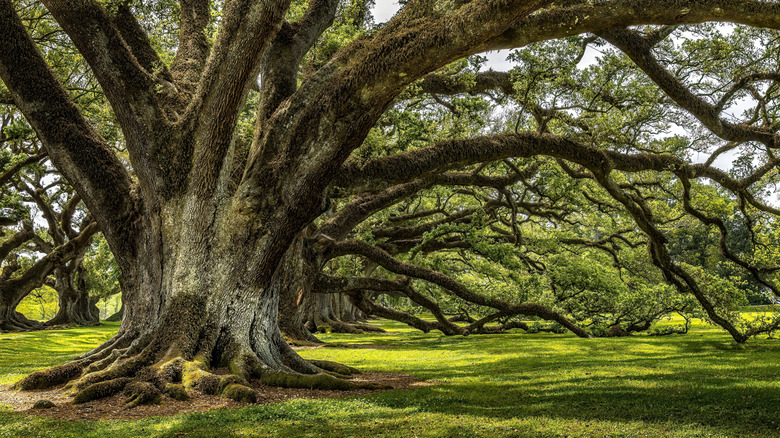
There's nothing quite as majestic as a fully grown oak tree (Quercus spp.), whether it's a native species, like the American white (Quercus alba) or red (Quercus rubra) oak, or introduced species, like the bewitching English oak (Quercus robur). Even though these magnificent trees are loved by many and will grow to a ripe old age, their shallow, lateral-traveling roots become quite thick over time and can cause damage to older underground piping near homes.
Sycamore trees
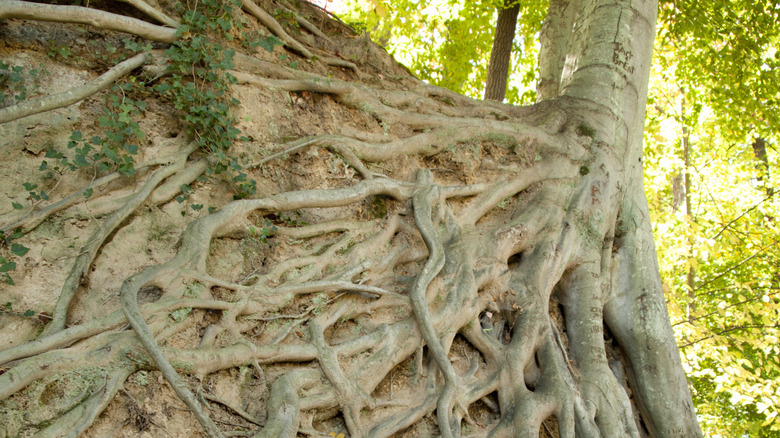
Although sycamore trees (Platanus spp.) are wildly popular due to the gorgeous shady canopy they grow relatively quickly, they also have an aggressive root system that can be hazardous for your underground plumbing. Apart from this, the trees also have a tendency to shed twigs and the small, fibrous fruits, which can make quite a mess of your lawn and landscaping. Thankfully, they grow too big for most backyards, reaching heights of 175 feet in ideal conditions.
Willow trees
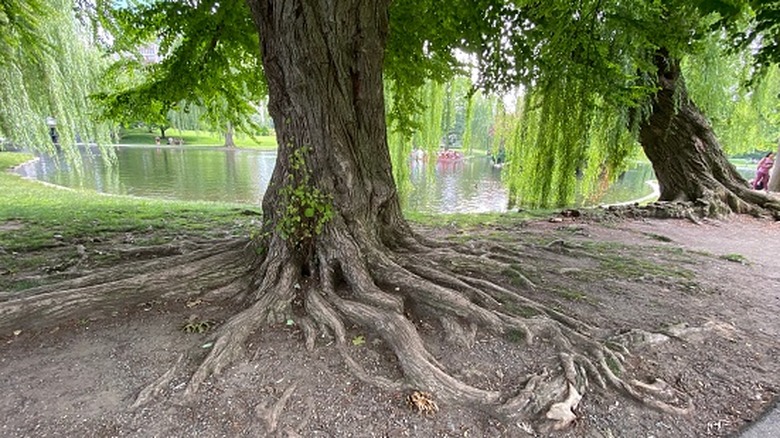
Willow trees, in the Salix genus, are a common sight along riverbanks and other waterways across the U.S. Their wide-ranging, interlacing root systems help to hold the soil together and prevent erosion. While that might sound helpful, willow roots, which are quite fibrous, also thrive in the damp, making them a poor choice for urban yards. If they're not planted in soggy enough soil, they will infiltrate — and damage — your underground pipes for the water they need.
River birch
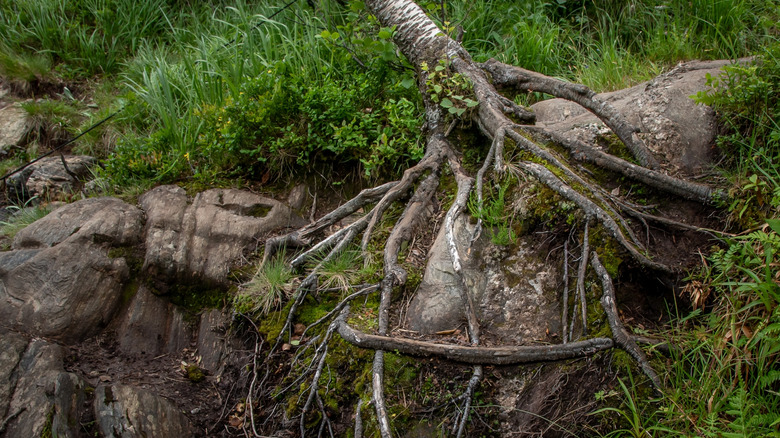
The river birch (Betula nigra) is also called the water birch for good reasons. It's a North American native tree that, as its name implies, particularly enjoys wet soils. It's often found growing along the banks of streams and rivers. This tree has shallow roots that aggressively seek out water. If your sewer lines or underground drainage pipes have even the tiniest cracks, they may be invaded. Although this is one of those fast-growing trees that will thrive in damp soil, you'll definitely want to keep it well away from your plumbing.
Magnolia trees
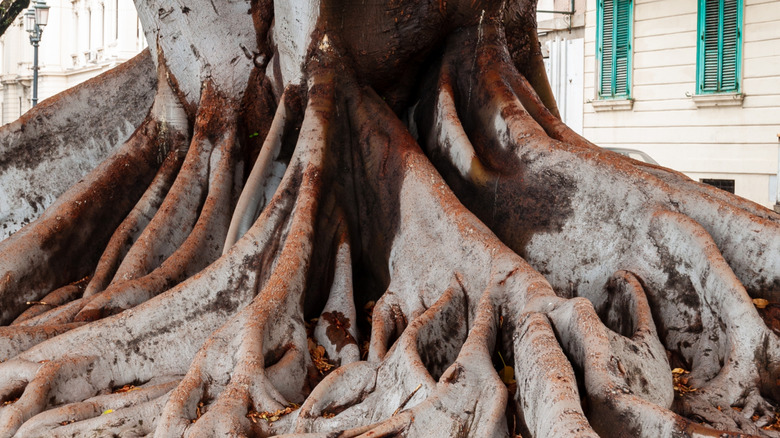
There are many species of magnolia (Magnolia spp.), with some native to the U.S. Although magnolias are popular garden plants, you should carefully consider growing a species that sprouts into a large tree. They tend to have thick, strong, rope-like roots that grow close to the surface. If these water-seeking roots come across underground drainage pipes with cracks, they'll quickly work their way inside. If you love magnolias and their stunning blooms, it's best to stick to smaller, shrubbier species and hybrids and plant them well away from your house.