

Think Twice Before Putting Coffee Grounds On Seedlings
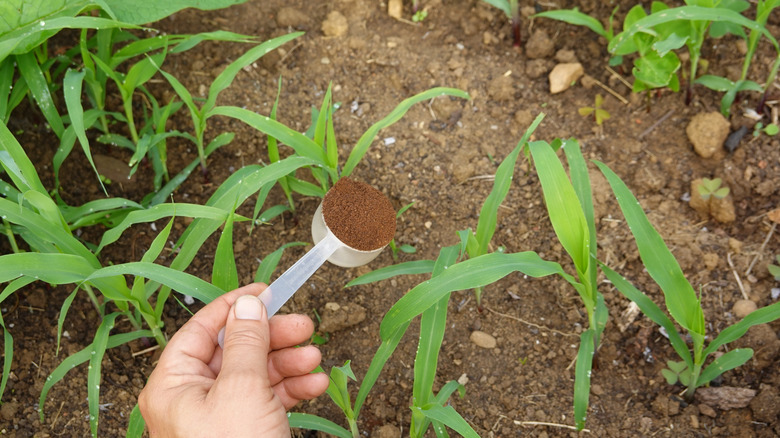
Like other gardening practices that are considered beneficial by some and harmful by others, the use of coffee grounds for improving plant health is heavily debated. Whether the practice is right for you or not depends on many factors: the plants you're using them on, how much you're using, and the application method. You can use coffee grounds in the garden effectively — they can be great for composting and mulching, for example. Coffee grounds are an essential addition to your vase of flowers if you want to prolong their life. However, using them on seedlings numbers among the things you should never do with coffee grounds around your garden. Coffee grounds contain allelopathic chemicals that can hinder plant growth. When pre-decomposed, they can also limit a seedling's access to nitrogen, air, and fertilizer in the soil.
Coffee grounds — which are, as the name suggests, ground and brewed coffee beans — have a lot to offer to gardeners. They contain nutrients like nitrogen, phosphorus, and potassium in small amounts, all of which are essential for healthy plants. Using coffee grounds in gardening solves the problem of their disposal, too. You keep something biodegradable out of your trash can and eventually a landfill. However, you need to be careful about using coffee grounds in the garden in certain cases. For instance, plants, such as rosemary, lavender, and thyme (and, in fact, many other Mediterranean plants), may not react well to a sprinkling of acidic fresh coffee grounds near their roots. It turns out that coffee grounds may do more harm than good to seedlings, too, though for a different reason.
Coffee grounds contain allelopathic chemicals that may hinder seedling growth
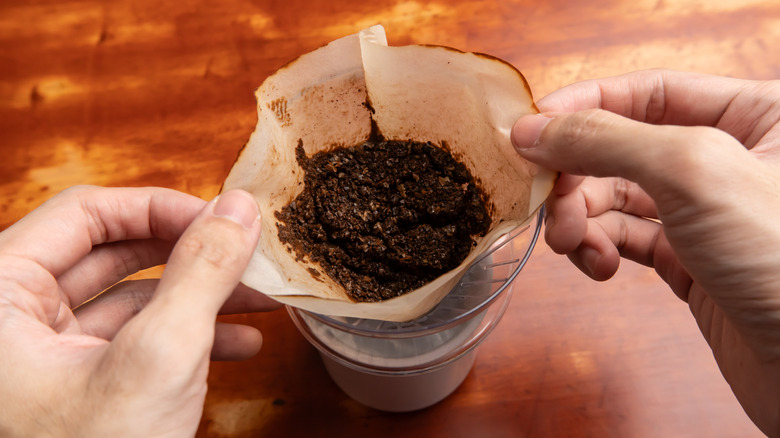
Coffee grounds contain several allelopathic chemicals, such as caffeine, tannins, and phenols, that may inhibit plant growth — they act as natural herbicides. In fact, coffee ground extracts are being explored for their potential as a natural weed suppressant. As described in "The Question of Caffeine" (2017), researchers found that caffeine disrupts cell division processes and in-vitro germination in lettuce and tomatoes. Furthermore, the scientists behind a 2020 study published in Bio Web of Conferences found that a 0.1% or higher concentration of caffeine inhibited root formation and shoot growth in Rubus species seedlings.
It's not just plant growth that's affected, either. Even if your seedlings survive an early fresh coffee ground assault, allelopathic chemicals may also inhibit seed germination, photosynthesis, and reproduction, threatening long-term plant survival. Coffee plants produce these chemicals to reduce pest predation and competition from nearby plants, but they can be less than helpful in a garden setting. Since all seedlings prioritize root formation and photosynthesis for rapid establishment, adding coffee grounds to the soil may be detrimental and, ultimately, counterproductive to your overall gardening goals of an abundant backyard.
Fresh coffee grounds can reduce available nitrogen for seedlings
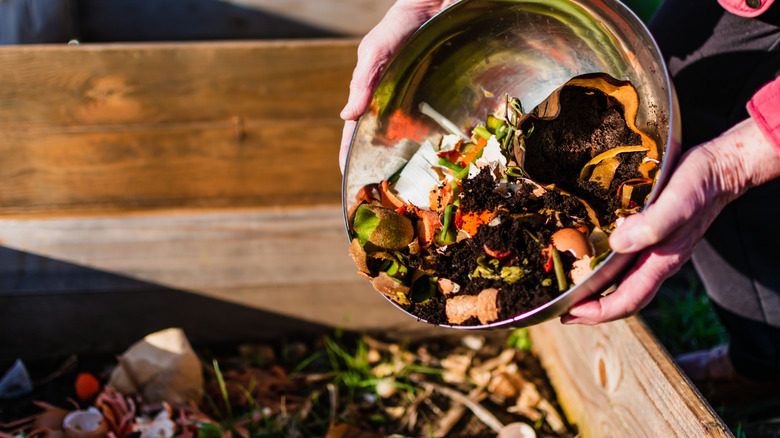
The disadvantages to sprinkling leftover coffee grounds on your lawn and garden aren't just chemical. However, when applied to a patch of freshly sown seeds in high volumes, coffee grounds can clump together or compact, forming a barrier against air, water, and fertilizer. The soil dries out and the quality deteriorates, quickly becoming less habitable for any emerging seedlings. Like the aforementioned Mediterranean herbs, seedlings also aren't fans of the high acidity content of fresh coffee grounds. It can burn their roots. In short, the solution lies in composting your coffee grounds before using them on seedlings.
While decomposed or composted coffee grounds are largely beneficial for garden soil, fresh coffee grounds may make nutrients less, not more, available to your seedlings. Although this organic waste product contains nitrogen, it's not available to plants in its current form. Seedlings rely on nitrogen for leaf development, especially after their first set of true leaves emerges. A deficiency can lead to lackluster growth. If you sprinkle fresh — not decomposed — coffee grounds around your seedlings, microbes will get to work breaking them down, using the available nitrogen (temporarily) in the process. The results of a 2016 study published in Urban Forestry and Urban Greening found that directly applying coffee grounds to broccoli, leek, radish, viola, and sunflower negatively impacted their growth.