

How To Attract Birds Based On What They Eat
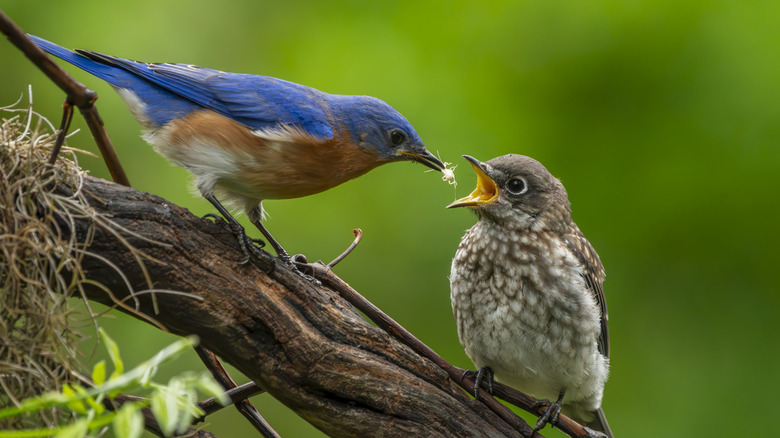
Unfortunately, attracting more birds to your yard isn't always as simple as filling your feeder with seed and calling it a day. While plenty of common backyard birds will gladly stop by and thank you for your efforts, there are lots of others who are decidedly more particular about what — and where — they eat. Hummingbirds, for example, need a steady source of nectar, and if you're hoping to encourage boldly-colored birds like blue jays, then a trayful of nuts is likely to bring them to the yard
Of course, food is just one piece of the puzzle when it comes to attracting birds, and if your yard doesn't offer your chosen species' preferred type of habitat, then honestly, it doesn't matter what you put out for them to eat. But if you're confident that your garden is suitable, then what you feed — and the way in which you feed it — is absolutely critical. Don't worry, though. Whether you're hoping to welcome hummingbirds, craving the sight of cardinals, or tickled by the sight of tufted titmice, this guide will help you focus your feeding on the species most special to you.
Hummingbirds will return to a decent flower bed year after year
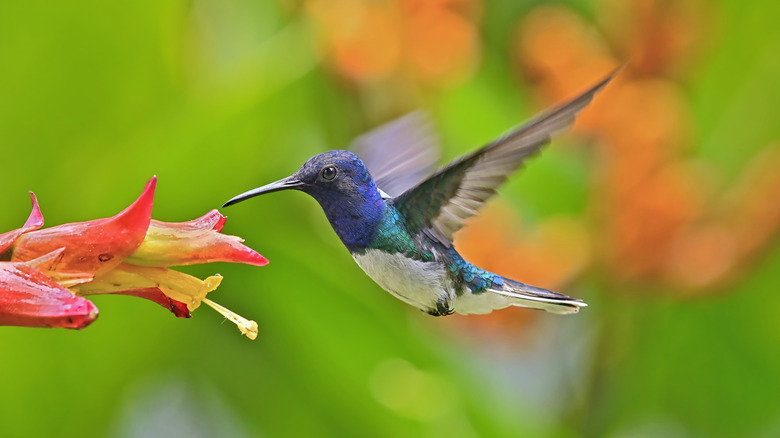
Look us in the eye and tell us that you don't want to attract more hummingbirds to your garden. You can't, can you? These enigmatic little hummers have captured the imagination of American gardeners for time immemorial. Their constant flitting between flowers is amazing to watch, and when you realize that they often travel thousands of miles each year in order to feed and breed in your yard, their presence can feel like a real stroke of good fortune. But is it really just good luck?
In fact, hummingbirds have been shown to have an impressive memory, and despite the long distances that they often traverse each year to breed, they frequently return to the same feeding grounds. This means that if you get your planting scheme right, you could end up welcoming the same breeding birds each and every year. To do this, you want to focus your efforts on growing nectar-rich, hummingbird-friendly plants, like bee balm (Monarda) and honeysuckle (Lonicera spp.). It can't hurt to throw in a hummingbird feeder, either; hummingbirds need to feed roughly every 10 to 15 minutes, so the more food your yard offers, the better.
Orioles may also thank you for hanging a hummingbird feeder
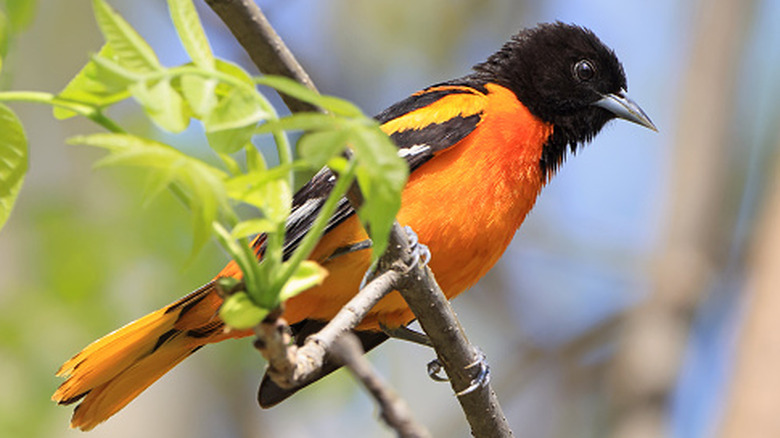
Hanging a nectar feeder is not only one of the top tips for attracting hummingbirds into your garden — it's also a great way to attract orioles. In fact, these birds have something of a sweet tooth, and as well as nectar, are also rather partial to a number of fruits and berries. This makes it a good idea not only to keep your hummingbird feeder topped up, but to also lay out a spread of different fruits. You could even create a DIY oriole feeder with an old garden rake and an orange.
Now, in order to stand a chance of encouraging orioles year-round, it's important to match the way in which their diet changes seasonally. They usually return to the United States during the spring, which is when they're most likely to feed on nectar. In order to ensure they visit your nectar feeder when they return, make sure you offer them a sturdy perch. These birds are larger than hummingbirds, and they can't simply hover while they drink. You should also ensure the nectar is accessible for orioles; their beaks are shorter and stubbier than hummingbirds, so you may need to remove the bee guards in order to give your visiting orioles a fair chance of feeding.
Set out seeds, cracked corn, and fruit on a tray to attract cardinals
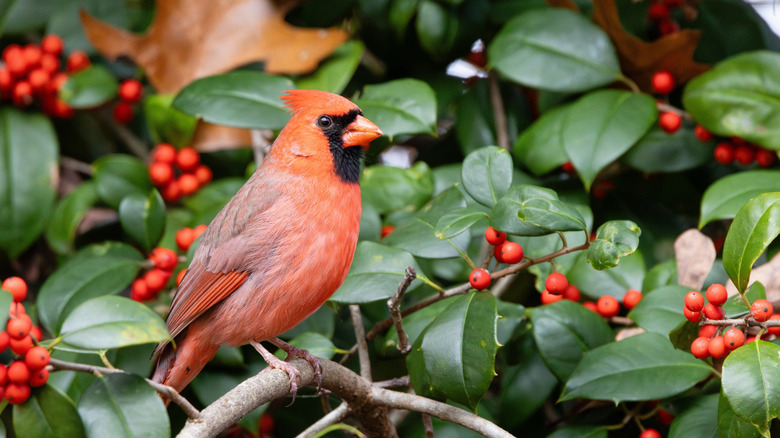
If you've been putting out a banquet of berries and fruits in your yard in the hope of attracting cardinals, then you're on the right track. But the diet of this magnificent bird goes well beyond the fruit bowl. To make your garden irresistible, you need to supplement these sweet treats with a variety of seeds and cracked corn. You also need to be mindful of exactly how you present them.
Using the wrong feeder is one of the cardinal mistakes when trying to attract these birds. Their natural feeding behaviors see them scavenging for food items, either on the ground or in low-lying shrubs and bushes. And while they're omnivores (which means they're largely unfussy when it comes to food), a feeder suspended in your trees is unlikely to inspire their culinary confidence. Instead, it's best to put out food items like seeds, cracked corn, and fruit on sturdy, low-level trays or platform feeders.
A growing population of rodents may be enough to attract owls to your garden
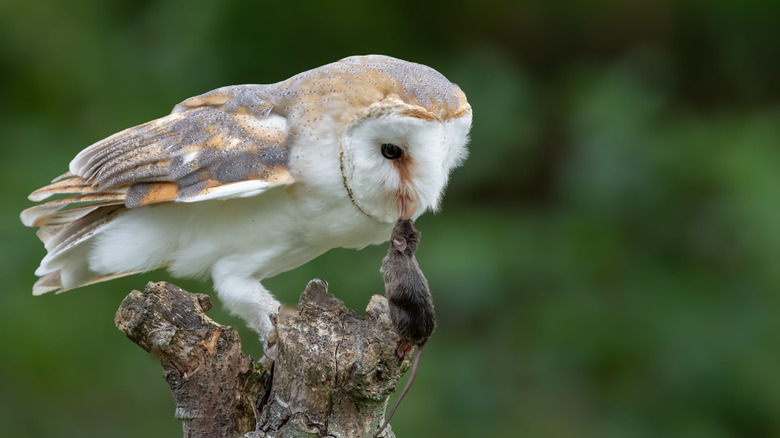
The first thing to mention here is that if you don't already have rodents in your garden, you shouldn't start trying to encourage them. Doing so could lead to all kinds of problems — in fact, they're among the most damaging pests to have around your home. However, if you have owls in your area, and you've started to notice rodents around your property, then attracting owls into your yard can be one of the most effective ways of controlling them.
In fact, a single screech owl can eat over a thousand mice in a single year, and a barn owl can eat up to 12 in a single night. Just imagine how many they can get through once they're trying to feed a family! The key to capitalizing on these numbers is to make your yard as owl-friendly as possible. You could install nest boxes in your trees, for example, while ensuring that any lights around your garden are switched off. And if there's a chance that owls may start to swoop in and eat your rodents, you should avoid laying poison at all costs.
Blue jays are omnivorous, but they're particularly partial to nuts
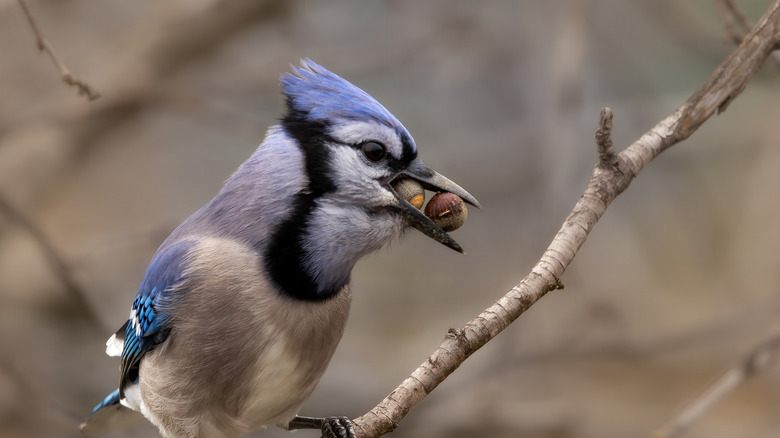
Anybody hoping to attract blue jays into their yard have several types of food to choose from. These birds are omnivores, and will gladly feed on insects, seeds, fruits, berries, and even small amphibians. The trick is to use the right type of feeder for blue jays, which, given their size, and their preference for flat, stable surfaces, is usually a tray or hopper.
That's not to say that you can't make a visit more likely by favoring certain foodstuffs. While blue jays are generally unfussy, they are also particularly partial to nuts. In fact, nuts often provide up to 40% of a wild blue jay's diet, which means that if you're not already mixing nuts into your feed mix (and you've yet to see a blue jay visit your garden), then it might be time to make a change.
Plants with small seeds will be readily foraged by goldfinches
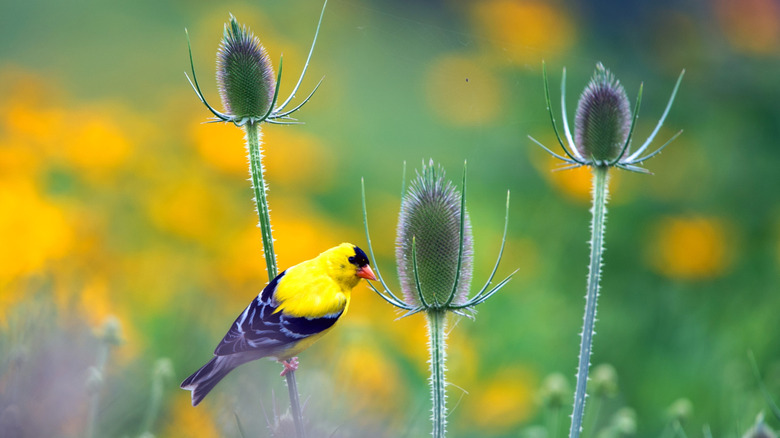
Who doesn't want to attract more goldfinches into their garden? Known and loved for their striking colors and their cheerful, spirit-raising songs, goldfinches are also incredibly acrobatic. Watching one from your kitchen window is enough to make all of that hard work in your yard worthwhile, however, in order to have a chance of attracting goldfinches to your yard, it's important to choose the right plants.
Like other birds, goldfinches are more likely to visit your garden if there's a chance of finding a good meal. They prefer to eat small seeds, which means you should fill your feeders with items like sunflower seeds and nyjer. Alternatively, if you're hoping to cultivate a beautiful garden for yourself, while also putting on a feast for your local finches, they've been known to favor the seeds of various colorful flowers. Zinnas, asters, and coneflowers are all good options to grow, and if you have dandelions or thistles in the wilder parts of your yard, consider leaving them in place.
Adding worms to your garden is sure to attract American robins
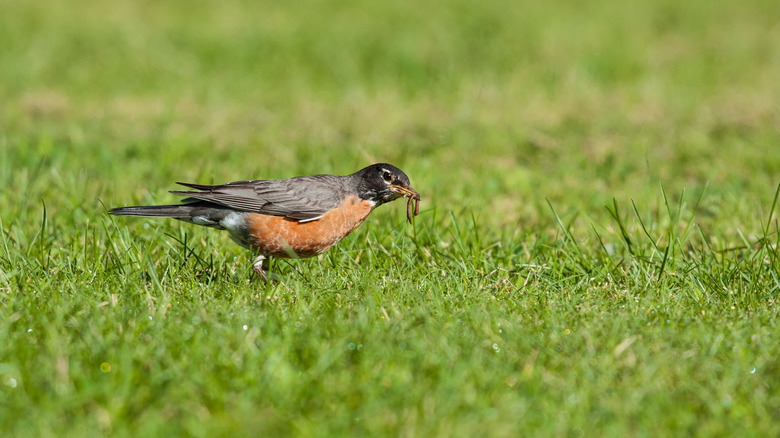
You've probably heard the phrase "the early bird gets the worm," but have you ever heard the one that goes "the gardener who encourages worms in their garden soil is more likely to attract American robins?" Probably not. We made it up, and we know — it hardly rolls off of the tongue. But it's true. In fact, during the summer months, the diet of this particular species comprises up to 20% of worms. To put this another way, they can eat up to 14 feet of worms in a day. 14 feet!
Beyond just plucking earthworms from the ground (you'll most likely spot them after it's rained or your lawn has been watered, as that's when worms are nearest to the surface), you can put out mealworms as part of a feeding station. These birds especially love the worms during during nesting season (approximately April through July), as they'll gather a bunch to take back to their nest to feed their babies. Open feeders are preferred, and make sure there is a substantial ledge for the robins to land on.
Dark eyed juncos love seeds on a low platform feeder
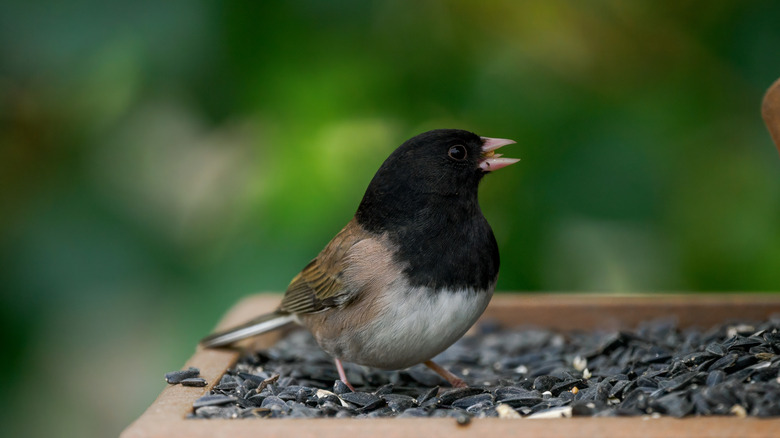
Dark-eyed juncos are one of the common birds you're likely to find in your yard during the winter, however, while they're far from rare, their presence should always be welcomed. Like other species, they're omnivores. This means that as well as eating seeds, they're also quite happy to eat insects, and that, in turn, makes them a useful ally for pest control.
To attract them, it's best to use a low-level platform feeder. Their natural way of feeding is by foraging on the ground, which means they're unlikely to perch and peck at your carefully hung tube feeders. As for what to fill it with, the best bet is to appeal to their graniferous appetites by providing a spread of seeds, like sunflower seeds and cracked corn. This is especially true in the winter, when the availability of insects is reduced. In the summer, these birds migrate north from most parts of the United States. However, there are populations in the western states that don't migrate at all, so if you live there, it could be worth using seeds in the spring and summer, too.
Insects attracted to a brush pile will in-turn attract an array of different bird species
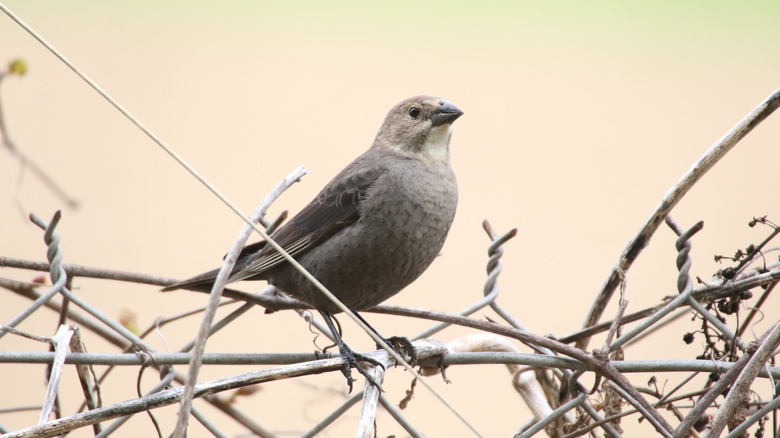
Before we go any further, we should first explain that we don't advise allowing branches, grass, and leaf litter to be left untended all around your lawn. Too much can prevent your grass from getting the sunshine it needs to grow, and all of that debris and detritus is precisely the kind of cover that pests like rodents need to run around your yard unseen. However, that's not to say that you should get rid of those leaves and branches altogether. Instead, if you're hoping to attract birds, you should turn them into a brush pile.
Provided that you build it away from your grass and garden structures, a brush pile can be a powerful way of attracting wildlife into your yard, and that includes birds. As the contents of the pile starts to decay, it'll naturally attract a host of insects, which in turn will draw an array of beautiful birds. Wrens are especially attracted to brush piles, although you're also likely to see an influx of nuthatches, flickers, catbirds, and even cardinals.
Log piles may attract pileated woodpeckers in search of ants and other insects
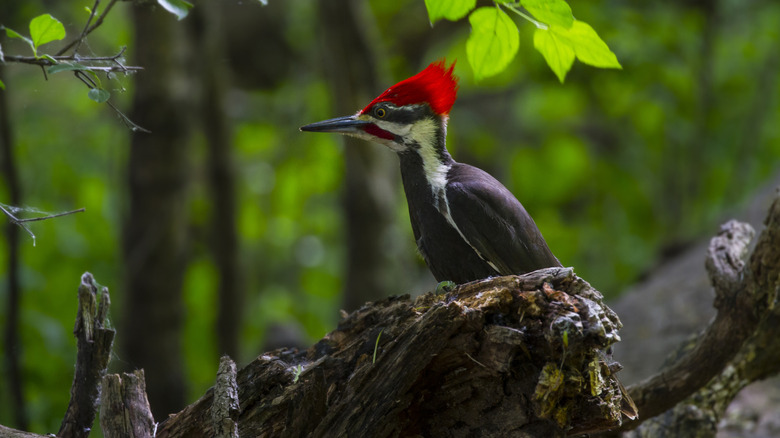
You may not like the sight of a dying tree or snag in your backyard, but if you wish to welcome woodpeckers into your yard, it's strongly advised that you leave it be. As it decays, dead wood begins to attract a whole ecosystem of insects, including carpenter ants, woodboring beetles, and termites. These are particularly sought-after by pileated woodpeckers, who'll happily spend hours tearing at the wood for the abundance of protein beneath. This is a magnificent sight to behold, but the benefits don't stop there. The voracious way in which they tear apart the rotting wood helps create habitats for an even wider variety of species, including bats, more insects, and even small mammals.
To give yourself the best chance of attracting woodpeckers, consider leaving any standing dead trees where they are. If they must be cut down (perhaps for safety reasons), then don't get rid of the wood. Cut it into logs and pile them up in a quiet corner, or if you have space, lay the trunk on its side and allow it to naturally break down.
Northern mockingbirds enjoy a bounty of winter berries
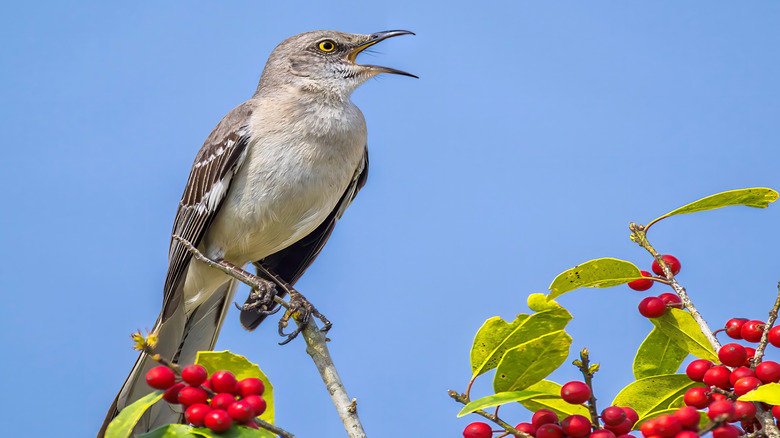
The northern mockingbird's diet is almost as versatile as its mimicry. Like other birds, it eats in line with the seasons, and in the warmer months, it favors an insect-heavy diet that includes, among other things, grasshoppers, caterpillars, and beetles. This means that maintaining a pesticide-free lawn and allowing patches of mulch to go un-raked is key to attracting them in the warmer months. But what about in the winter?
As temperatures drop and insect activity starts to dwindle, northern mockingbirds turn their attention to sweeter treats. In fact, these birds can become fiercely protective of food sources at this time of year, and honestly, given their scarcity in the depths of winter, it's hard to blame them! To help them (and thus encourage them into your garden), if you live in a mild climate where plants can still grow in winter, it's worth planting winter-berry bushes, like beautyberry (Callicarpa americana).
Tufted titmice are relatively unfussy feeder visitors
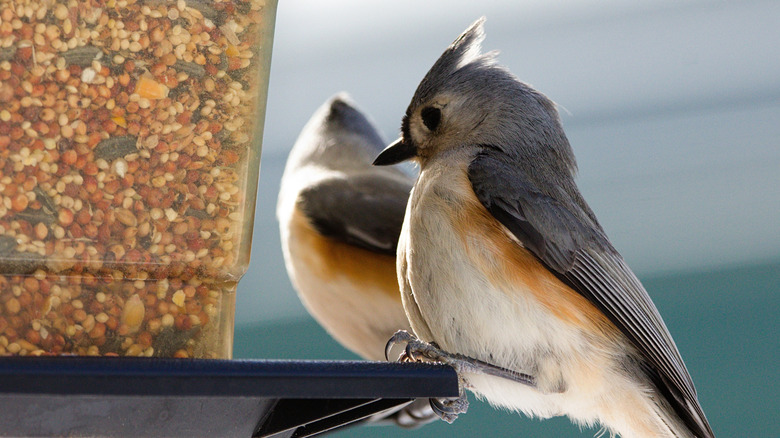
Known, named, and absolutely adored for the tiny feathered tuft on its crown, the tufted titmouse is almost always a welcome sight in the garden. It's found year-round across its range in the eastern United States, and since it's rather unfussy about what it eats, it's quite easy to attract into your yard. In the summer, a range of typical feeder items are likely to work, including most seeds and nuts. Titmice are also rather partial to suet.
In other words, if you're already targeting other species and you'd like to attract titmice into your yard, then you probably don't need to change much. They're likely to snack on whatever it is that you're already feeding, especially if you're feeding it via a house or platform feeder. They're often seen as a "bonus" by gardeners trying to attract other, more particular species, and if you have a pileated woodpecker visiting your garden tearing chunks out of your dead wood, then you may just start to spot titmice moving into the cavities they leave behind.
Mourning doves feed almost exclusively on seeds
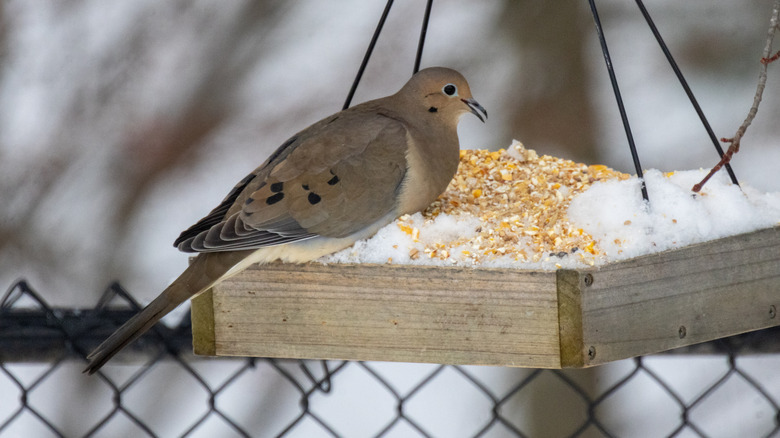
Despite their larger size (compared to other common garden birds), mourning doves feed almost exclusively on grains and seeds. They usually forage for these on the ground, and generally speaking, they prefer to forage in open areas with good visibility. With this in mind, they're unlikely to visit any feeders hung high around your yard.
Instead, the best way to attract these birds is to try and mimic their preferred feeding scenario. Scatter seeds around the middle of your lawn, or put them on a tray or a low-level platform feeder. You could also plant mourning dove-friendly plants like sunflowers and cone flowers, which will attract not only mourning doves, but an array of other birds, too. They're also beautiful to look at in their own right, so even if they fail to attract doves, at least your work won't have been for nothing.
Song sparrows favor sunny gardens with insects, berry bushes, and self-seeding flowers
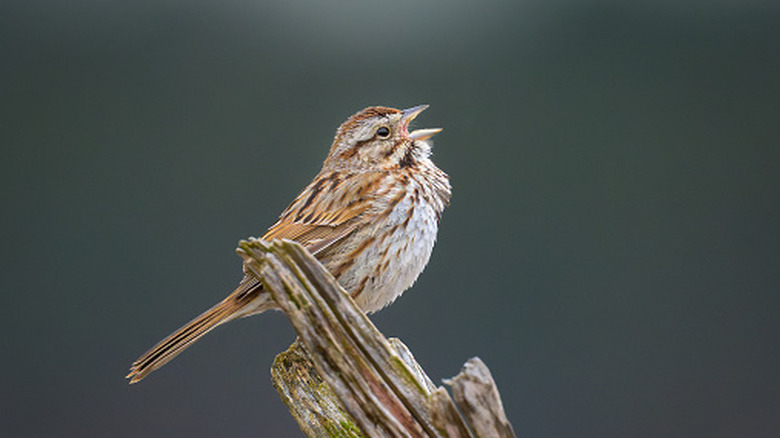
As one of the most persistent singers in the bird kingdom, song sparrows live up to their name. Their music is enough to lift the spirits of even the most downtrodden gardener, and since they'll eat just about any berry, seed, or insect that you put in front of them, they're also quite easy to please. As a bonus, they share similar habitat requirements with other, more sensitive species, like golden-winged warblers, which means that anything you can do to make your garden song-sparrow friendly has got to be worth the effort.
Open yards that benefit from lots of sunshine are best for song sparrows. These provide an excellent habitat for insects, as well as great growing conditions for fruit and berry plants. Their specific dietary requirements vary (being so widespread, they tend to adapt their diets to the foods available within their range), however, an abundance of berries, seed-producing flowers, and insects is almost always a good way to attract them, especially when offered on a platform feeder.
Eastern bluebirds can be excellent allies in managing insect infestations
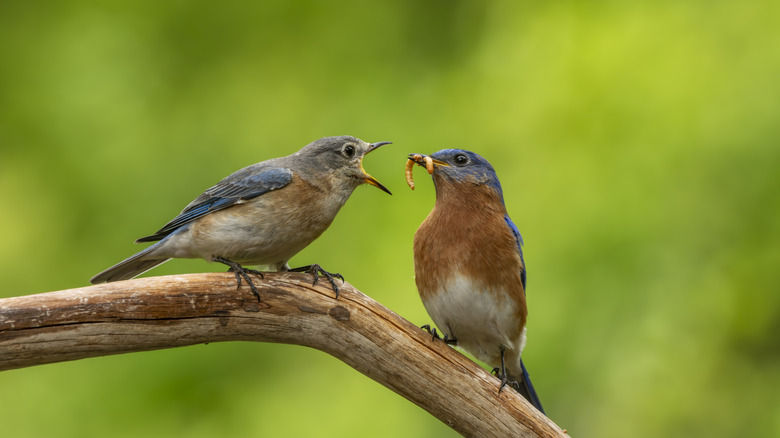
Not only are eastern bluebirds beautiful to behold in your garden, but they are also insatiable eaters of insects. This makes them an invaluable ally for those who are struggling to deal with pests in their growing patch. Thankfully, with just a few additions to your yard to make it eastern bluebird friendly, they can put a surprising dent in your yard's pest problem.
They're one of the many birds who favor birdhouses, or nest boxes, so if you've yet to install one in your yard, that's a good place to start. As for food, eastern bluebirds are especially fond of moth and butterfly larvae, although they'll also readily eat crickets, grasshoppers, spiders, true bugs, beetles, and flies. In other words, if you're actively trying to combat an infestation of any of these insect species, then you probably don't need to do much to encourage bluebirds to come and visit. If you're not, then a platform feeder filled with mealworms is sure to pique their interest.