

Do Smart Light Bulbs Use More Electricity? Here's What You Should Know Before Buying

Smart home appliances have been trending for some time now. From kitchen essentials to washing machines and doorbells, you probably already make use of a bunch of smart technology integrations that modernize your home. Smart lighting is another popular integration. With motion sensors, remote access, and several smart lighting features to personalize your home, the smart bulb market is rapidly growing. But do smart bulbs also grow your energy bills? What about the dreaded "vampire draw" that pulls in electricity even when the bulbs are off? Well, smart bulbs do consume a little more power to fuel their smart features, but the added cost is still a minuscule part of your total bill. These bulbs also offer a range of energy-saving features that can reduce long-term energy costs by preventing unnecessary wastage.
Smart bulbs can be connected over Wi-Fi, Bluetooth, or Zigbee and facilitate automation and customization via an app on your smartphone. What this essentially means is that you can change the color and brightness of the lighting anywhere in your house, right from your phone. Smart bulbs also let you set dedicated schedules for different times of day, like dimming lights for cozy evenings and warm, soft tones for gentle mornings. With all these extra features, your concerns about a possible spike in power consumption are justified. But it turns out this increase is minimal and largely overshadowed by the numerous ways smart LEDs save you money.
Smart bulbs only use marginally more electricity
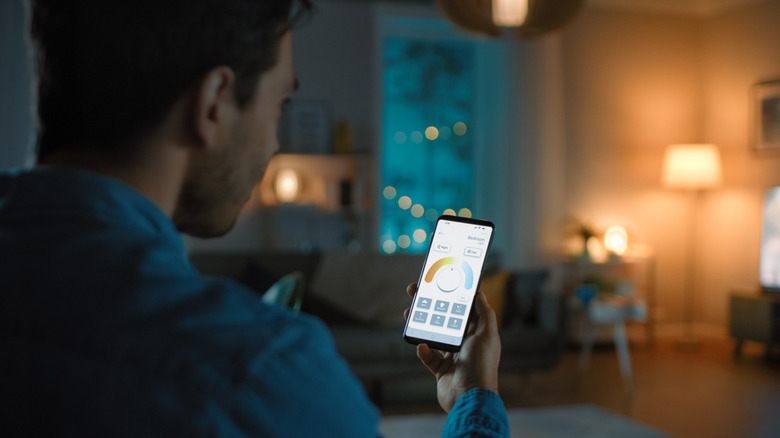
While it is true that smart bulbs need power to stay connected to the Internet and offer their smart features, the cost over the course of a year could be much lower than you might think. Smart bulbs need about 0.2 to 0.5 watts of extra power to stay connected with Wi-Fi (or Bluetooth). How-to-Geek tested smart bulbs from different manufacturers and found that even the bulb that drew the most power (1.66 watts on average) still cost only an extra 17.9 cents in standby mode over a month (calculated at $0.15 per kWh).
If smart bulbs don't stay in this standby mode, you won't be able to switch them on from your phone or access features like schedule automation. While you may not notice a difference when the bill shows up, smart bulbs still outlast CFLs and incandescent bulbs in terms of lifespan. So, you'll be purchasing bulbs less frequently.
Moreover, when compared to incandescent bulbs, smart LEDs use 75% less energy, while 90% of the electricity used by incandescent bulbs is wasted in the form of heat. The fact that you can control the bulbs from your fingertips essentially means that lights do not stay on any longer than they need to. You can easily dim the lights as well and reduce energy costs at home whenever light is not required.
Smart bulbs can reduce your electricity bills in the long run
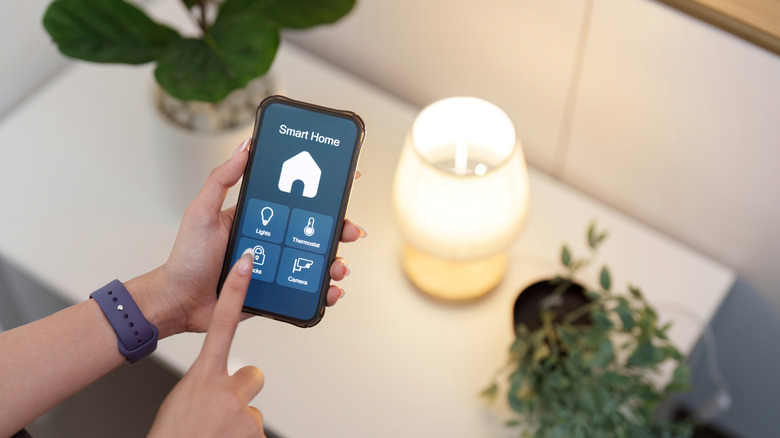
While smart bulbs are great for adding personality to your home, they can also reduce your energy wastage. How often have you gotten out of your house only to realize that the kitchen lights are still on, and it's too late to go back? In this regard, the remote control and scheduling feature of smart bulbs are major add-ons for your savings. All you need to do is change a few settings on the app, and your bulbs will switch off exactly when you want them to. Unlike fluorescent lamps (CFLs), switching LED bulbs on and off multiple times does not reduce their lifespan either.
The motion-sensing feature in smart bulbs is also great for avoiding excess electricity usage. Smart bulbs can dim or turn off when they stop detecting movement in the area they illuminate. This is especially helpful in staircases and hallways that do not see steady traffic.
Moreover, a typical house in the U.S. has dozens of light bulbs, and around 15% of each home's electricity bill goes to lighting. While the cost of leaving lights on every now and then may not seem like much in the short term, it certainly adds up over the year. Smart bulbs can definitely help you save money in the long run.