

Goodbye Regular LEDs: The Type Of Light That Brightens Spaces & Improves Sleep
We may receive a commission on purchases made from links.
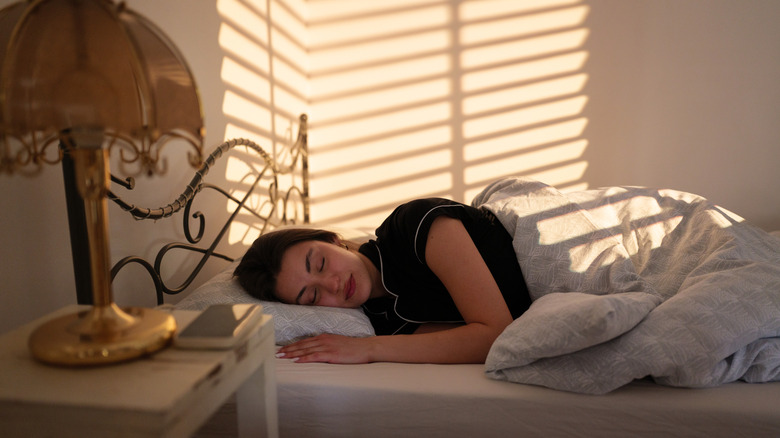
It's hard to have a productive day if you're tossing and turning all night. If you've tried changing your habits but your sleep schedule still isn't where you want it to be, your surroundings may be the culprit. A cool, dark, and quiet bedroom can set you up for sleep success, but so can a little-known type of lighting: a circadian rhythm light bulb. Unlike regular LED bulbs, this type of lighting mimics the brightness of natural daylight. Some versions can even adjust their color temperature and intensity throughout the day to imitate sunlight and then gradually switch to the dimness of the evening.
If you're not familiar, your circadian rhythm is like an internal clock, signaling to your body when to sleep and when to wake up. While many factors such as stress, food intake, and exercise can impact it, the biggest effects come from light and darkness. Because some of the different types of LED lightbulbs emit blue light, they can interfere with your circadian rhythm, making it harder to fall asleep. One possible solution? Switching to circadian rhythm lighting in your home.
How circadian rhythm light bulbs work
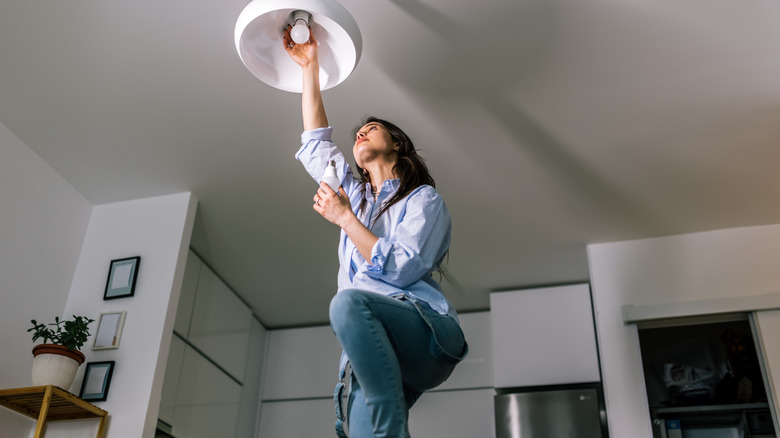
Circadian rhythm light bulbs can limit the blue light of typical LEDs and mimic the sun, or dim themselves and adjust their color intensity to regulate your sleep and wake cycles. Some options, such as this Norb Smart Light Bulb, imitate the brightness of the sun during the day, then dim in the evening to promote melatonin production for a better night's sleep. Some circadian rhythm smart bulbs also feature timers and custom schedule settings that users can control through companion apps. Other types of circadian rhythm lights, such as GE's Sun Filled Light Bulb, don't adjust intensity or automatically dim; instead, they limit blue light in the spectrum and aim to imitate sunlight.
If you want to potentially improve your sleep, avoid the mistakes everyone makes when buying light bulbs and try one that supports circadian rhythms. Consider setting these up in the main living areas and the bedroom to create a peaceful bedroom for a good night's sleep. If you're using a smart bulb, you'll need to download the companion app; otherwise, there's no special setup for installing most circadian rhythm light bulbs.