

Propagate Your Boston Fern Plant In March For Fuller Growth All Spring Long
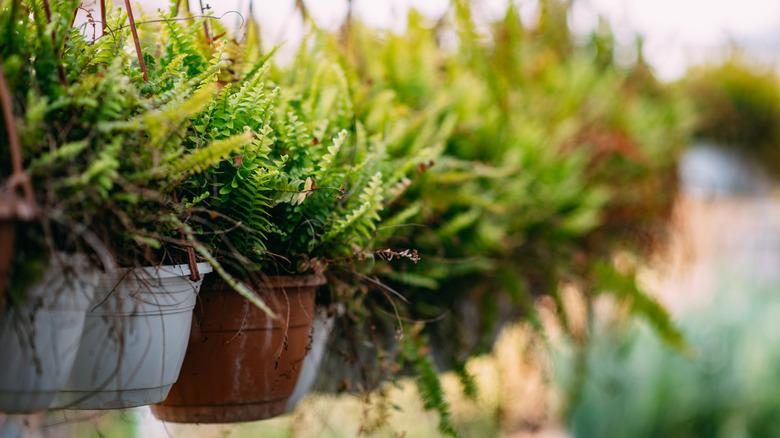
The Boston fern (Nephrolepis exaltata) is a common houseplant that thrives in steamy bathrooms, shady backyards, and hanging baskets alike. Unlike some other ferns, Boston ferns won't naturally experience a dormant period in winter. Instead, they retain their fronds, but slow down growth because sunlight is weaker. This lack of true dormancy is why Boston ferns typically won't do well if they're left out in winter conditions. In most areas, they need to be brought inside where temperatures will stay well above freezing. After months of "cabin fever," so to speak, these plants will be eager to get growing when spring finally rolls around. That's why March is the best time to propagate your Boston ferns if you want to enjoy fuller growth, healthier leaves, and more plants.
While other shade-dwelling plants may snooze until the warmer summer days, ferns are one of the best fast-growing shade plants that will effortlessly fill your garden in spring. By propagating in March, you'll split the ferns just in time to catch that early spring growth spurt. Dividing your ferns every so often will prevent them from becoming rootbound, and repotting the propagated plants in early spring ensures that they'll have all the room they need through the growing season ahead. In USDA Hardiness Zones 9 to 11 where Boston ferns thrive, March also provides the ideal, mild temperatures that they need to survive, recover, and grow after being propagated.
Spring growth helps Boston ferns split and survive
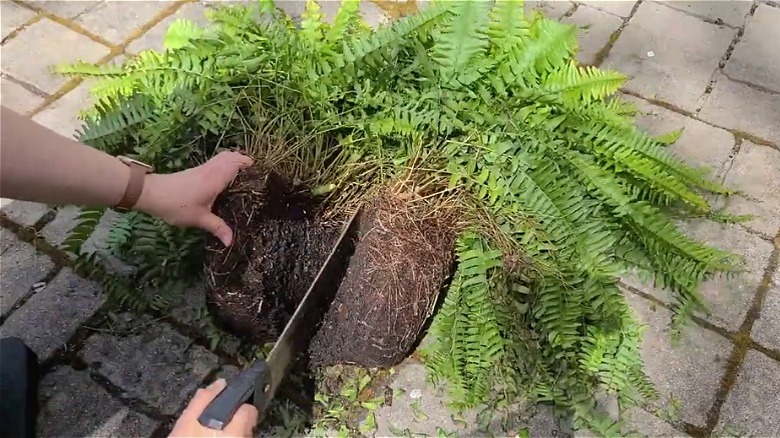
Propagating Boston ferns couldn't be easier. To multiply your plant supply, tip the pot and gently loosen to release the plant and roots. Break up the soil with your fingers, then part the fronds and use a sharp knife to saw from the top all the way through the root ball, splitting the plant into halves or even thirds. If you're propagating ferns that have been planted in a garden bed, you can also use a shovel or spade to split them in the ground and dig portions out. Take this opportunity to cut back any dead fronds and make room for more fresh, green growth.
Place each new fern clump into its own pot or space in the garden bed. Boston ferns prefer rich, well-draining, slightly acidic soil. Spring is also the perfect time to give them an extra boost at by adding a balanced fertilizer to their potting mix. Boston ferns love humidity, so as your ferns heal and grow, keep the soil moist, especially if you're growing in containers, which have a tendency to dry out quickly.
Before putting your new ferns outside, ensure that nighttime temperatures are above 65 degrees Fahrenheit. Keep the plants in medium-bright light, but away from the scorching sun — they're one of the best types of ferns to grow on your porch. This separation method might seem a bit brutal, and your plant divisions could look a little thin and wiry at first, but within a few months, the propagated ferns should fill out with new, healthy fronds!