

Martha Stewart Shares 12 Of Her Secrets To Thriving Indoor Plants

We may receive a commission on purchases made from links.
Tending to your indoor plants can be tricky but oh-so-rewarding if you follow the right advice. Whether you're trying to decide which plants work best for your environment or you want to ensure your current greenery will thrive, Martha Stewart is an amazing resource. As a professional indoor and outdoor gardener herself, Stewart knows what it takes to maintain a beautiful display of flowers, succulents, and much more.
If you've been researching how to care for houseplants when you don't have a green thumb, you don't have to do it alone. Experts like Martha Stewart have made all of the mistakes for you, so you can avoid the most common mishaps and prioritize what matters most. Indoor plants are great for adding color and life to your interior, as long as you follow a few key pointers. If you're ready to take your indoor plants to the next level, we've rounded up the 12 most helpful secrets from Martha Stewart herself.
Don't underestimate the power of your soil
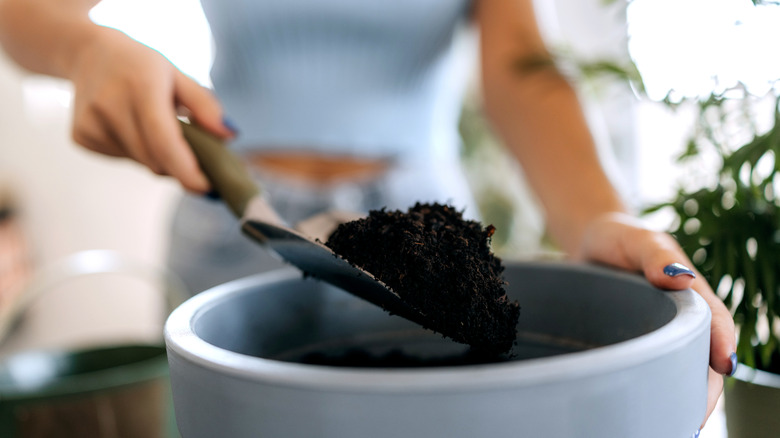
Beyond the way you care for your plants, the soil you select is crucial to creating an environment where they can thrive. Martha Stewart explains in this Facebook video for CBS Sunday Morning: "You have to use the right soil. I found just the right mix here, this tropical potting mix. It includes lava rock, the fiber from the coconut shells, and it also includes sand for good drainage." Each of these elements can help create a well-aerated growing environment.
You can find a variety of potting mix options, from plant-specific blends to more generic choices. This Miracle-Gro Indoor Potting Mix includes coconut coir, a Martha Stewart favorite, and also avoids common ingredients that can attract gnats, like compost or bark. Instead of selecting a mix that already has lava rock and sand, you can also add these components to your soil. For example, these Toypopor Mix Horticultural Lava Pebbles are ideal for promoting drainage. For some plants, you can use a product like the Toypopor Leca Clay Pebbles and avoid messy soil altogether. Always research the ideal environment for your specific houseplants to improve growing conditions.
If you have trouble caring for your plants, consider succulents
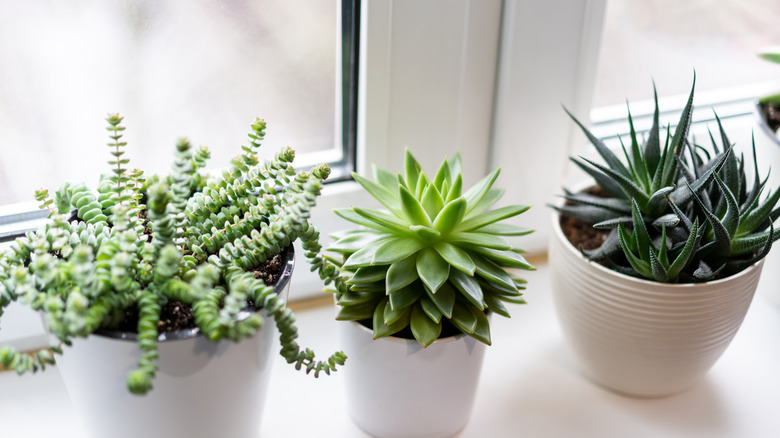
Not everyone has the time to look after high-maintenance plants. Luckily, there are tons of low-effort options that can still make a major visual impact. Instead of accidentally neglecting your houseplants, try something less demanding. Martha Stewart writes on her blog: "If you like growing plants, but don't really have the time to care for them properly, consider growing succulents. [They] require very little maintenance. These plants are able to survive prolonged drought because they store moisture in their fleshy stems, roots, or leaves. And they grow in so many different and interesting formations."
When searching for the perfect succulent for your space, there are a few important considerations. If your home doesn't get a lot of direct natural light, consider a variety like the Haworthia cuspidate, also known as the Star Window Plant. Because of their semi-translucent leaves, these can thrive in limited sunlight more easily than a succulent like agave.
Alternately, for a space that does get some sunlight, Aloe vera and Snake Plants are easy to care for and tolerate a balance of both sun and shade. If you're sold on the idea of succulents, this is how you can DIY a thriving succulent planter with Martha Stewart's expert tips.
Don't place your plants next to hot radiators
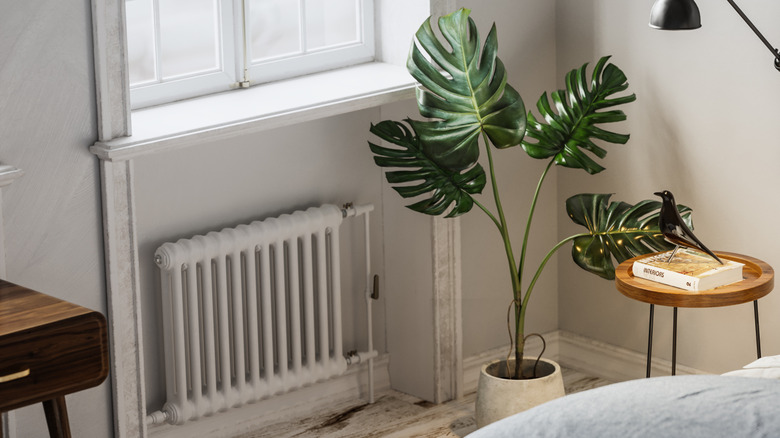
While some plants may be able to survive direct heat, others can be sensitive to nearby radiators. When talking about her Alocasia tirgrin in an interview with CBS Sunday Morning, Stewart says: "They need light, and they need water, and they need tender care. No hot radiators — please." It's always better to be safe and store your houseplants away from heaters or hot vents.
The placement of your houseplants matters more than you think. If your plants prefer sunlight, it's crucial to place them next to the window or directly on the windowsill. For plants that thrive in shade, you have more flexibility. Low-light plants may be able to survive placed next to a north-facing window due to the lack of direct sunlight. If your plants love humid environments, consider a bathroom or kitchen — just make sure not to place the plants too close to any heat sources. Consistent temperatures are always ideal. You can also use a simple shadow test trick to find the best location for your houseplants.
Clay pots are ideal to let your houseplants breathe
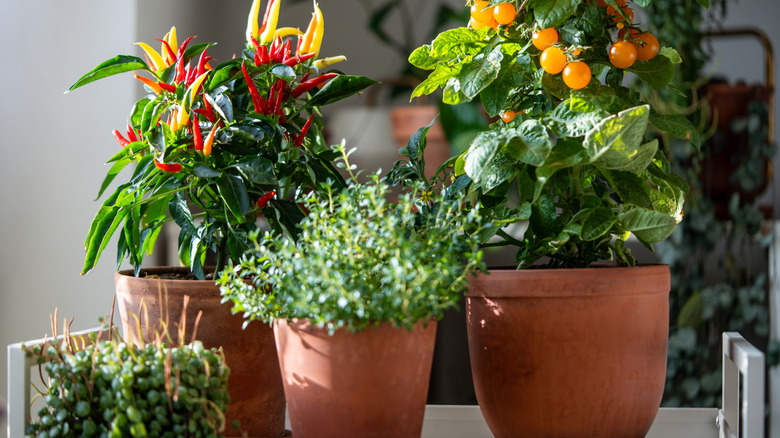
Choosing the right pot is a matter of both taste and functionality. If you're feeling overwhelmed by the amount of pot choices, Martha Stewart has highlighted her favorite option. She writes on her blog: "Most of my pots are clay. I like to use clay pots because they allow proper aeration and moisture to penetrate through the sides and to the plant." In addition to their practical purpose, clay pots also have a timeless, rustic look.
Clay pots are suitable for most plants, but their unique composition can affect your method of care. The fact that they absorb excess water can prevent your plant from getting root rot as a result of overwatering. These vensovo 6 Inch Terracotta and Clay Pots are a highly-rated option that come in several colorways. However, if you tend to underwater your plants, this can actually backfire and cause them to dry out quicker. In that case, consider a plastic alternative like this Amazon Basics Plant Pot.
Reuse ceramic shards to partially block the hole at the bottom of pots
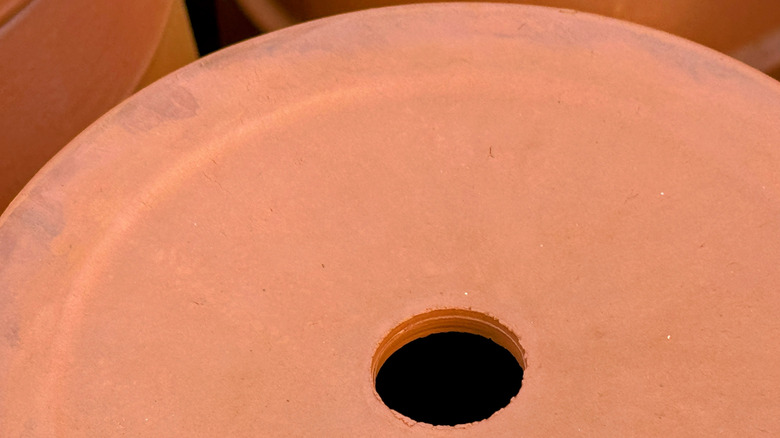
An important theme in plant care is proper drainage and choosing the right drainage materials to prevent excess moisture. While drainage is important, you also don't want the soil or pebbles to flow straight out the bottom of the pot. Martha Stewart shares her resourceful fix for this problem on her blog: "There is a hole at the bottom of each pot. A clay shard is placed over the hole to help with drainage. We always save the shards from any broken pots — it is a great way to reuse those pieces."
If you don't have any clay shards on hand, there are a few other materials you can use that have a similar function. One method is to use a felt cloth that will allow water to pass through without the soil seeping out. You can also purchase an insert disk for pots with or without drainage holes, like these Drain Smart 3D Mesh Planter Pot Drainage Insert Disc.
Check the leaves for evidence of over- or underwatering
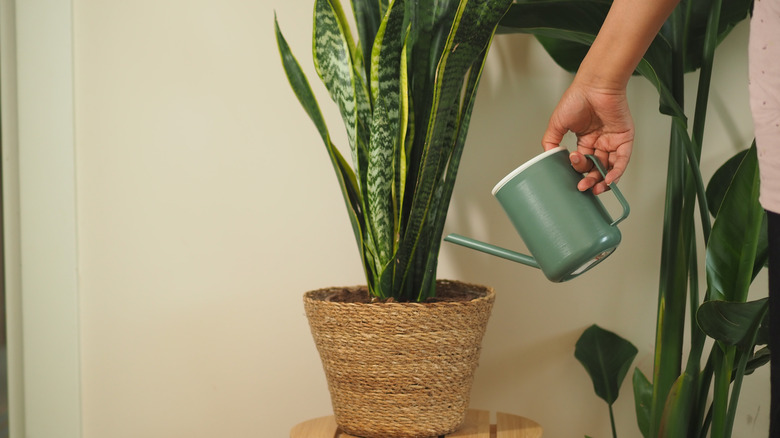
It can be tricky to strike the right balance between watering but not drowning your plants. Martha Stewart tells TODAY that you should always check the leaves for evidence of either over- or underwatering. She explains: "Don't forget to water. But if you overwater, you'll see that [your plant] will turn yellow. [If it's dry] it wrinkles up."
One of the most important skills to hone when caring for your houseplants is observing the plant from top to bottom. In addition to affecting the color of the leaves, not giving your plants the correct amount of water can result in problems like root rot or pests. If you think your plant may have been overwatered, check for root rot by feeling whether the roots are durable and moveable, or soft and easy to break. Pests like mealybugs can also cause yellowing or present themselves as a white coating on the plant's leaves. HARRIS Neem Oil Cold Pressed Water-Soluble Concentrate is an easy solution for this issue.
Make your succulents multiply by callousing a leaf
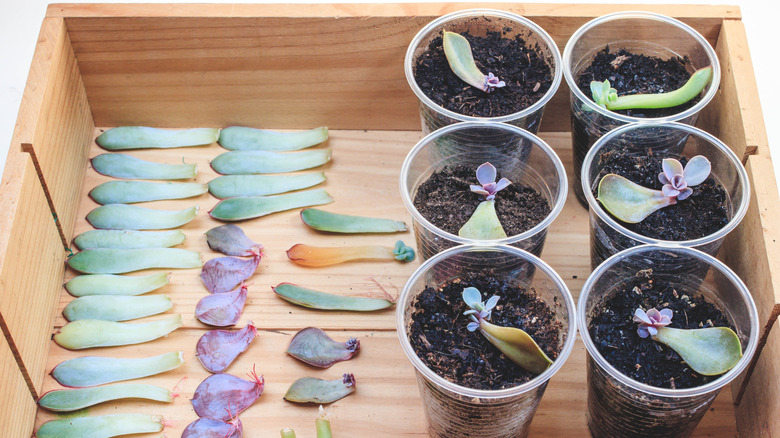
Many succulents, like echeverias, can multiply if you follow a few simple steps. Martha Stewart tells the viewers of TODAY: "You just pull a leaf off, and you can then callous this. They call it callousing. It dries up a little bit. [...] Just lay it on a little bit of soil, cover it with a little dish like that, and it will search for moisture in the soil, and it will root. And you'll have a new plant." Make sure the leaves have lots of light, but avoid direct sunlight as they can easily burn.
Echeverias aren't the only succulents you can propagate. A few other succulents that are easy to spread include Tiscalatengo gorge sedum (Sedum clavatum), Burro's tail (Sedum morganianum), and Hens and chicks (Sempervivum heuffelii). If you don't want to pluck leaves off of your thriving succulents, look for smaller, offset plants that have begun to blossom and replant the entire bud. If you don't have extra pots, consider using a muffin tin to make plant propagation a breeze.
Don't forget to feed your plants with fertilizer
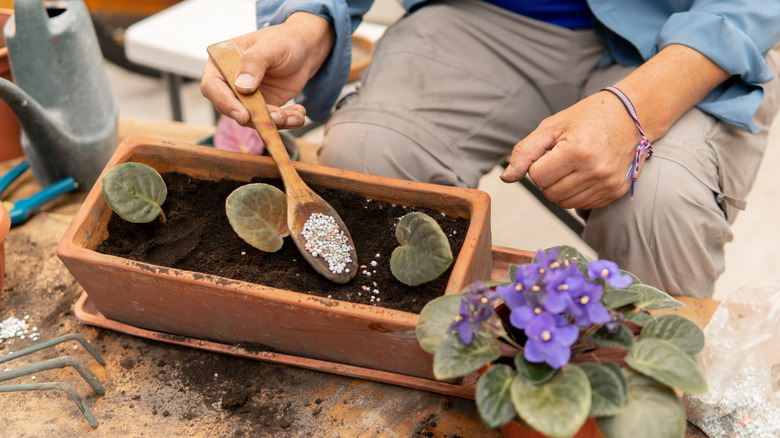
Martha Stewart feels passionately about one key aspect of plant care. She shared one of her most important pieces of advice with the audience of TODAY, stating, "Don't forget the fertilizer. You eat every day. So, plants need to eat too. Don't forget to feed your plants." This isn't the first time she has emphasized the importance of fertilizer. She also captioned a TikTok about her peonies: "You eat ... your plants need to eat too."
In an interview with Scott's Miracle Gro, Martha Stewart also acknowledges that choosing the right fertilizer can seem overwhelming. With so many options on the market, it's easy to get lost in the vast array of choices. She gives the following advice: "When shopping for fertilizers, check the three-number ratio on the label, such as 24-8-16 or 12-4-8. This describes the content by percentage of the three principal plant nutrients, nitrogen, phosphorus, and potassium." She also says that water-soluble powder fertilizers can give your plants a quick and powerful boost, whereas granular fertilizers offer a gradual solution.
Always clean your pots thoroughly before replanting
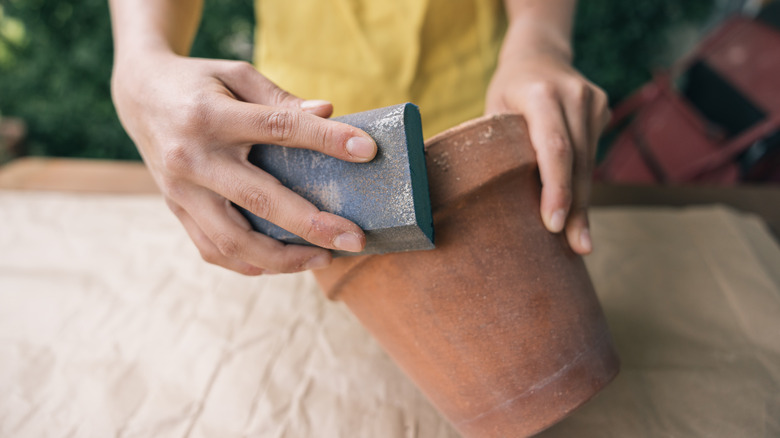
You might be surprised by the importance of keeping your gardening tools squeaky-clean. Although you're going to fill your pots with dirt, plants can actually be susceptible to harmful residue from previous potted residents. Martha Stewart speaks about this imperative step on her YouTube channel: "Wash all the pots thoroughly and put about ¾ of a cup of Clorox bleach right in the water and scrub very well on the inside and the outside and let them dry. This will be very good, and it will certainly help protect the new plants."
Bacteria and pathogens can live in your pots, especially if they are made from porous materials like clay. Terra-cotta and clay pots can also contain a layer of salt and other minerals that may harm plants that come into contact with the sodium-heavy residue. A mixture of white vinegar and water can also be used to help clean any hardened minerals. Just be aware that you should never mix vinegar directly with bleach.
Keep your pruning and trimming tools sharp and clean
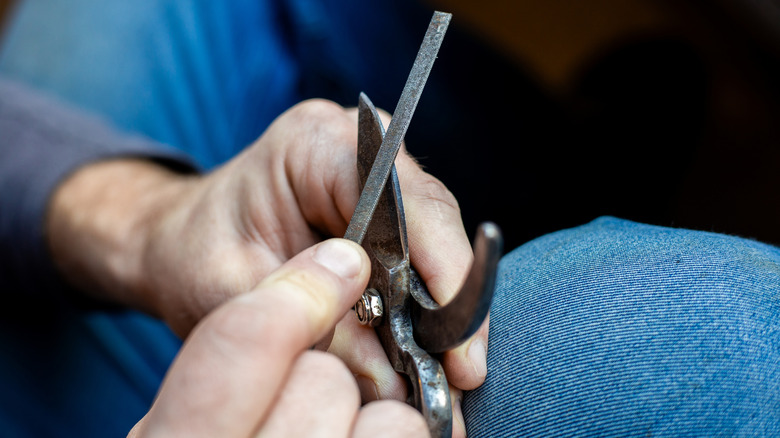
Beyond your pots, you should also keep your gardening tools sharp and clean to maintain the health of your house plants. Martha Stewart tells her YouTube viewers about her favorite tools to sharpen trimmers: "If you have forgotten to sharpen, this is a great tool. This is called a Dia-sharp, and it has a very wonderful, mildly abrasive sharpener right here." She suggests swiping the edge of the blade two or three times before cleaning the trimmer with an oiled rag.
As far as how often you should follow this sharpening process, Stewart says it's important to perform this short procedure after every use. She also emphasizes that it should be done after cutting any diseased branches or stems. In addition to sharpening, sterilizing is also imperative. Just like cleaning your pots, Stewart suggests dipping the blade in a mixture of water and bleach to stop the spread of diseases.
Try forcing your bulbs for an early indoor bloom
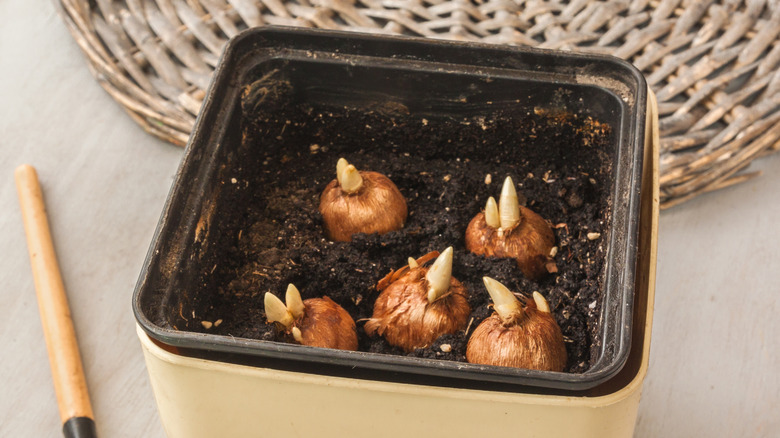
The benefit of an indoor garden is that your flowers don't have to be dependent on the seasons. Martha Stewart tells her blog readers all about the concept of forcing flower bulbs: "Forcing is the process of speeding up a bulb's development by simulating the conditions of winter and spring — it's a way of fooling Mother Nature and tricking the bulb to bloom before its natural time." She clarifies that you can use practically any container for forcing bulbs, as long as you maintain between three and four inches of soil below them.
Stewart also advises that readers make sure that all of the bulbs are free from mold, mildew, and discoloration before planting them facing upward. Once you've planted your bulbs, they should be kept in a refrigerator or a cool, dark space. Make sure to continuously check the moisture level of your soil. If it gets too dry, you can add water to the pot. This should be done for a period of 12 weeks before you can finally expose them to sunlight and watch them flourish.
Use the finger test to determine when to water
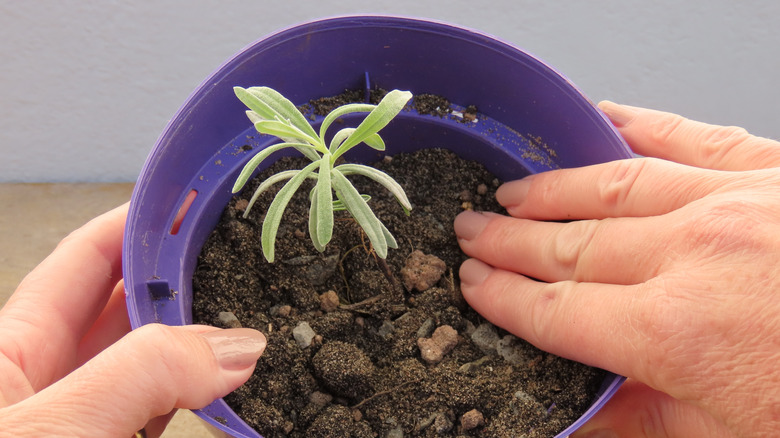
When discussing low-light houseplants like peace lilies and bamboo palms, Martha Stewart recommends using your finger to prevent overwatering. She says in an interview with Scott's Miracle Gro: "To determine when to give the plants a drink, place your finger about half an inch into the potting mix. If it feels dry, water the plant well (in a sink until water seeps out from the bottom of the pot). Use a quality potting mix that provides proper drainage to prevent rot."
This might seem like a simple piece of advice, but this easy test is often overlooked. Your plants often don't show you whether they are being over- or under-watered on their leaves until it's too late. By getting your hands a little dirty, you can easily gauge if the soil has dried out or whether it's still damp. If you're still not sold on using your fingers, you can use a battery-powered moisture meter for your houseplants like this Yamron 4-in-1.