

8 Beautiful Blue Sage Plants That'll Fill Your Yard With Hummingbirds
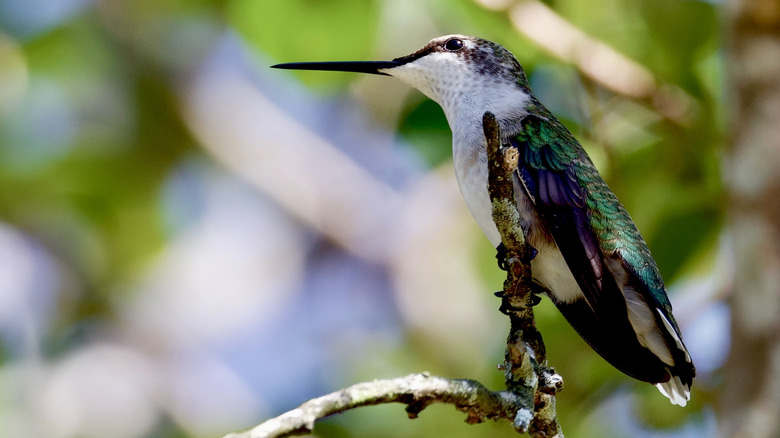
By now, it's fairly common knowledge that hummingbirds are partial to red, yellow, and orange flowers. Indeed, there are plenty of red-flowering shrubs that will attract hummers all spring or summer long. However, they certainly won't turn their beak up at bright blue blooms, especially if they're also tubular and, of course, full of nectar. Enter those gorgeous blue-flowering sage plants you've been eyeing up at your local garden center — like anise sage, arrowleaf sage, and pitcher sage. Go ahead and grab a few to plant in your backyard because visiting hummingbirds are sure to absolutely love them.
Sage or salvia (Salvia spp.) flowers have a shape that perfectly accommodates the long, narrow beaks and lengthy tongues of hummingbirds, which they use to reach inside blooms and suck up the nectar. Plus, many plants in the Salvia genus bloom in summer and fall. Late-flowering plants are a vital resource for hummers as they prepare for their arduous annual migratory journey.
Sage plants are low-maintenance vigorous growers, making them a welcome addition to any garden. Even within blue-flowering sages, there are lots of species and cultivars to choose from, all with different heights and growing conditions. There's bound to be one that's just right for that difficult spot in the garden you need to fill. Best of all, salvias are both pest- and disease-resistant, so they should grow happily without too much intervention from you, the gardener. Most varieties prefer to grow in full sun and in soils that drain well, though not all. They're typically very drought-tolerant once established, and require minimal watering long-term.
Blue anise sage
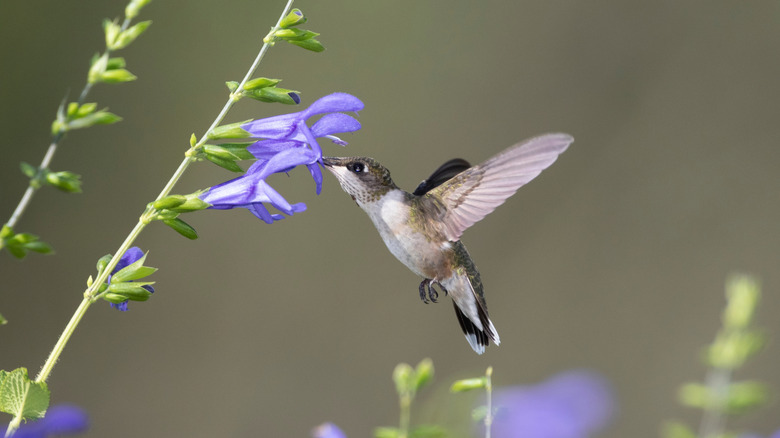
Blue anise sage (Salvia guaranitica) has the tubular flowers that hummingbirds love in shades of lavender, blue, or black, depending on the cultivar. It's a perennial in USDA Hardiness Zones 7 through 10, but can also be grown as an annual in colder regions. Once planted, it will spread to other parts of the garden through tuberous roots. Apart from attracting hummers, this species is also visited by butterflies and carpenter bees. It's resistant to deer, making it a great border plant or garden bed backdrop. Expect it to reach a maximum height of 5 feet.
'Black and Blue' sage
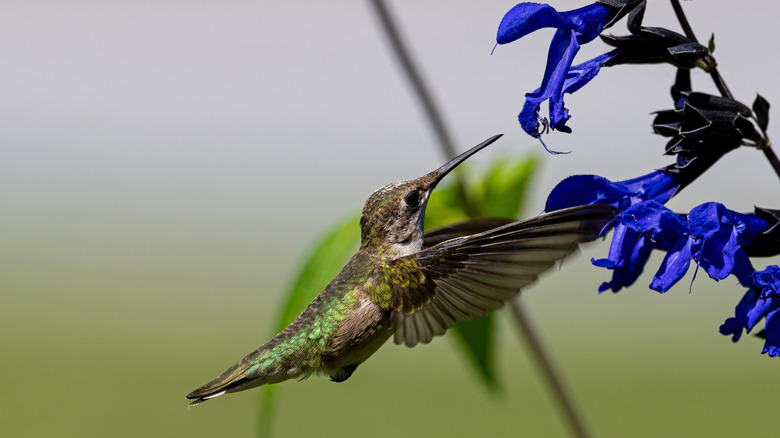
This lovely sage, Salvia guaranitica 'Black and Blue,' is a cultivar of the aforementioned plant, blue anise sage (Salvia guaranitica). What makes it unique to its parent is that the flowers are a much deeper blue, boasting deep purple or almost black bracts, hence its moniker. 'Black and Blue' will also survive mild winters down to Zone 7, as long as you apply some mulch around the base to keep the soil a little warmer and the tuberous roots protected. It's a big shrub, meaning more blooms to satisfy lots of visiting hummingbirds.
'Victoria Blue' sage
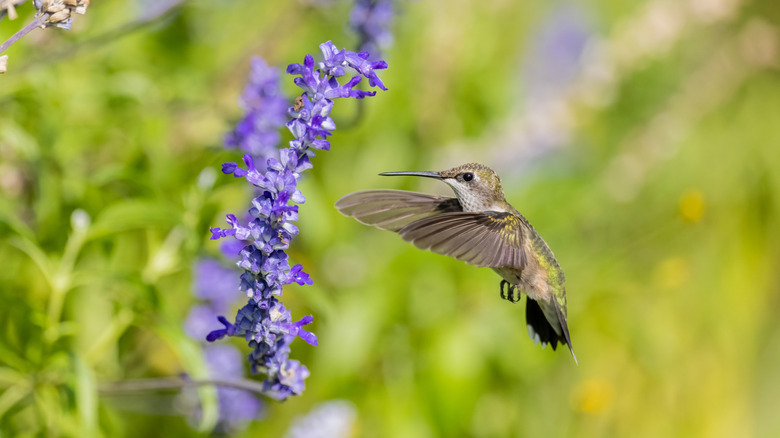
'Victoria Blue' is a cultivar of mealycup sage (Salvia farinacea) with purple-blue flowers and dark stems. This particular sage will grow as a perennial in Zones 8 to 10, but can be treated as an annual in other zones. Plant it in a full-sun spot and it will have a long blooming season, from spring right through to fall. This makes it a good choice for keeping hummingbirds well fed and happy at a time when resources are stretched. This upright, clumping plant needs little maintenance — you can even get good flowering without deadheading.
Lyreleaf sage
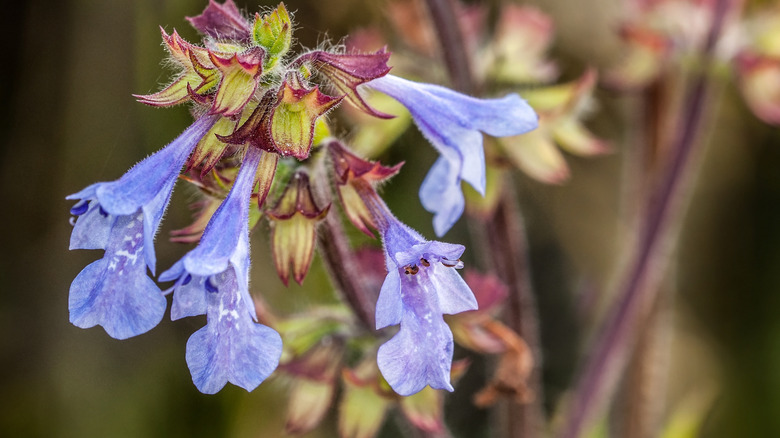
If you garden in Zones 5 through 8 and you're looking for a perennial sage beloved by hummingbirds that's a bit more cold-hardy, then the lyreleaf sage (Salvia lyrata) is likely your best choice. This is a much shorter species of salvia — it reaches just 2 feet tall. Each flower spike boasts a lovely rosette of leaves at its base. It's a good sage species for woodland gardens, although it will also thrive in a full sun site. Leave the spent flowers on the plant, and it should self-seed in your garden, unless songbirds get the seeds first.
Pitcher sage
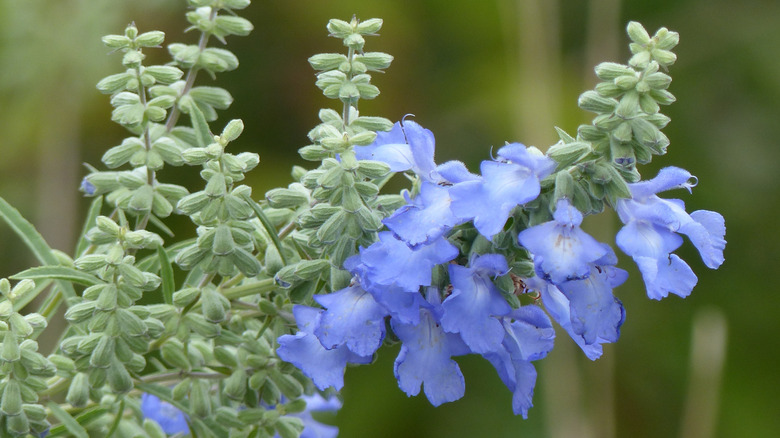
Both hummingbirds and butterflies love the delicate, soft-blue, nectar-rich flowers of pitcher sage (Salvia azurea), which you can grow as a perennial plant in Zones 5 to 9. This salvia species begins blooming in mid-summer and continues putting on a show right through until fall. It's the perfect self-seeding flower to plant for continuous color year after year. The floral spikes can reach a height of 5 feet, so it's recommended to cut the foliage stems back by about half in late spring. This will reduce lanky growth and strengthen the stems.
Russian sage
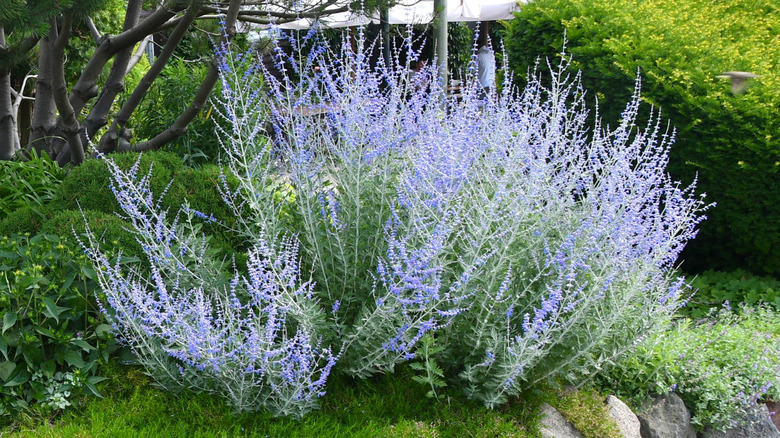
Hummingbirds aren't the only ones who love the pale blue-purple flowers of Russian sage (Salvia yangii) — bees and butterflies will also flock to the tiny nectar- and pollen-filled blooms this plant produces in abundance. This species grows into a clumping shrub in Zones 5 through 9, maxing out at about 4 feet tall. Like most salvia species, Russian sage prefers soil on the drier side and a spot in full sun. You can cut it back aggressively in spring to promote sturdier growth, though this pollinator-friendly herb also benefits from being pruned in late winter.
Blue spike sage
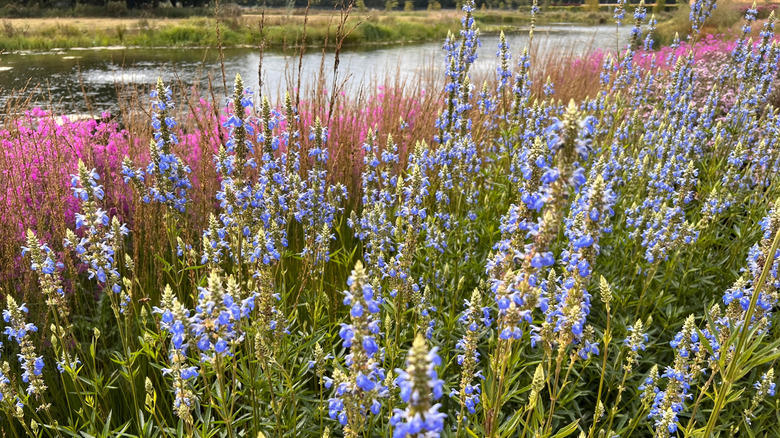
Think bumblebees visiting your garden is almost as exciting as watching hummingbirds flit around? You're in luck. The neon-hued flowers of blue spike sage (Salvia uliginosa) provide ample nectar for hummers, bees of all sorts, and other pollinating insects, like butterflies. Grow it as a perennial in Zones 6 to 10. Unusually, this sage is a great plant for boggy areas in your garden. Plant it along the back of a damp flower bed, where it will reach about 5 feet tall, then sit back and wait for all that wildlife to visit its stunning blue blooms.
Arrowleaf sage
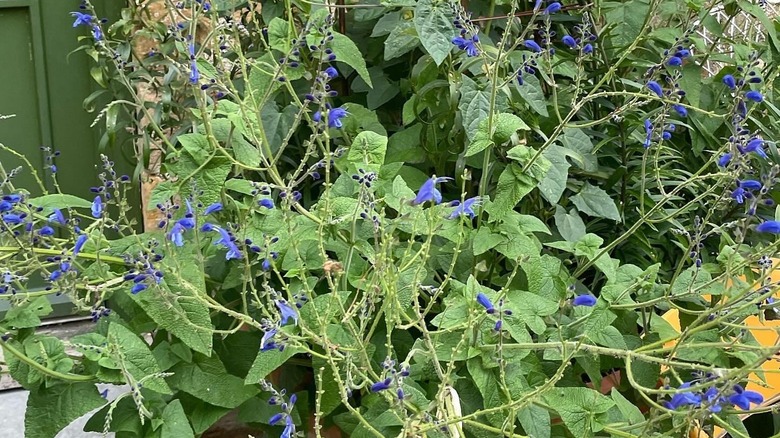
There's something quite unique about arrowleaf sage (Salvia sagittata). As this salvia species' name suggests, it's large leaves are shaped like arrowheads. On top of that, the flowers are an incredibly vibrant blue — it's more than a bright enough color to bring in lots of hummingbirds. This large sage will grow to a height of 5 feet without specialist care and is perennial in zones 8 through 11. Aside from hummers, you can expect butterflies and bees to visit the blooms. Note, however, that this Andes native prefers cool summers and may not tolerate high humidity well.