

This Beginner's Jigsaw Guide Will Unlock A World Of DIY Possibilities
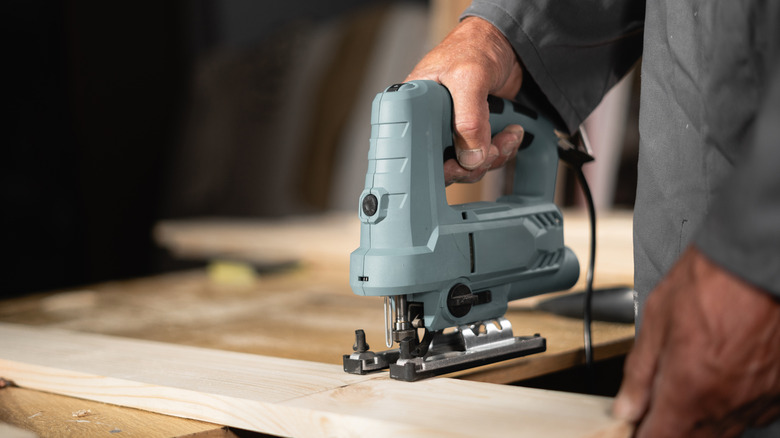
There's something truly satisfying about getting stuck into a DIY project to improve the aesthetic of your home. Whether it's something big and bold like building a DIY fire pit for your yard, or a simpler task like making your own shelves, it's important to have the right tools at your disposal. One useful power tool that should form part of any home improvement toolbox is a handheld jigsaw.
A jigsaw is the perfect starter tool for anyone looking to rework raw materials into home décor or save money by fixing things up around the house. This versatile tool is great for all kinds of jobs — from making straight, simple cuts to creating intricate edging and tight, decorative curves. As with any tool, it works best when you can make full use of its capabilities; however, you first need to master the basics. With a jigsaw, that includes understanding what all of the controls do, which blades are best suited to specific projects, and what speed settings to select for different types of cuts. In this article, we cover the basics of jigsaws, provide a few tips on how to get the most out of your jigsaw, and share a few things that you need to know if you want your tool to last.
What a jigsaw can be used for
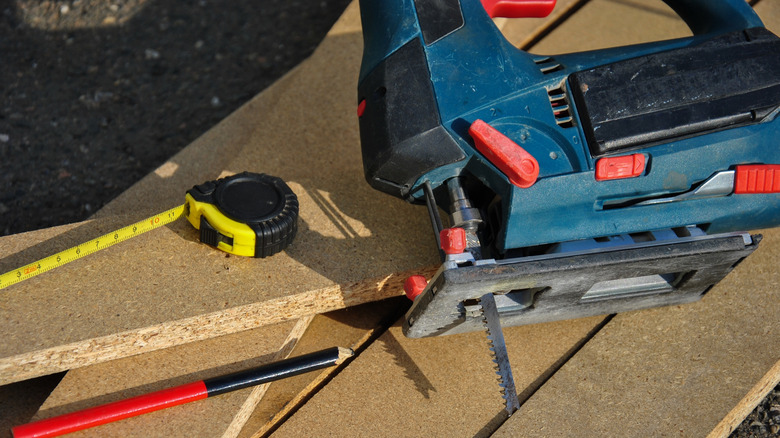
To start, it's important to have a solid understanding of what a jigsaw can be used for. Many DIY enthusiasts incorrectly assume that jigsaws are only good for cutting through straight-edged pieces of wood. The cordless drill is often hailed as a jack-of-all-trades, but the jigsaw is also worthy of this description thanks to its many uses and functions. Yes, it may simply be a blade moving at a high speed, but when you see its versatility in action, you'll be surprised at just how much you can do with it.
With wood, the jigsaw excels at both simple and delicate tasks. You can cut straight lines, elegant curves, accurate circles, and intricate notches. While the standard blade setting will let you make clean, straight cuts, if you tilt the base plate, you'll also be able to make angled and beveled cuts. Standard blades will easily glide through most types of wood, but specialized blades will let you slice through metal sheeting, laminate countertops, PVC piping, and even ceramic tiles. Its highly adaptable nature makes it a must-have tool for any DIY enthusiast.
How much does a jigsaw cost
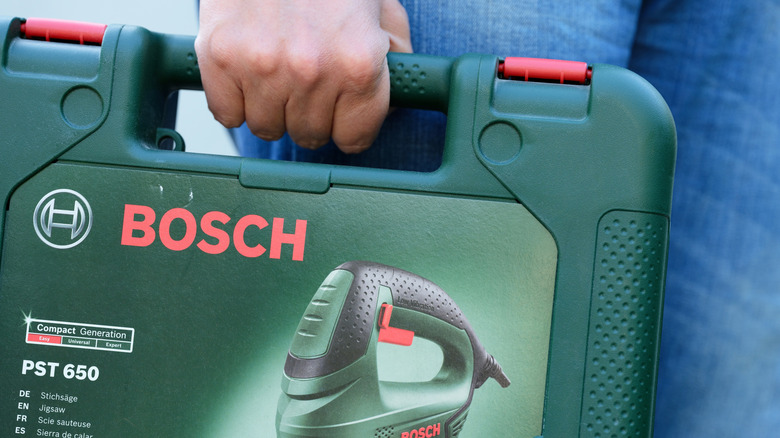
As with any power tool, the amount you need to spend on a jigsaw will depend on what you plan on using it for, the brand, and where you buy it from. You can expect prices to vary depending on a number of factors, including whether it's a cordless model, if it has variable speed settings, and how versatile the stock blade is. Before you go off and purchase a jigsaw, first consider what kinds of projects you'll be working on — this will give you an idea of whether you should invest in a higher-end product or if a budget model will do.
If you're looking to get started with a basic model, you likely won't need a cordless jigsaw. For a trusted brand – like Black+Decker, Bosch, DeWalt, Hitachi, or Milwaukee – prices can range from as low as $40 to over $500. We recommend staying away from unknown brands, as cheap power tools often cost more money in the long run. If you're new to DIY, opt for a jigsaw at the lower end of the price scale, but stick with a known brand. If you're looking for something that can handle more intensive jobs, it might be worth looking at the mid-range options.
Understanding the basics components of a jigsaw
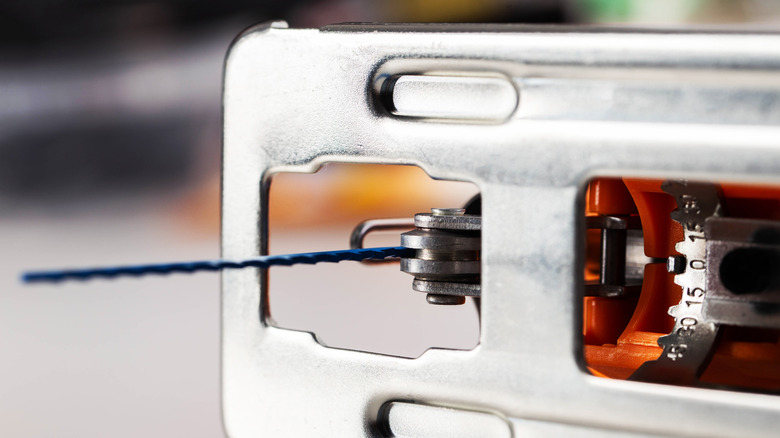
Before you plug in your new jigsaw, you should familiarize yourself with its components and learn what all of the buttons do. Starting with the top section, you'll see a trigger set into the jigsaw handle which turns the jigsaw on and off. Some models have a dial control that lets you adjust the speed of the blade. Near the trigger, you'll find a lock. You can use this to keep the power engaged — handy when you're making long, intricate cuts and you don't want to keep pulling the trigger manually — or to prevent accidentally turning the blade on.
The bottom half of the jigsaw is where you'll find the mechanical parts that do all the work. The blade is located at the front of the tool, with its teeth facing forward. Most modern jigsaws will also have a blade guard to help prevent any mishaps — like losing a digit. Close to the blade, you'll find the orbital action dial — this is used to give the blade forward and backward motion, allowing for a more aggressive cut. At the bottom of the tool is the jigsaw shoe or foot plate, which sits on top of the material you're looking to cut and supports the saw. Knowing what these jigsaw components do and how they work will be important when you want to adjust their settings to improve your cuts or tackle different tasks.
Choosing the right jigsaw blade
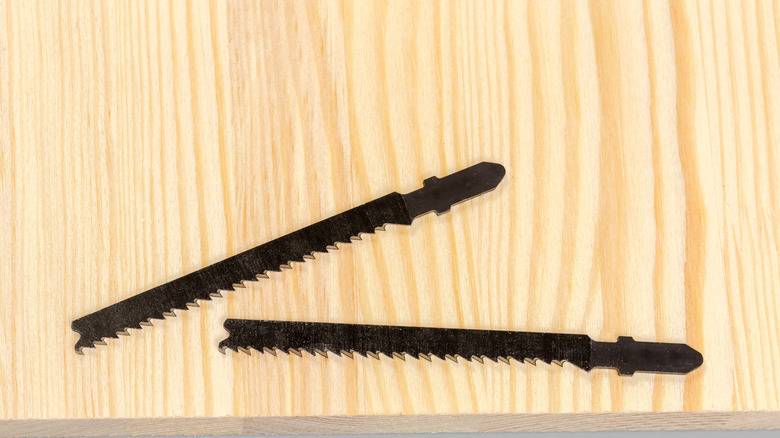
Even if you own the most expensive jigsaw on the market, you'll get poor results if you use the wrong blade for the material you're cutting. There are a few things to consider when choosing a blade for your jigsaw, starting with the fastening system. Blades typically come with one of two tang types – U-shank and T-shank — and they're not interchangeable. T-shank blades are more common nowadays, as they're designed to work with the tool-less fastening mechanisms of modern jigsaws.
Next, you'll need to consider the teeth of the blade, as these will differ depending on the material you're cutting. Coarse teeth are great for making fast cuts through wood, while fine teeth will give you smoother cuts through metal. If you're tackling a laminate kitchen countertop project, you'll want a blade with a reverse-tooth design that cuts on the downstroke. These blades are specifically designed for cutting laminate, as they won't chip the material.
If you're cutting ceramic tiles, you'll need an extra-strong blade — typically a toothless tungsten carbide blade with a grit-coated edge. If you're unsure which blade you need for a specific material, it's best to ask an employee at your local hardware store, who should be able to guide you.
Safety considerations when using a jigsaw
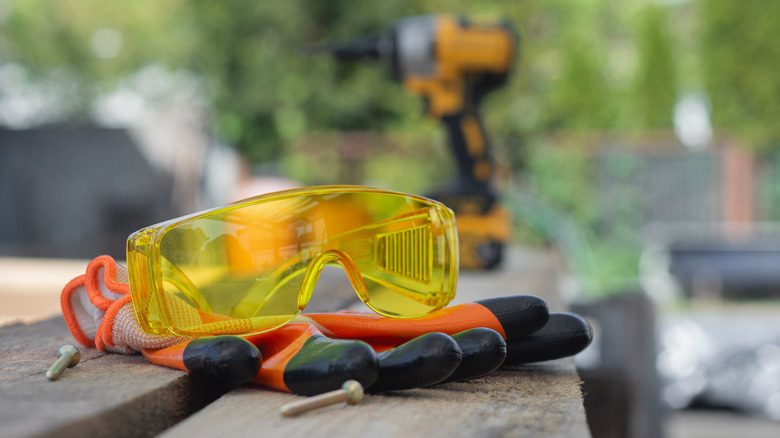
As with any power tool, you should always consider what safety precautions you need to take when operating a jigsaw before lining up your first cut. Jigsaws are reasonably safe to use, but they can still cause serious injury if used incorrectly. Start by thoroughly reading the tool's instruction manual, paying attention to any safety guidance.
In terms of protective equipment, you'll need a pair of safety goggles to protect your eyes from splinters. You should also wear ear protection, especially if you'll be using the tool for an extended period of time, and a face mask to avoid inhaling dust. You'll want to use gloves to protect your hands while handling materials, but it's not recommended to wear them while using the jigsaw, as the fabric can get caught in the blade.
Once you have these safety precautions in place, pause before you switch your jigsaw on. First, make sure that the underside of the material you're about to cut is clear of anything that may cause the jigsaw to buck as you move through it. This includes things like sawhorses, clamps, or even your workbench. When you start to use the saw, don't force it through the material — let the blade do the work. If you push too hard, the blade might snap or the jigsaw motor could overheat.
Preparing to use your jigsaw
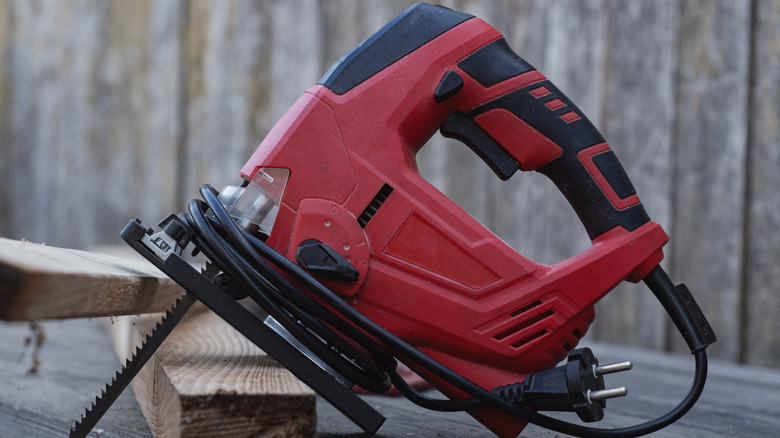
Now that all of your safety precautions are in place, it's time to get to work. When preparing for your first cut, there are a few things to consider. First, make sure that you've fully prepared your workstation. If possible, clamp the material in place so that it doesn't move around when you measure and mark your cutting line, or while you cut. Next, check that you're using the right blade and that it's been inserted correctly.
Knowing how to hold a jigsaw properly is also crucial. You'll want to grip the handle with your dominant hand. Before you pull the trigger, place your other hand on top of the jigsaw to keep it stable as you guide it along your cut marks. Once you're ready to go, make sure that the shoe of the jigsaw is flush with the material you're cutting. Position the blade just next to the item you're working on and then pull the trigger. Use light pressure only and prepare to work slowly through the material.
How to use a jigsaw for simple straight cuts
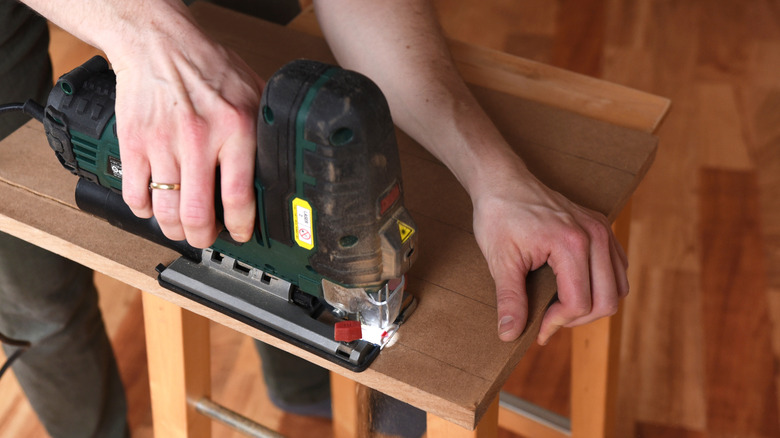
The simplest type of cut you'll make with your jigsaw is a straight line, typically through wood. Even if it's a straightforward cut, you should follow a few fundamentals. Instead of working by eye, use a reliable ruler and pencil to mark a line where you want to cut. When you start, make sure that you cut on the waste side of the line instead of directly on it.
To achieve a perfectly straight cut, you can use a piece of wood with a straight edge and clamp it to your workspace. This will act as a physical guide for your jigsaw's shoe to glide along. Once you're ready to cut, engage the trigger and wait for the motor to reach full speed. As you move the saw forward, keep your focus about an inch ahead of the blade, as this helps you anticipate the cut and make any necessary adjustments.
Cutting curves and circles with a jigsaw
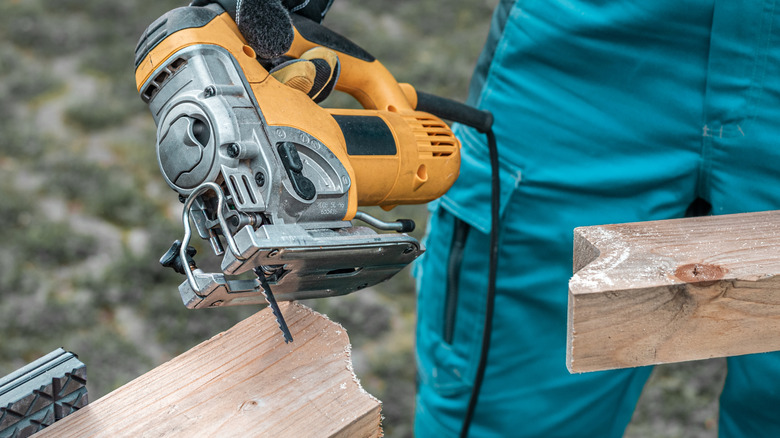
One of the great features of a jigsaw is that you can cut curves to create edges and circles. The most important consideration here is the blade itself. You'll want to use a narrow, fine-toothed blade designed for more intricate work. As with cutting in a straight line, make sure that you map out your curve with a compass or a template before you start. Cut slowly and let the blade do the work — don't force it around the edge
Position the blade just off the material, turn the saw on, and slowly follow the outside edge of your marked line, making subtle turns to follow the curve. If you're looking to cut out a circle , drill a small hole near the edge of the circle, then insert the blade into it to start the cut. With both types of cut, make sure you hold the jigsaw with both hands to keep it steady throughout.
How to angle the blade of a jigsaw
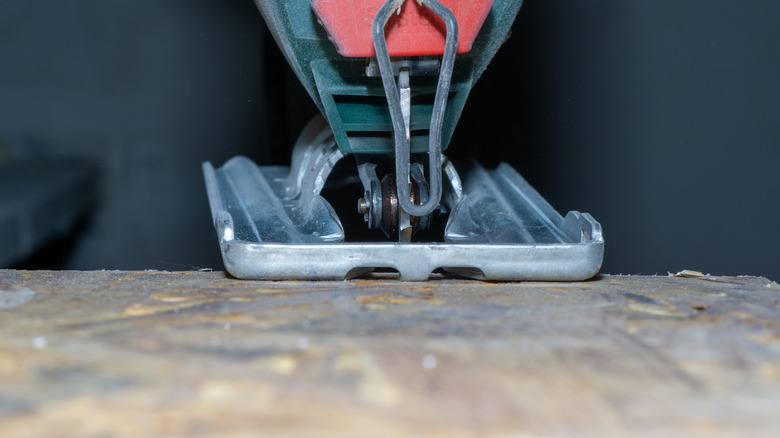
A handy jigsaw technique to try once you've mastered the basics is making a bevel cut. This is a great way to level up your DIY projects, allowing you to create soft, decorative edges on the material you're working on. Rather than tilting the jigsaw itself, you adjust the foot plate so the blade automatically sits at the correct angle.
The method for adjusting the foot plate depends on your jigsaw model, but you'll typically find a bevel lock that you can loosen to set the angle and tighten to secure it. Always double-check that the lock is secure after adjusting, as the last thing you want is the foot plate coming loose mid-cut. Most jigsaws allow angles up to 45 degrees, giving you reasonable range of flexibility for your bevels.
When to reverse your jigsaw blade
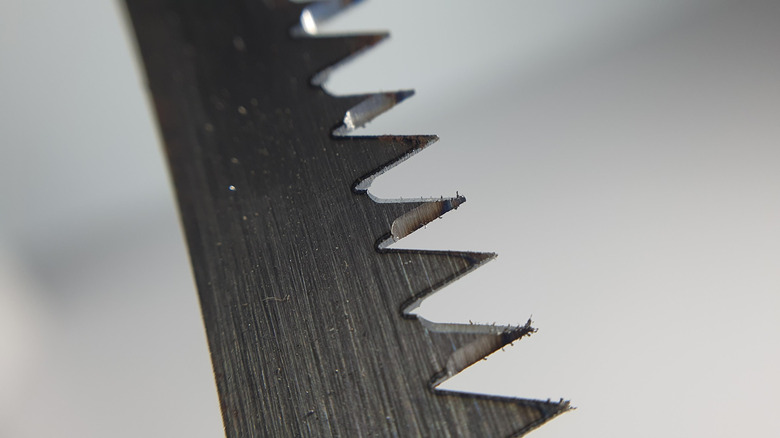
One useful jigsaw blade trick is to reverse the blade so the teeth face toward you instead of forward. You may want to reverse the jigsaw blade if you're working in a tight, cramped space where a forward-facing blade might end up hitting an obstruction. To do this, remove the blade, rotate it 180 degrees, and securely fasten it back in place.
Once installed, you'll pull the jigsaw toward you rather than pushing it away. This gives you far greater control for intricate cuts and makes it easier to see exactly where the blade without having to crane your neck over the tool. It's a simple adjustment that allows you to tackle more complex tasks with confidence. Just be sure to return the blade to its normal orientation before resuming standard cuts.
Tips for intricate work on wood
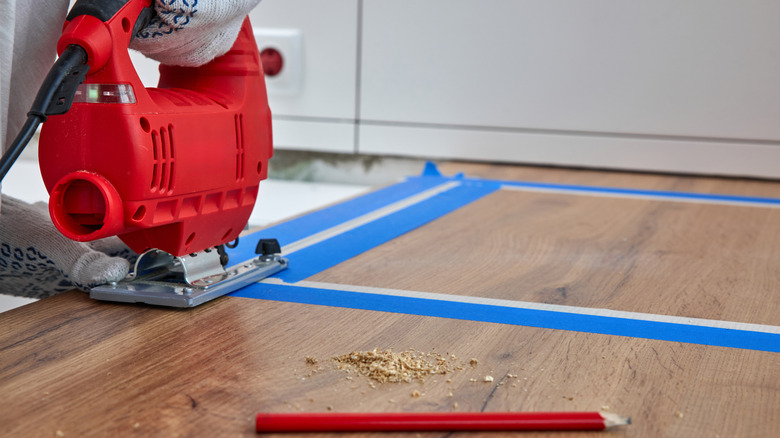
You may find that your projects require more complex cuts than a straight line, so it's worth having a few tricks up your sleeve to tackle more intricate work. One of the biggest jigsaw challenges you'll face is preventing the wood from splintering or shredding as you cut. To counter this, you can use clamps to secure the wood to your work surface. Start by sandwiching your material between two pieces of scrap wood — this prevents the clamps from marking the piece while also providing extra support, reducing the likelihood of splintering.
If you don't have any clamps, you can minimize splintering and chipping by placing packaging or masking tape over the cut line. The tape will act as a stabilizer, holding the surface of the wood together and reducing the chance of it breaking apart as you cut. Another tip for fine cutting is to adjust the speed and vibration of the jigsaw. For very fine details, turn off the orbital action entirely. This slows the blade down, giving you greater control and reducing the risk of the blade jumping or tearing the wood.
Tips for cutting metal with a jigsaw
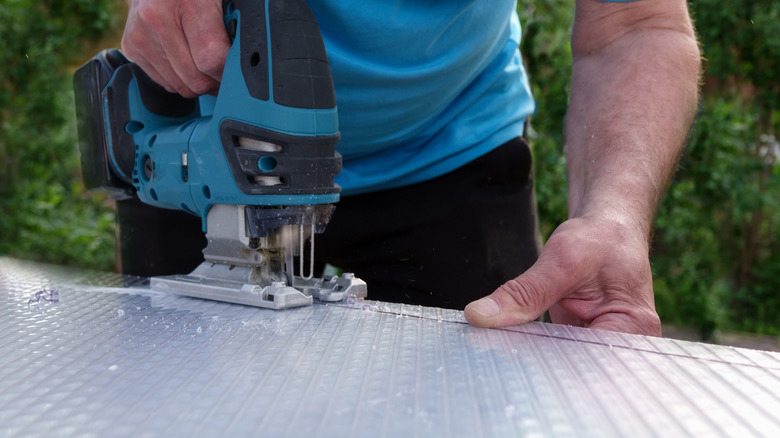
As you use your jigsaw more often, you might find yourself working with materials beyond wood. While it's excellent for wood projects, a jigsaw is also useful tool for creating DIY metal décor around your home. You can also use it to cut steel sheeting for metal cabinets, roofing repairs, or other small metal projects. However, a jigsaw isn't suitable for cutting all types of metal, and some require more specialized tools.
Metals that can be cut with a jigsaw include aluminum, thin stainless steel, and mild steel. Choosing the right blade is crucial — bi-metal or tungsten carbide blades are strong enough to handle these materials. You also need to consider tooth density. For thin metal sheets, a fine-toothed blade will give you a cleaner cut. For thicker metal, opt for a lower-density blade, but remember the final cut may be rougher. Make sure you check the blade regularly, as cutting metal will dull it much faster than cutting wood.
How to make your jigsaw last
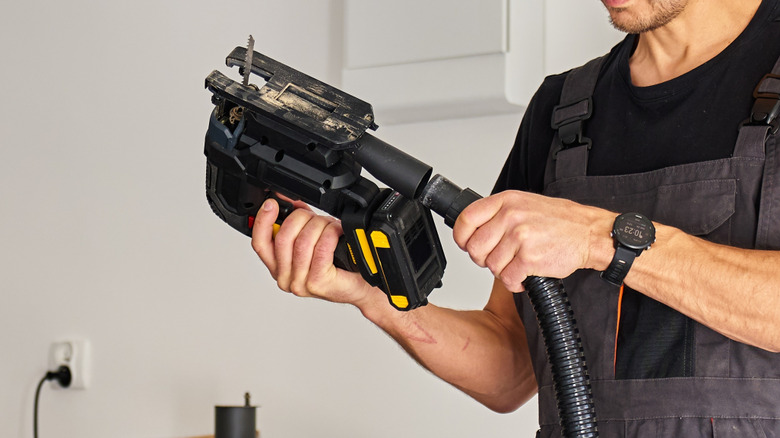
While the jigsaw might not be your most expensive home DIY tool, its versatility makes it one you'll reach for often. How long it lasts will depends as much on how you care for it off the workbench as on it.
Let's start with the blades. As we mentioned previously, a blade designed for cutting wood will become blunt quickly — or even break — if used on harder materials, like. Using the right blade for the job will ensure it lasts much longer. The speed settings are also important — you'll want a slower cut speed for harder materials, and a faster speed for materials like wood and PVC.
When using the jigsaw, never force the tool if you meet resistance. If you do, not only do you risk damaging the blade, but you can also cause the motor to overheat. Once you're done working, use a can of compressed air to clean any sawdust and wooden chips off the jigsaw. Before putting the tool away, make sure to eject the blade. If possible, keep the saw in a protective tool case — many jigsaws will come with their own storage case. If you take good care of your jigsaw, it might even outlast the DIY projects you tackle with it.