

12 Vining Succulent Plants Perfect For Your Indoor Or Outdoor Garden
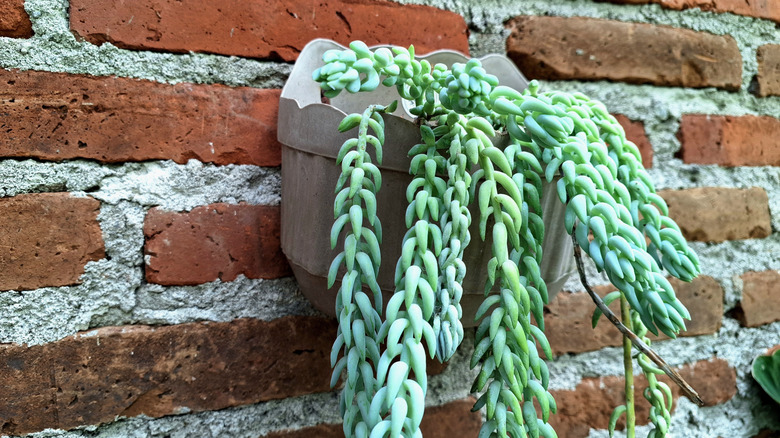
Vining succulents have surged in popularity in recent years. They bring the same life-giving aesthetic to interior gardens as everybody's favorite indoor plants, but they do so without the need for lots of maintenance. In certain climates, they're also indispensable outdoors, allowing homeowners to have a garden in even the most unforgiving conditions.
Wherever succulents are incorporated, their trailing habits make them excellent at adding visual interest to your home's vertical surfaces. This can be via hanging planters, vertical garden walls, or simply placing one on the shelf above your home office desk. Succulents also come in a variety of novel shapes and sizes, like the aptly named burro's tail, the delightfully formed string of dolphins, and the irresistibly cute string of turtles.
In the following list, we'll explore 12 beautiful vining succulents to consider for your garden. It could be that you're hoping to work some greenery into your home decor. Or you may be looking for inspiration to liven up your desert patch. Either way, you're sure to find a vining succulent below that you can use to upgrade your home horticulture game.
String of pearls (Senecio rowleyanus) is a cascading, jewel-like trailing succulent
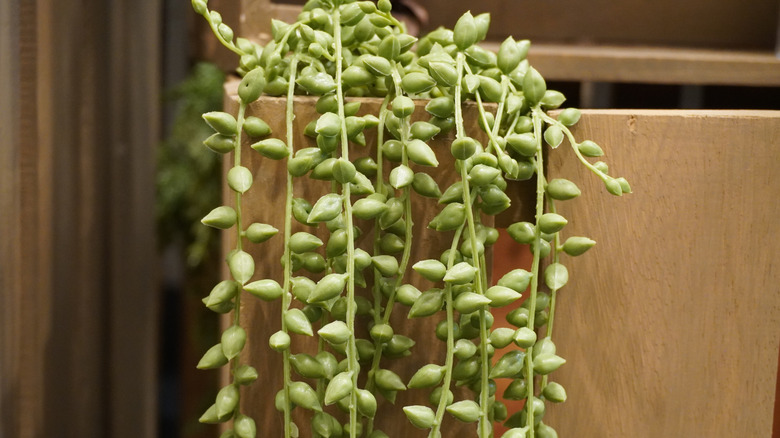
Named for its distinctive, pea-like green spheres that grow along thin, trailing stems, string of pearls (Senecio rowleyanus) delivers a "curtain" of green to wherever it's planted. It's ideal indoors, especially for minimalist homemakers who want their plants to double up as jewel-like decor. Having said that, it's also possible to grow this succulent outdoors with reasonable success, provided that you live between hardiness zones 9 and 11.
Indoors, pop it on top of a shelf near a window that'll afford it bright, indirect sunlight, and allow those bejewelled stems to spill across the shelf's surface. Alternatively, if you're hoping to grow it outdoors, then make sure you plant it in free-draining soil or in a container that has plenty of drainage holes. Like other succulents, string of pearls succulents won't tolerate overwatering for long. Outside, give them a spot with bright, dappled sunlight, and if you want them to spread (which they will in the right conditions), plant them so that the strings can reach the floor when they reach maturity. They usually grow up to three feet long, and once those pearls make contact with soil, they'll begin to root themselves and form a mat.
Burro's tail (Sedum morganianum) thrives indoors with textured trailing foliage
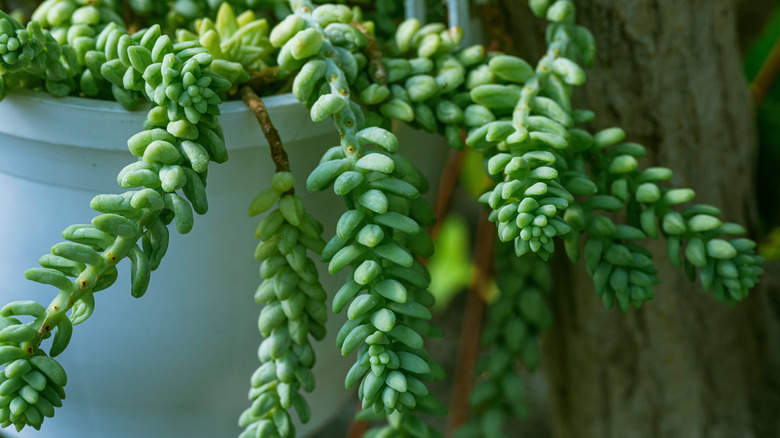
If you're looking for an indoor succulent that'll thrive in low light conditions, then consider snagging yourself a burro's tail (Sedum morganianum). The thick, teardrop-shaped leaves look braided — like a burro's tail. They're colored somewhere between blue and green, and when the plant reaches maturity, it can grow up to 24 inches, lending your space a serious sense of visual texture.
As for where to plant it, you have several options. Outside of hardiness zones 10 and 11, it's best grown indoors, where it'll survive with less light than other succulents. However, it needs at least four hours of sunlight per day, and for best results, give it a sheltered spot with bright sunlight for at least five to six hours. If you get it right, you can also expect spring and summer displays of starry pink flowers. If you want to plant it outside, ensure you can guarantee your plant consistent outdoor temperatures above 50 degrees Fahrenheit. If you can't, then ensure it's planted in a pot so that you can bring it indoors on cooler days.
String of hearts (Ceropegia woodii) is a fast-growing succulent with gorgeous heart-shaped leaves
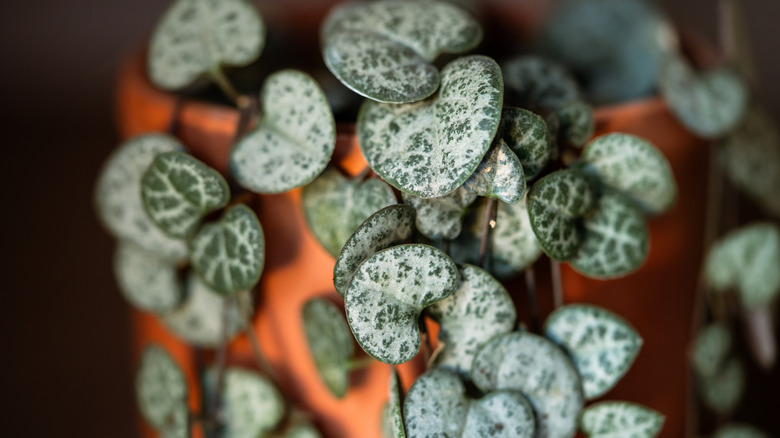
With small, grey, heart-shaped leaves (which are marbled with silver and purplish tones), string of hearts (Ceropegia woodii) is unsurprisingly popular among succulent lovers. Not only for its foliage, but also for the pink, tubular flowers it's capable of bearing in the right conditions. And while it's well-suited to growing indoors, using a string of hearts as a houseplant comes with one key warning: they can grow extremely quickly.
Provided that you can commit to monitoring, maintaining, and occasionally pruning your succulent, this shouldn't be an issue. In fact, it should really be encouraging. These plants prefer indoor temperatures (between 65 and 80 degrees Fahrenheit) and are only really suited to outdoor gardens in hardiness zones 10 to 12. Add one to a shelf or a hanging pot — somewhere its leaves can tumble over the edges — and ensure it gets plenty of bright, indirect sunlight. As with other succulents, it's important not to overwater it — in fact, you should allow the soil to completely dry out before topping your string of hearts up with H20.
Ruby necklace (Othonna capensis) is a vibrant, low-maintenance color-shifter
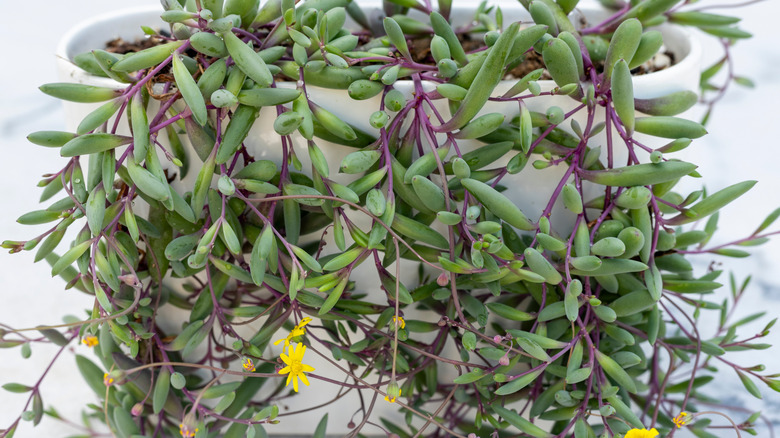
Ruby necklace (Othonna capensis) is named for its bean-shaped leaves, which, growing from bright purple stems, turn a deep, ruby red when exposed to sunlight. This color-shifting ability makes them great for adding visual interest to your interior, especially if you're short on time and need a low-maintenance succulent that's hard to kill. It brings a level of color that's rare among succulent plants (especially when it blooms with daisy-like yellow flowers), and provided that you give it a spot with full sun, it should thrive with relatively little upkeep.
Precisely where you put this plant is up to you, although sunny patios are great places to grow them. So, too, are south-facing interior windowsills. You could add them to hanging baskets to add vertical color and texture to your deck or driveway, or, if you live in its preferred outdoor hardiness zones (9 through 11), it can even be grown as a ground cover. Just know that ruby necklaces aren't frost-tolerant, and they detest being overwatered. In other words, unless you can guarantee a fairly dry and frost-free winter, it's best to pull this plant indoors when the mercury starts to plummet.
String of bananas (Senecio radicans) is an easy trailing succulent for beginners
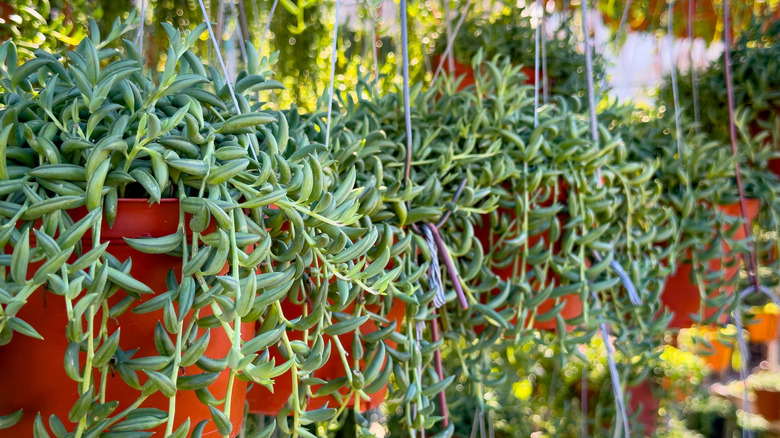
As Joanna Gaines' plant of choice for bringing a room to life, string of bananas (Senecio radicans) is loved (and named) for its glossy, banana-shaped leaves. It's fairly easy to care for, and grows surprisingly quickly, making it a great choice for beginner botanists. As for where you should use it, it's generally best grown indoors.
That's not to say that it won't grow outdoors. In fact, if you live in hardiness zones 10 to 12, it'll probably do just fine. It's just that, like many other succulents, it hates being overwatered (or rained on too heavily), and it's unlikely to put up with anything close to freezing temperatures. Outside of its preferred climatic range, it's best grown indoors. Place it in a spot with bright, indirect sunlight, and if you're unsure when you should water it, just wait until the soil is bone dry.
Fishbone cactus (Epiphyllum anguliger) is easy to grow in humid kitchens and bathrooms
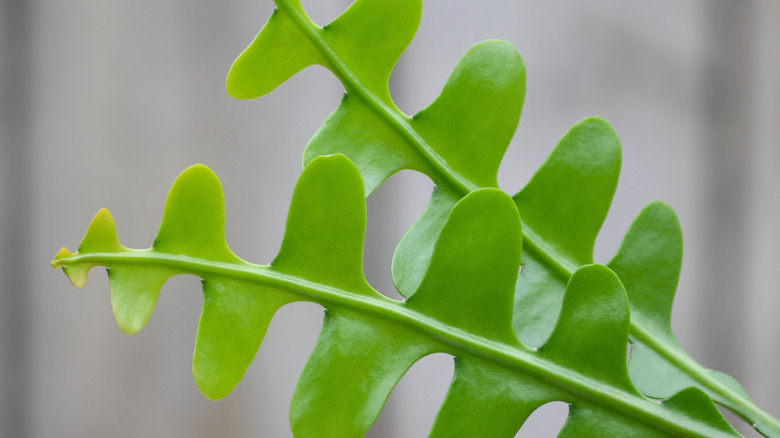
Resembling, in a rather cartoon-esque way, the skeletal form of a fish, the fishbone cactus (Epiphyllum anguliger) is both distinctive and ideal for beginner gardeners. It's also handy for those who are short on time, since it's comparatively easy to grow (versus other houseplants) and requires comparatively little maintenance. As for where to grow it, this depends on the conditions you're able to offer it.
This particular succulent is native to the rainforests of Mexico, which means that, unlike other members of the succulent family, it likes things highly humid. Hardiness zones 10 and 11 are best for outdoor growth, however, unless your area is often humid, you may be best reserving this plant for indoor use. It makes an especially good addition to the shelves in your kitchen and bathroom, where the combined temperature and humidity are sure to see it thrive. It likes to spread, which means you can effortlessly add plant-based interest to your space, and it may also bloom with fragrant, tubular flowers. These tend to open at night, so if you wake up one morning to a peculiar floral scent in your bathroom, chances are that it's your fishbone.
Rat tail cactus (Disocactus flagelliformis) is a dramatic trailing cactus with pink blooms
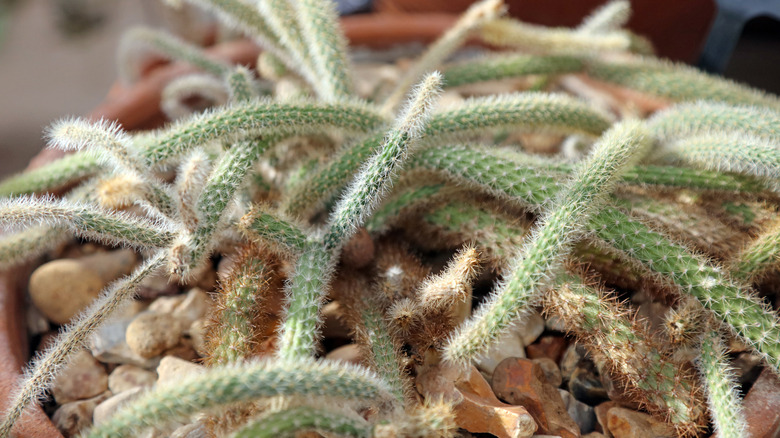
It may not be the most attractively-named succulent in this guide, but with its long, cylindrical stems (which eventually become covered with soft, golden spines), there's much to be said for adding a rat tail cactus (Disocactus flagelliformis) to your indoor garden. They're not exclusively grown indoors. In fact, provided that you live in hardiness zones 10 or 11, you'll probably find that it grows quite happily outside. However, it prefers to be kept dry throughout the year, making the winters in more temperate climates unsuitable.
If you live in a hot, desert climate, then great. Add this cactus to hanging baskets, container gardens, and rock gardens, and watch as those tail-like leaves grow and spread. If you don't, then the best way to care for your rat tail cactus is to give it a south- or east-facing windowsill with bright, indirect sunlight, and to water it sparingly. In the warmer months, wait for the top inch of soil to dry out before re-soaking it. Into the autumn and winter, rein in your watering and allow the soil to dry out completely before dousing it with more. Follow these guidelines and, as well as those succulent, golden-hued locks, you may just be rewarded with a springtime display of pink flowers.
Calico kitten (Crassula pellucida 'Variegata') is an excellent spiller for container gardens
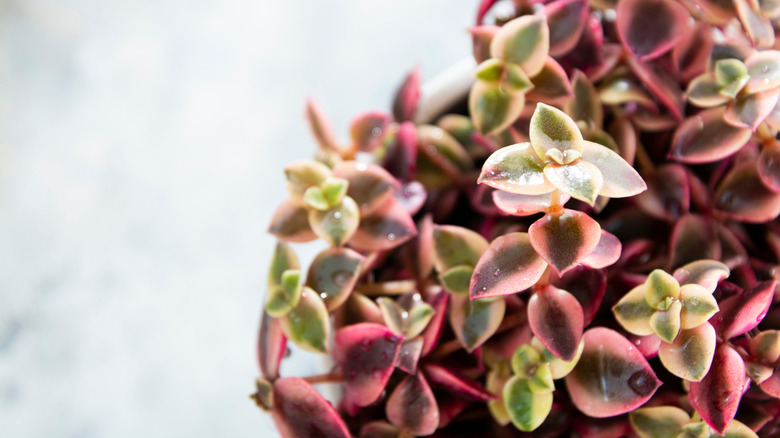
Growing with trailing vines and explosive clusters of pink, purple, white, and green heart-shaped leaves, Calico kitten (Crassula pellucida 'Variegata') is both easy to grow and beautiful to behold. It's suitable for both indoor and outdoor gardens, too, although, as with other succulents, its suitability for outdoor gardening depends on where you live. Generally speaking, it thrives best in hardiness zones 9 to 11, especially if you can give it a sunny spot with free-draining soil.
This is an excellent choice for adding "spiller" material to container gardens and hanging baskets. Indoors, its trailing habit, surprisingly diverse colorways, and starry summer blooms of flowers add oodles of visual interest to sunny shelves and windowsills. And while these plants are delicate and prone to breaking, you can usually pop any snapped stems into fresh soil and use them to grow a whole new plant.
Variegated elephant bush (Portulacaria afra 'Variegata') can be grown and trained like a hedge
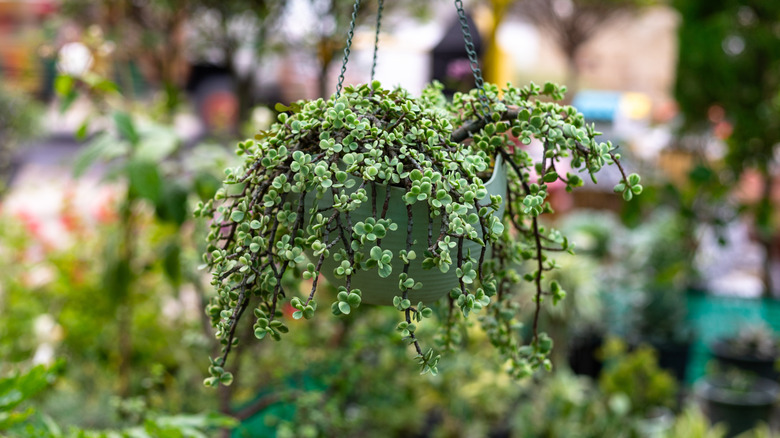
Variegated elephant bush (Portulacaria afra 'Variegata') is known and loved for its striking, multi-hued foliage. It's also quite easy to care for (as houseplants go), and promises to bring beauty to your home with its reddish stems and small, green-white leaves. It looks like a small, trailing tree, and if allowed to grow, can provide a surprising amount of coverage. Interestingly, it's also thought to be an excellent absorber of carbon — soaking up more than the equivalent amount of deciduous forest — making it a great choice for the climate-conscious gardener.
As for where to grow it, again, that's up to you. It's well-suited to gardens in hardiness zones 9 to 11. You can grow it like a hedge, pruning and "training" it into your desired shape just like any other shrub. It's drought-tolerant, which makes it useful for gardeners adopting xeriscaping practices, and since it grows so quickly, it makes a fantastic option for ground cover. Indoors, it's great as a trailing plant, perhaps on a shelf or a windowsill.
Wherever you grow it, try to give it bright, indirect sunlight. Plant it in well-draining soil, and if you're growing it indoors, allow the soil to dry out completely before re-watering. Outside, it should cope fairly well with temperatures as low as 30 degrees Fahrenheit. If the mercury is likely to fall lower than that in your area, consider either growing it as an annual or placing it in a pot so that it can be brought inside during the winter.
String of turtles (Peperomia prostrata) is a humidity-loving trailer with leaves that match the name
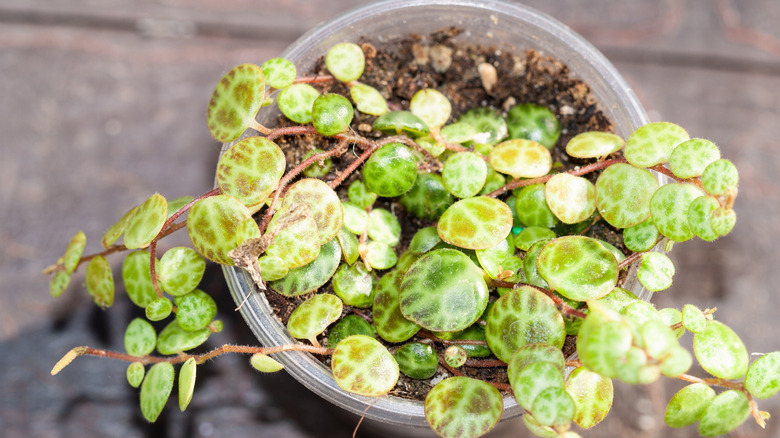
How on earth are you supposed to resist a plant called string of turtles (Peperomia prostrata)? Named, as you've probably guessed, for its mottled-green, turtle-esque leaves (which grow on long, cascading vines), this plant is an excellent means of bringing charming, plant-based texture to your decor. It's native to the rainforests of South America, meaning that it absolutely loves humidity. This makes it an excellent choice in high-humidity areas of the home where other succulents may struggle, like the steamy confines of your bathroom.
As well as humidity, string of turtle plants grow best when given a spot with bright, indirect sunlight. Avoid giving it full sun, as this can fade the leaves. It's also best to err on the side of caution when it comes to watering, especially if it's already placed in a humid environment. The best bet is to water it whenever the top inch of soil feels dry.
If you're hoping to grow this cutesy succulent outdoors, then the good news is that you can. The bad news is that it's only really viable in hardiness zones 10 to 12. Even then, you'll need to bear its native environment in mind. This means ensuring it's planted in well-drained soil, and that your chosen spot is both warm and sheltered from the wind. If it's not, then any breeze is likely to whisk the plant's much-needed humidity away.
String of nickels (Dischidia nummularia) is a tropical epiphytic vine that's excellent for humid indoor spaces
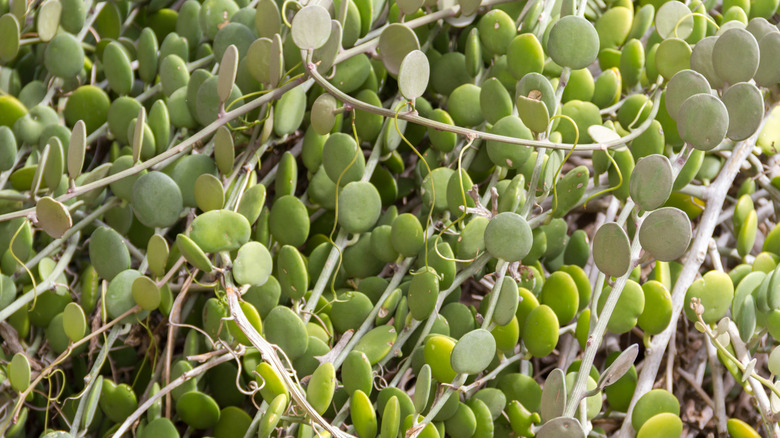
With cascading vines peppered with small, round leaves that resemble (you guessed it) nickels, this succulent is an epiphyte. What is an epiphyte, you ask? It's a type of plant which naturally grows out of the nooks and crevices of trees. It draws air and moisture from the air around it, rather than stealing them from its host.
Like other beautiful trailing "string of" plants, string of nickels (Dischidia nummularia) is popular as an ornamental and is often planted in hanging baskets. It's often used in terrariums, too, where its minimal substrate requirements make it easy to care for. Its vines can be trained to grow around windows or along the base of shelves, and as you might expect, given how it's evolved to grow, it's usually quite easy to care for. In fact, this particular succulent actually quite enjoys being rootbound.
It's native to the tropics of Australia, Asia, and the Pacific Islands, which means it likes things nice and humid. It can technically be grown outdoors in hardiness zones 10 and 11, however, it must be given a warm and sheltered spot where humidity can collect without being blown away by the breeze. For best results, grow it ornamentally indoors, in a spot with bright, indirect sunlight, and in a room where humidity can be guaranteed, like the bathroom.
String of dolphins (Senecio peregrinus) is a playful trailer with dolphin-shaped leaves
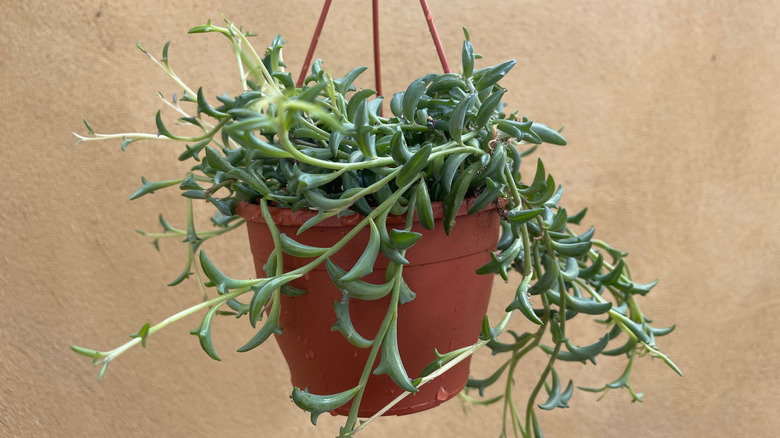
Again, how anyone is supposed to resist the urge to buy one of these unique-looking houseplants, we have no idea. Named "string of dolphins" (Senecio peregrinus), its fleshy green leaves look remarkably similar to the marine animal it's named after. These grow on vines, which can stretch up to three feet in length, and in the summer, this plant produces small pink-white flowers that smell ever so slightly of cinnamon.
As for where it's best grown, most people use it ornamentally, either in the home or greenhouse. It can be grown outside between zones 9 and 11, but it's not frost-tolerant. In fact, it doesn't really enjoy temperatures any lower than 60 degrees Fahrenheit, so unless you can guarantee these on a steady basis, it's best to give this succulent sanctuary inside. Use it as a dramatic "spiller" plant in your indoor container arrangement, or add it to a pot on your shelf and allow it to cascade across the surface. It's best grown in a position with at least six hours of bright, indirect sunlight, but other than that, it's fairly easy-going. You needn't water it until the soil completely dries out, and you'll find that average indoor humidity is sufficient to keep it happy.