

Brighten Your Garden Beds With A Self-Seeding Flower Hummingbirds & Butterflies Love
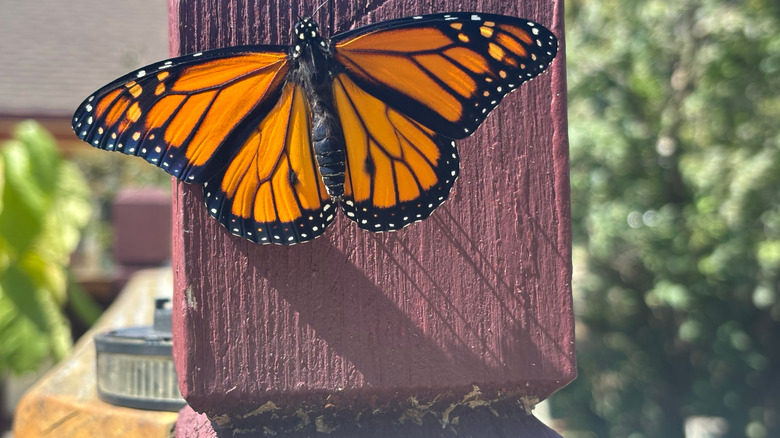
There's arguably no easier way to brighten your garden beds than with self-seeding flowering plants. What's so magical about these plants is their ability to fill a garden bed with color each season with almost no effort from you, the gardener. You let the blooms go to seed, then let the seeds drop to the soil below. There, they hibernate over the cold months, germinating once the ground warms up again in spring. If you sow enough plants initially, you get an instant garden bed year after year. To make it even better, select plants with flowers adored by hummingbirds and butterflies, such as tall bellflower (Campanulastrum americanum) — though don't confuse this non-invasive flower with creeping bellflower (Campanula rapunculoides).
This stunning wildflower is native to north-central and the eastern U.S. as well as eastern Canada. In the wild, it's found growing in moist, shady areas such as woodlands and along streams. The bellflower in the plant's common name is a little deceptive because the small lavender-hued blooms look more like five-pointed stars. Each flower stem can grow as tall as 6 feet, but they more commonly max out at around 2 feet tall. The blooms attract hummingbirds, and they're also beloved by bees, butterflies, and other pollinating insects. Once the flowers are spent, the plant forms a fruiting seed capsule, which contains many seeds that will naturalize the species in your garden.
How tall bellflowers support hummingbirds and butterflies in your garden
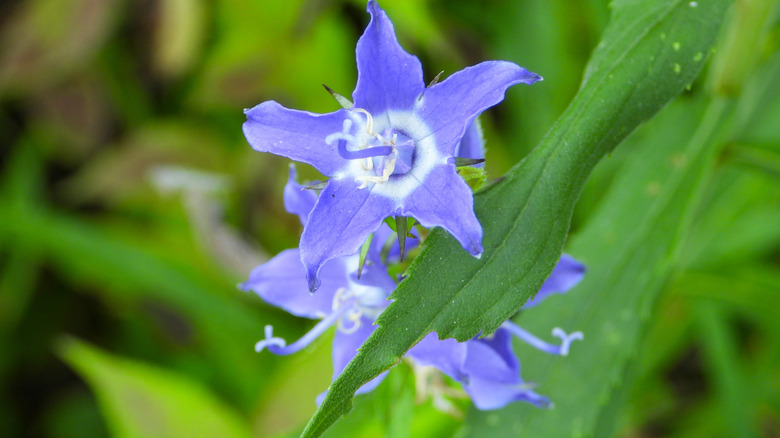
Tall bellflower's star-shaped blooms are filled with nectar and pollen, and they grow on tall spikes, making them easily accessible to any sweet treat-loving critters that visit your garden. If you grow them en masse, the plants will bloom all summer long, drawing in hummingbirds seeking food to fuel their frantic flitting. Having hummers around through the warmer months of the year allows you to enjoy watching their antics, but that's not all. With such an abundant source of nectar, the tiny birds may decide to nest and produce offspring in your backyard.
Long-tongued bees, like bumblebees and leaf-cutting bees, love visiting tall bellflower blooms for their nectar, as do butterflies, wasps, and other bee species — though the latter are often more attracted to the pollen. It's perhaps not surprising since butterflies and bees tend to seek out purple and blue flowers over other colors. All this avian and insect activity promotes local ecological diversity and ensures that the other plants in your garden thrive, too. For example, as the hummingbirds, butterflies, and bees move from flower to flower, they spread pollen, aiding germination and ensuring natural reseeding. It may even increase the yields of edible plants in your garden.
How to plant tall bellflowers for years of display
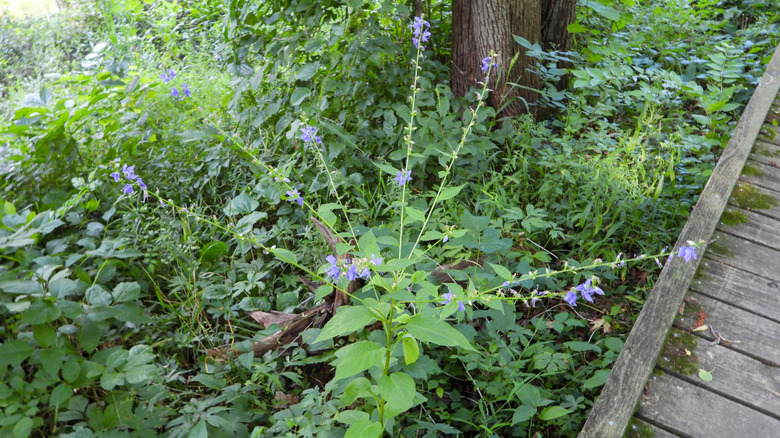
Tall bellflowers will thrive as annuals or biennials in much of the U.S. If you garden in a warmer area that experiences hot summers, select a partially shady spot for these native plants. Because of their height, tall bellflowers do best at the back of a border shaded by overhanging trees or a fence. To get started growing this pretty wildflower, plant seeds indoors around six to eight weeks before the last predicted frost date. This will provide you with plants that will flower in the current season and then reseed for future displays. To create a pollinator garden, pair your tall bellflowers with other dazzling self-seeding flowers that'll attract hummingbirds to your yard like magic, such as bleeding heart, hoary vervain, and common lantana.
Let's say you've successfully transplanted your spring seedlings into a garden bed. To keep these self-seeding flowers that effortlessly fill your yard with color growing happily, make sure they stay well-hydrated. Avoid letting the soil dry out completely to ensure abundant flowers and healthy growth. You also want to protect tall bellflower seedlings from slugs, snails, and aphids, which can occasionally be a problem. To keep your plants blooming from May to October, deadhead some of the early flowers. Just remember to let any flowers that appear in later months go to seed. Bonus: They will attract seed-eating birds to your yard for a spot of bird watching.