

The Perfect Plants To Grow Near A Bird Feeder
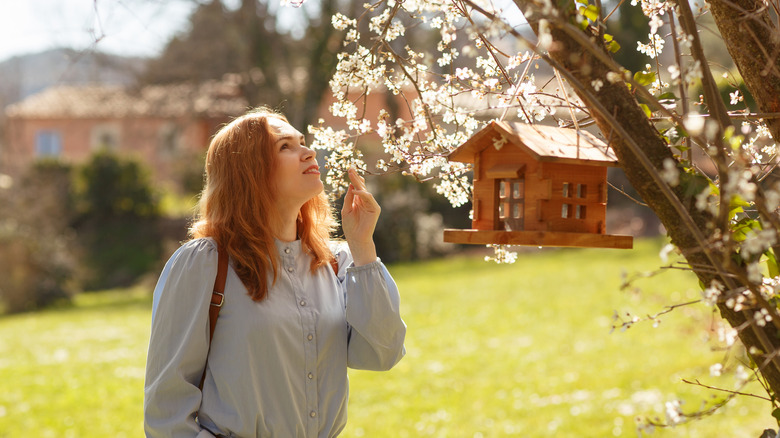
Has your bird feeder seemed empty lately? Adding a bird feeder is one of the best ways to attract more birds to your garden. However, your feeder's efficiency depends only on its location. To maximize its ability to attract your feathered friends, ensure the surrounding landscape is as hospitable as the feeder itself by adding nearby plants that birds love, such as trees, flowers, or ornamental grasses.
While it may seem like birds choose their next meal spot haphazardly, there are actually a few features that they look for. First, birds prefer to eat when they have coverage nearby, such as bushes or tall grasses (like switchgrass or Indian grass) that they can readily flee to if a predator appears. Adding fruit-bearing plants can complement your feeders and attract birds that might not have been drawn to the area otherwise. For example, if you have a bird feeder full of seeds, you may not attract insectivores. However, by adding plants like the pawpaw tree that offers fresh fruit, you can attract more fruit- and seed-eating birds, plus species that'd prefer to make a quick meal out of the fruit-feasting bugs.
The right plants to grow near a bird feeder in your yard or garden depend on several factors. You'll need to consider factors like the birds you want to attract, what's already in your yard, and your specific region and climate.
Blue curls
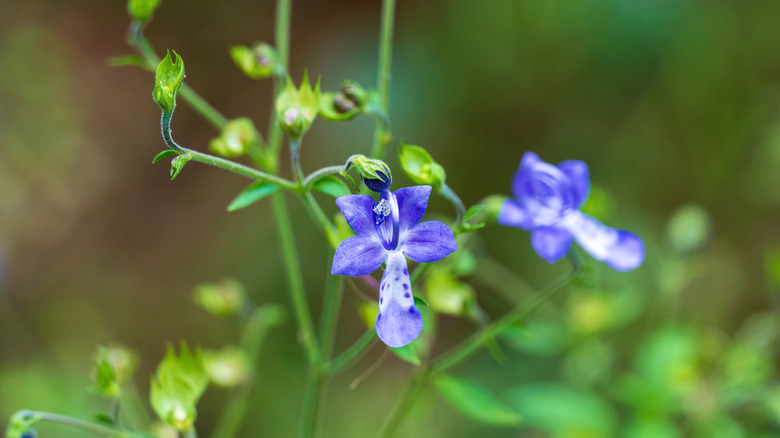
Native wildflowers can be among the best plants to add for local wildlife, as these species have adapted to your specific environment alongside the animals. As a result, one of the first plants you may wish to consider planting near your bird feeder is blue curls (Trichostema dichotomum). This annual flower sports eye-catching blue blooms that eventually develop into seeds that birds love to eat. They also attract a variety of insects, making them perfect for seed- and insect-eating birds such as sparrows, warblers, and buntings. Just keep in mind that blue curls are heavy self-seeders.
Serviceberry
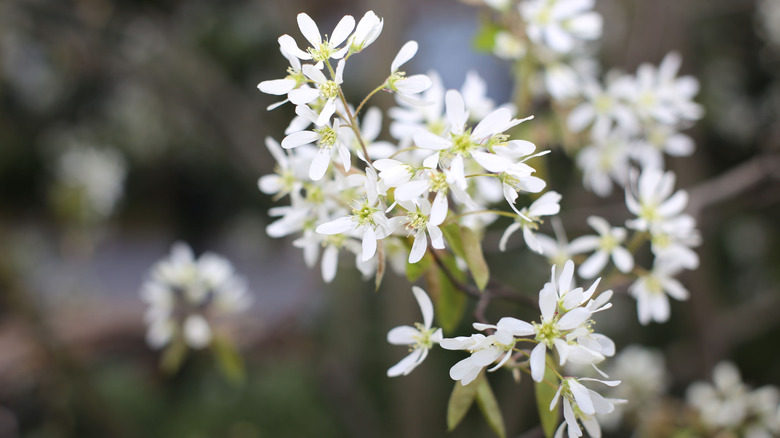
Berry bushes are pretty and double as a welcoming habitat for your backyard birds. During the fruiting season, they provide your feathered friends with an endless buffet of delicious berries (and of those insects who also like to take part in the feast). They also provide natural cover thanks to their thick foliage. Serviceberry bushes (Amelanchier spp.) are a popular choice thanks to their ability to support birds and insects and their charming white flowers. They're hardy in USDA Zones 4 through 9, and they produce edible fruit you can enjoy as well.
Pagoda dogwood
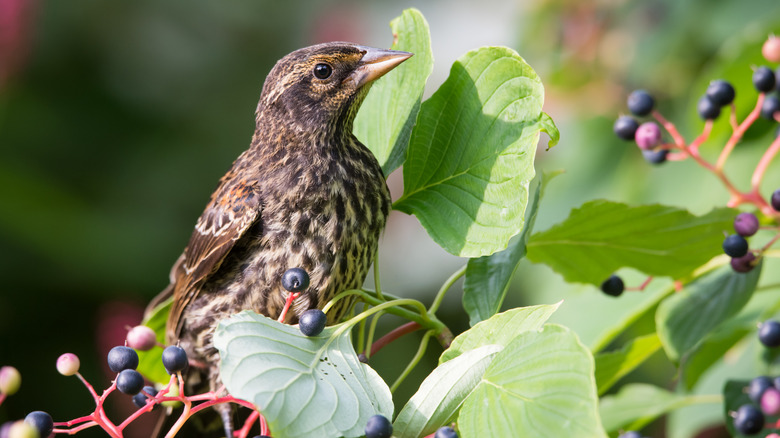
Also known as the alternate-leaf dogwood, the pagoda dogwood (Cornus alternifolia) can be grown as a tree or shrub. While it may not produce edible berries like the serviceberry, it does showcase eye-catching gold and white flowers that give way to fruit that birds and even some small mammals adore. Due to the plant's size and coverage, it also acts as a shelter for birds, including during the nesting season. This makes it a perfect plant to grow near your feeder due to its year-round wildlife appeal. This dogwood tree is winter hardy in zones 3 through 7.
Sassafras
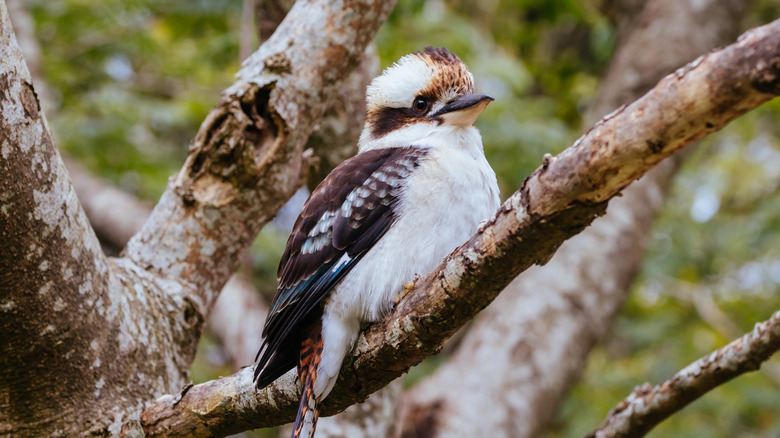
Sassafras (Sassafras albidum) has a long history in North America, dating back hundreds of years, with use spanning everything from medicine to food. By planting it near your bird feeder, you can extend the benefits of a sassafras to your backyard feathered friends, who can use the plant for coverage or eat its fruit. This tree is hardy in zones 4 through 9, and it displays a beautiful array of colors in the fall. However, while birds may enjoy having it nearby, keep in mind that it spreads through suckers and readily grows as a shrub without maintenance.
Green hawthorn
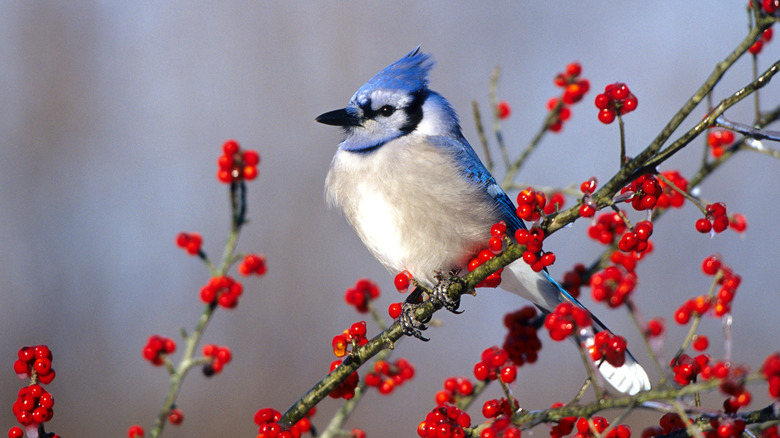
Also known as the southern hawthorn, the green hawthorn (Crataegus viridis) is a flowering tree native to the southeastern United States. It's hardy in zones 4-7 and produces fruit throughout the fall and winter. When planted near your feeder, birds can flock to this tree for shelter, whether they're avoiding predators or waiting their turn for a meal. Birds can also eat the green hawthorn's fruit during the colder months, while the various insects attracted to the green hawthorn offer a buffet to those carnivorous bird species that aren't interested in fruits or the available bird seed.
Possumhaw
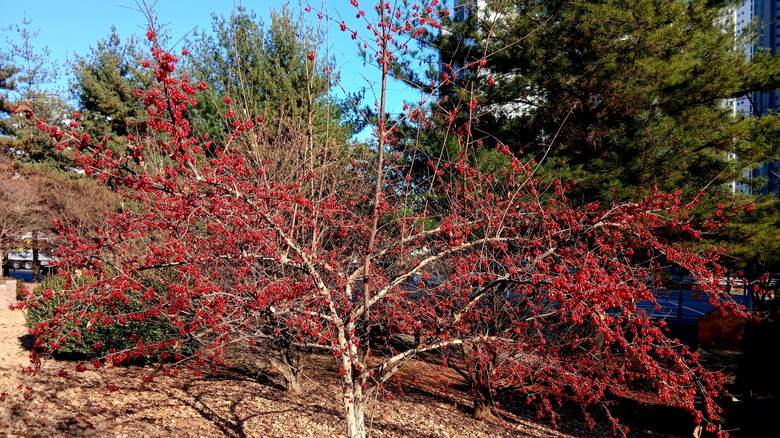
If you have poor soil near your bird feeder, finding the perfect plant can feel impossible. Fortunately, plants like the possumhaw (Ilex decidua) thrive in those less-than-ideal areas. So long as the soil is acidic, they can handle a variety of textures, and the possumhaw even tolerates occasional flooding. Not to mention, it does well with both full sun and partial shade. As far as appealing to your feathered friends, the possumhaw offers coverage for perching and nesting, berries that songbirds can eat, and hosts a variety of insects for non-seed-eating birds to enjoy.
Blackhaw viburnum
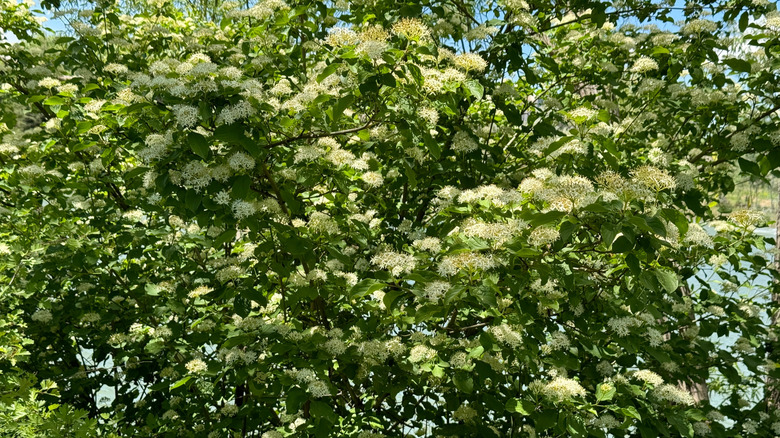
For an ornamental shrub that provides birds with food and shelter, look no further than the blackhaw viburnum (Viburnum prunifolium). Blackhaw viburnum blooms during the late spring and early summer, giving way to fruit that songbirds often flock to eat. And, near a feeder, the dense foliage of the blackhaw viburnum provides the perfect spot to hide from predators. Its eye-catching white flowers also attract hummingbirds, providing you with the benefits of a specialized feeder without needing to establish both a seed and a suet and hummingbird feeder in your yard. Blackhaw viburnum is hardy in zones 3 to 9.
Switchgrass
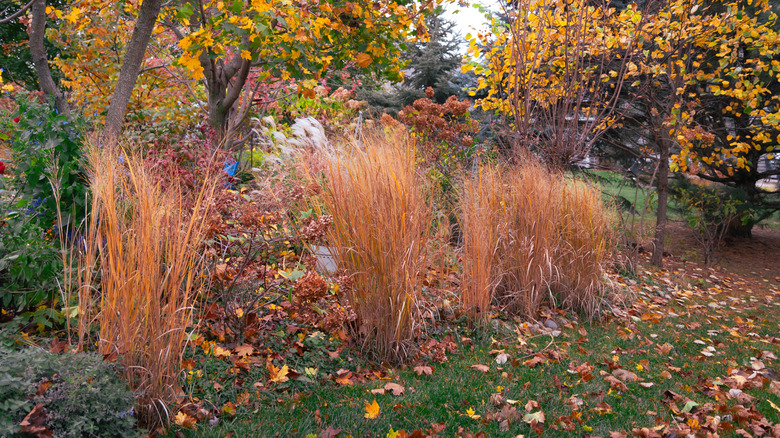
Switchgrass (Panicum virgatum) is native to North America's tallgrass prairies, meaning it has spent centuries adapting alongside the many bird species commonly found in these areas. Its long stalks act as both a source for nesting materials and a covered retreat for birds, and when it produces its seeds in the winter, birds enjoy them. Like many other plants on this list, it also attracts an abundance of insects, which draw in carnivorous species that may avoid your feeders. Plus, since this ornamental grass is self-seeding, it'll come back each year, providing annual appeal.
Cup plant
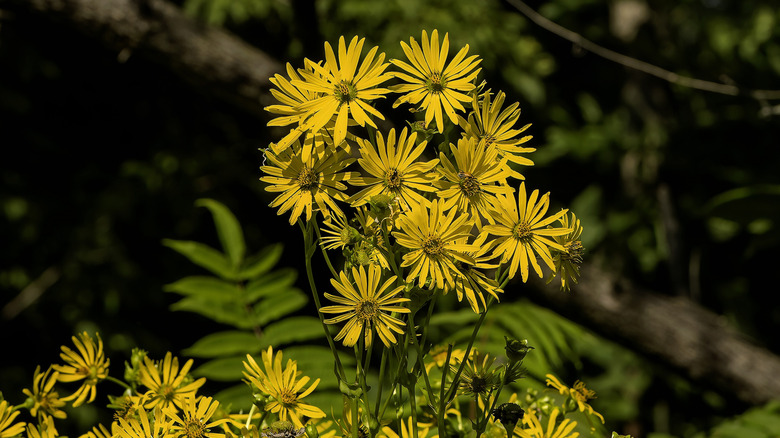
In the same way that you can provide visiting local birds with steady nourishment through food, you can also provide them with water for hydration by planting cup plants (Silphium perfoliatum) around your feeder. Cup plants are named for the divot created by their leaves, a cup-like space where water pools following rain. This feature attracts birds, making it the perfect addition to accompany your bird feeder. Cup plants also provide seeds and nectar, allowing them to pull double-duty in your garden to attract hummingbirds and seed eaters. This native wildflower is hardy in zones 3 through 9.
Coral honeysuckle
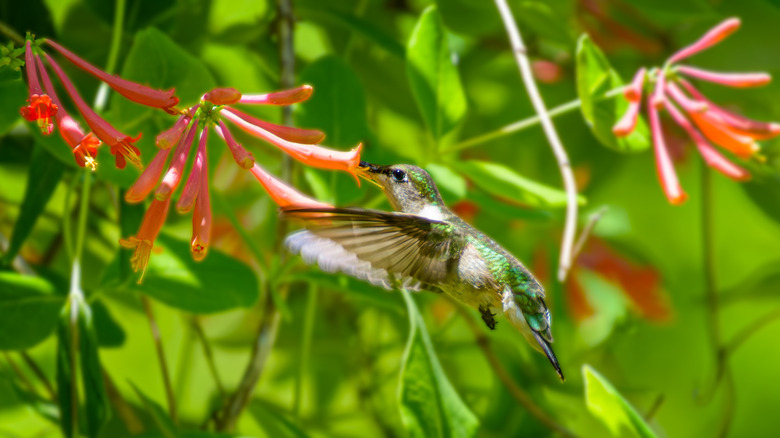
Hummingbird feeders require regular cleaning, often more so than your typical bird feeder. As a result, you may be looking for a plant that can tend to your smaller feathered friends' needs. Fortunately, like the blackhaw viburnum, coral honeysuckles (Lonicera sempervirens) attract hummingbirds with nectar, providing them with a reliable, natural food source. This vine produces stunning red flowers and is hardy in zones 4 through 9, making it evergreen and year-round appealing. Even when out of bloom, it offers birds cover and berries, and attracts butterflies.
Indiangrass
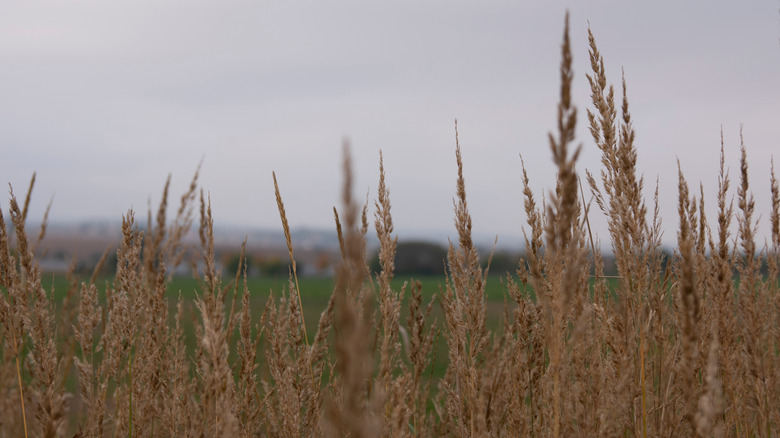
Another ornamental grass native to the United States, Indiangrass (Sorghastrum nutans) thrives in various spots throughout your yard, whether that's in the sun or shade. As long as you've placed your bird feeder out of the elements, you can easily grow this grass nearby. When it comes to benefiting your backyard birds, Indiangrass has plenty to offer. Like switchgrass, it provides cover and nesting materials. It offers seeds for granivorous birds while attracting butterflies for the carnivorous species to enjoy. This ornamental grass is hardy in zones 4 through 9 and is durable against challenges like deer and drought.
New York ironweed
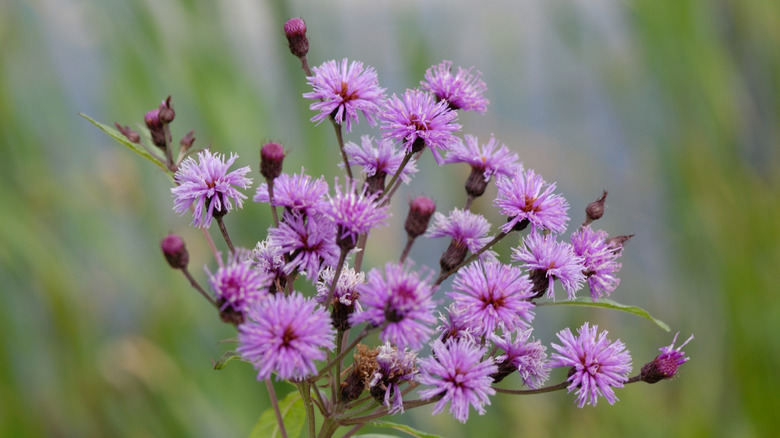
One of the best alternatives to baby's breath in your garden, New York ironweed (Vernonia noveboracensis), is also a perfect plant to grow near a bird feeder in your garden. Ironweed is a visually appealing plant that adds a touch of brightness to your outdoor space with its beautiful blooms. Hardy in zones 5 through 9, it's also a native wildflower. While it may not attract hummingbirds or provide coverage like other plants listed thus far, New York ironweed attracts both butterflies and bees, which birds like orioles and blue jays appreciate, and it is also a source of seeds for granivorous birds.
Green-and-gold
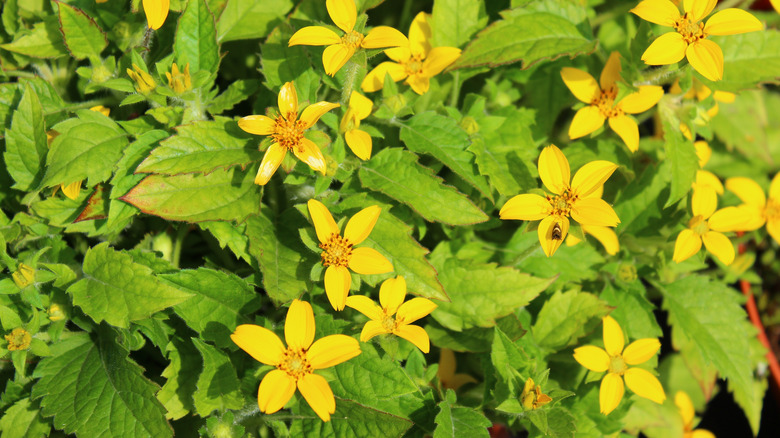
When choosing the right location in your yard for a bird feeder, it is important to consider ease of access, which is why many people choose to install bird feeders near walkways. Green-and-gold (Chrysogonum virginianum) thrives as a walkway border plant, adding a splash of color to the areas surrounding the feeders in your yard. Like ironweed, it attracts insects while also offering seeds, ensuring your backyard birds have a range of food options. This means you can still attract a diverse range of birds to your yard, even with only one or two feeders.
Southern sugar maple
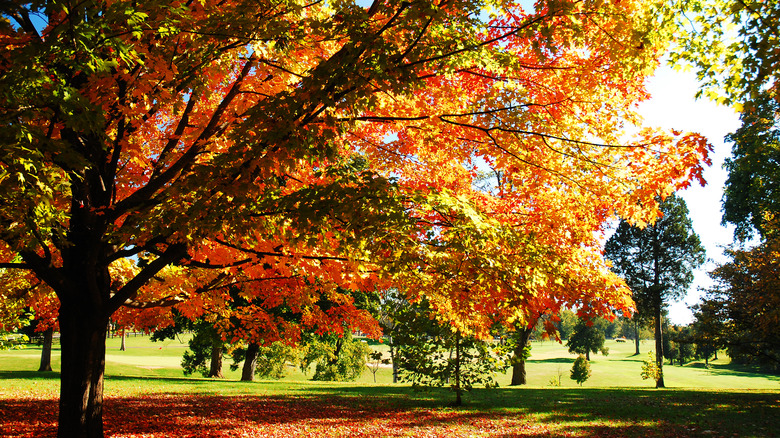
Trees are an essential part of a bird's life. The shelter they provide is nearly unmatched by other plants. Some species may also provide a food source, whether through nectar-producing flowers, insects that use the tree as a host, or seeds and fruit. As a result, if you are okay with the time commitment required for a tree to reach adulthood, adding a tree like the southern sugar maple (Acer floridanum) is often a top choice. Hardy in zones 6 through 9, this tree checks all the boxes while providing shade for your yard.
American beautyberry
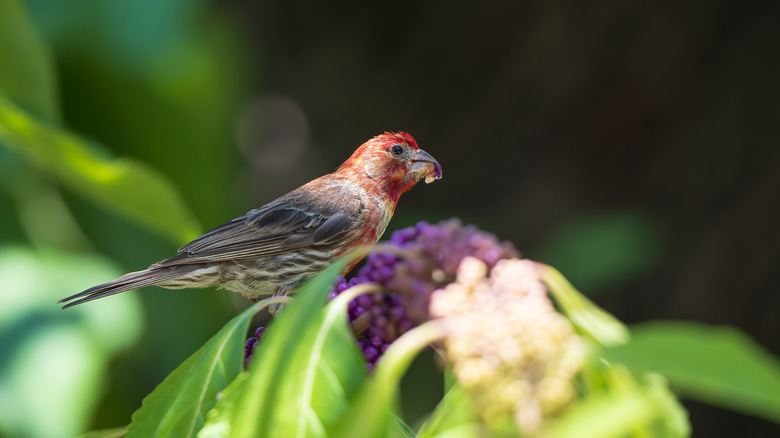
Also known as the American mulberry or sourbush, the American beautyberry (Callicarpa americana) is an eye-catching shrub native to the central and southeastern United States. Dozens of bird species visit these bushes for the fruit they produce in the fall, including common backyard birds like the American robin and the eastern towhee. This provides a popular food source for residential and migrating species come fall. Don't worry if the soil near your bird feeder isn't the best. American beautyberries are highly durable, holding up well to poor soil conditions. This bush is winter hardy in zones 6 through 10.
Nasturtiums
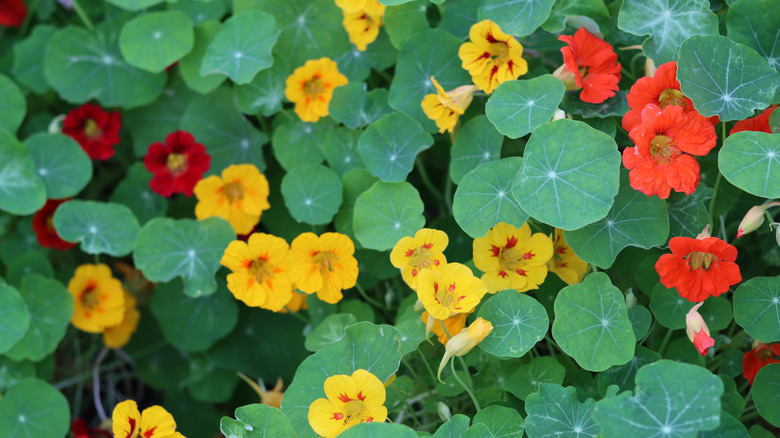
If you're looking for a stunning red flower to attract hummingbirds, look no further than nasturtiums. Nasturtium (Tropaeolum spp.) varieties, like the Empress of India nasturtium (Tropaeolum majus), are a fan-favorite among hummingbirds thanks to their showy red flowers and nectar. As a result, adding these flowers around your bird feeder helps attract hummingbirds that might otherwise not be interested in your bird seed or suet. Hummingbirds aren't the only pollinators attracted to nasturtiums, either, meaning that your carnivorous birds can enjoy a feast of butterflies. Nasturtium flowers are typically grown as annuals in most regions.
Pawpaw trees
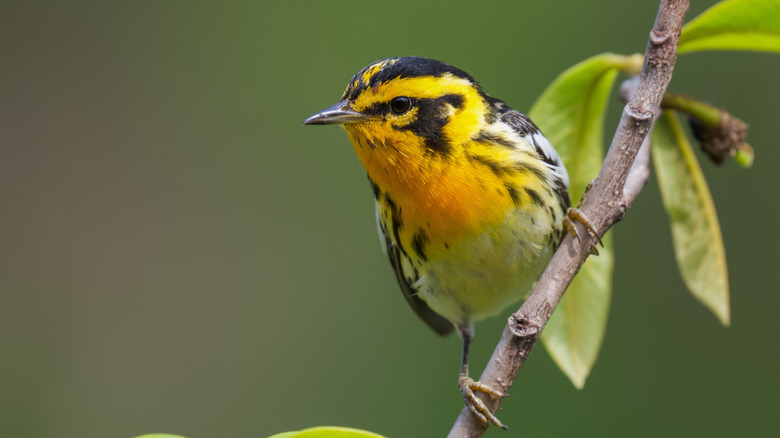
Bird feeders can be a great way to attract common species to your yard. However, have you ever wished you could watch more unique species from the comfort of your home? While wild turkeys may not care to visit your typical bird feeder, adding a tree like the pawpaw (Asimina triloba) to your yard provides benefits to both common backyard birds and game birds like wild turkeys. Turkeys and songbirds both eat the fruit of this plant, while a variety of flies, beetles, and butterflies are drawn to its shelter, flowers, and fruit. It also provides coverage for birds.
Eastern bluestar
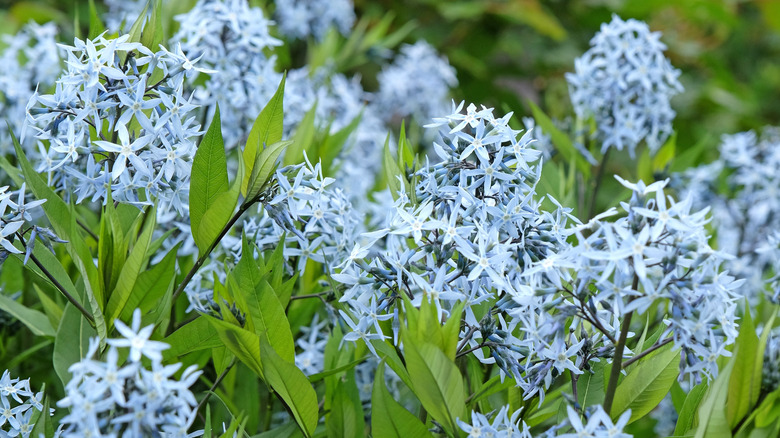
The eastern bluestar (Amsonia tabernaemontana) is a perennial flower native to the eastern and central United States and hardy in zones 3 through 9. If your goal is to create a hummingbird garden to complement your bird feeding zones, then this flower makes a great addition. It attracts hummingbirds and various insect pollinators. With this plant, you can feed hummingbirds and insect-eating birds while also curating a pollinator-friendly space to help the other plants you're growing near your bird feeders thrive. Eastern bluestars do well in both containers and when sown directly in your yard.
Bleeding hearts
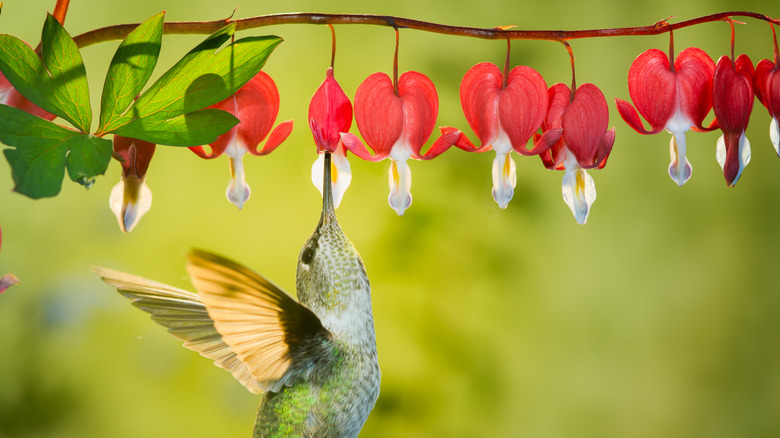
Another plant pick curated with hummingbirds in mind, the bleeding heart (Lamprocapnos spectabilis) is a plant native to Asia that's unique appearance makes it as visually appealing as it is functional in gardens. This plant sports vivid pink heart-shaped blooms with a large stamen. Between its coloration and its nectar, planting this is an excellent way to attract more hummingbirds. It also grows as an herbaceous shrub, providing plenty of shelter for other birds that may not be interested in the nectar. The bleeding heart plant is hardy in zones 3 to 9.
Eastern red cedar
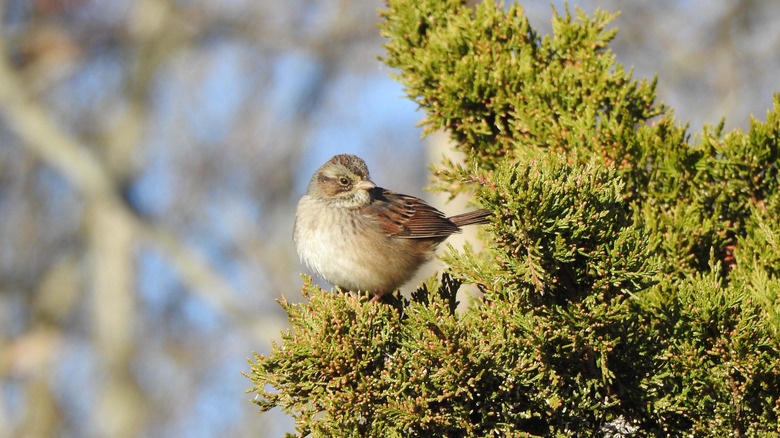
Eastern red cedar trees (Juniperus virginiana) are essential within their native ecosystems. In the abiotic environment, they reduce wind with their impressive branches, while their deep roots keep the soil in place to prevent erosion. In your garden, however, these trees serve a different purpose: providing any birds who may wish to visit your bird feeders a safe place to rest, refuel, or even wait their turn at the feeder, especially during the winter, given they're evergreen. Red cedars are also the host and food source for several insects, while the fruits they produce feed songbirds.