

No More Boring Wood Floors: 8 Popular Patterns That Give Your Design An Edge
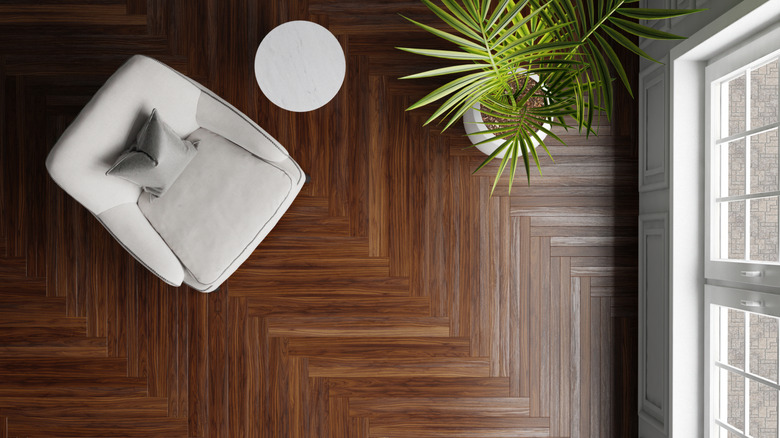
When you start to conjure up your dream wooden floors for your home, there are so many customization options. From selecting the type of wood, like oak, walnut, or maple, to choosing a finish, like water-based or oil-based, you have a ton of options to customize your wood floor. Another factor you might not expect to consider? The pattern of the wood. Not every wood floor has to look identical with the same size planks lined up consistently across the entire space.
In fact, there are a diverse range of patterns that you can select from, like classic herringbone versus chic chevron floors, or the many types of parquet, like mosaic or double basketweave. Your choice of pattern will depend on your desired interior style, as well as your budget, as some patterns are more expensive to install than others. Chevron, for example, tends to be on the pricier side due to its intricate and precise pattern and angles.
Some patterns are recommended for specific rooms in your home, which is another design factor to consider. Thanks to its busy pattern, chevron is often used for larger rooms, as it can feel overwhelming and tight in smaller spaces. Diagonal, where, as you might expect, the wooden planks are laid at a 45-degree angle, is often utilized for smaller rooms, as it can give the illusion of a larger space. If you want a classic and simple arrangement for any size room, random length is an excellent choice, as it shines with simplicity and doesn't clutter up the room. It also helps to show off the grain of the specific wood.
Herringbone
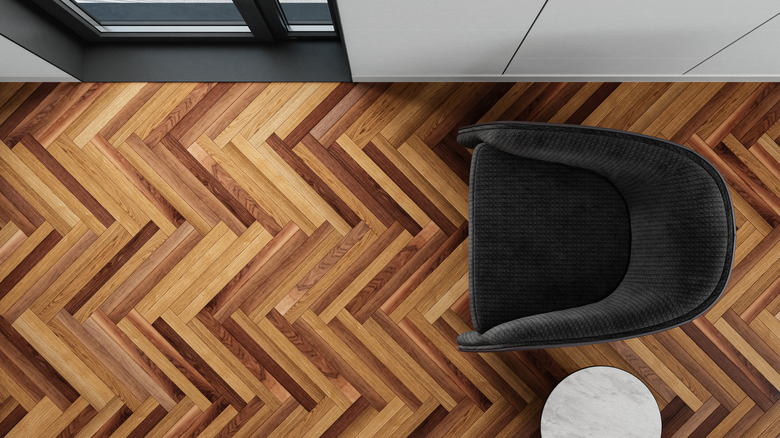
Named after the skeleton of a herring fish, the herringbone pattern can be traced back to the 1500s. In this pattern, the planks are typically rectangular and identical in size and shape. They are laid at 90 degree angles from each other, with the ends giving the illusion of overlapping and meeting throughout the design. It tends to be a more affordable intricate floor pattern compared to chevron and other arrangements, making it a popular option for many homeowners. One of the best and most popular materials for a herringbone-patterned floor is natural wood.
Chevron
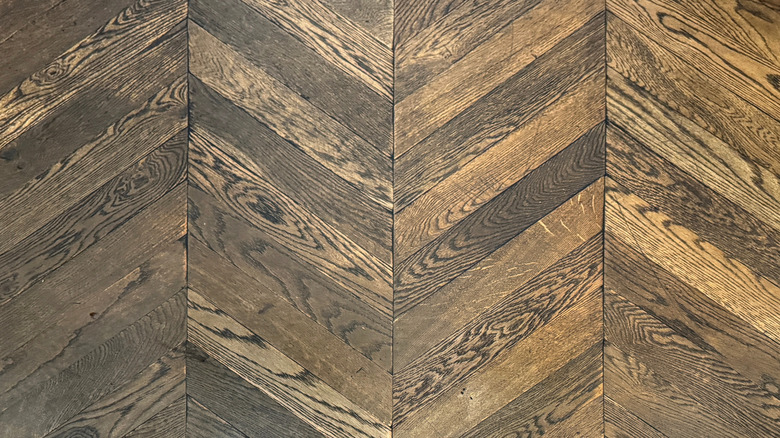
While many people get chevron mixed up with herringbone, the patterns have a distinctive difference that makes them easy to tell apart. While herringbone planks are always set at 90 degree angles, chevron floors can be adjusted to different degrees. Chevron planks are cut at an angle and set together to create a "V" shape. This type of flooring is often more expensive to install, due to the specific wood cuts to ensure the points align. However, chevron is intricate and can add depth and elegance to a space. (It's a pattern that's been around since ancient Greece.)
Diagonal

As you might expect from its name, a diagonal wood floor pattern is when the wooden planks are laid at a diagonal across the entire floor. It's recommended to use this pattern for small or narrow spaces, as this design can help open it up, giving the illusion of a larger room. Rooms like open-floor living rooms and entryways are excellent options for the use of a diagonal pattern. Pro-tip: if you have walls that aren't straight, opting for a diagonal flooring can minimize their uneven appearance. Note that for this design, the planks will require more precise cutting.
Random length
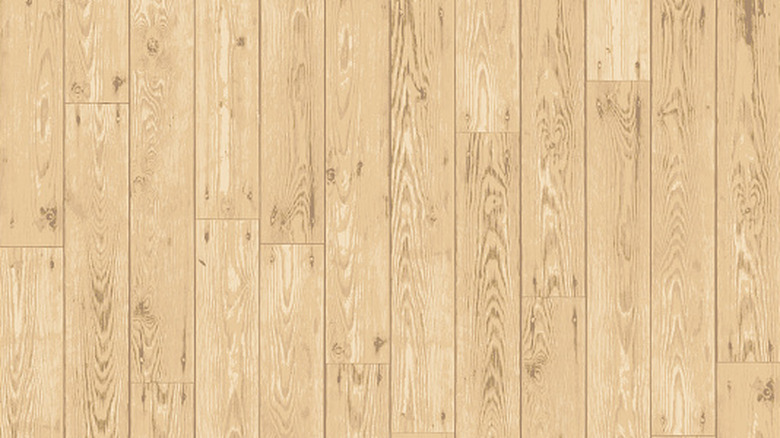
One of the decisions you'll have to make when selecting your desired pattern for your wood floor is the length of the planks. If you opt for a standard, straight-lined design, you can either choose fixed-length flooring or go outside the box by choosing random length. It's an easy switch to a simple floor look that divides it from other basic designs. This is the perfect option for anyone looking to save money, as random length wood is typically cheaper than more intricate patterns. This design also looks more authentic and organic in comparison to a fixed-length floor.
Mosaic

While there are several parquet flooring types titled "mosaic," one of the classic versions is the collection of planks lined into squares, with the squares laid at 90-degree angles to each other to create a mosaic effect. This pattern can also be referred to as "finger strip parquet." These smaller wooden panels can vary in length, width, and color, depending on the aesthetic you prefer. They can also be completely uniform for a sharp, clean look that still adds interest to your home.
Checkerboard
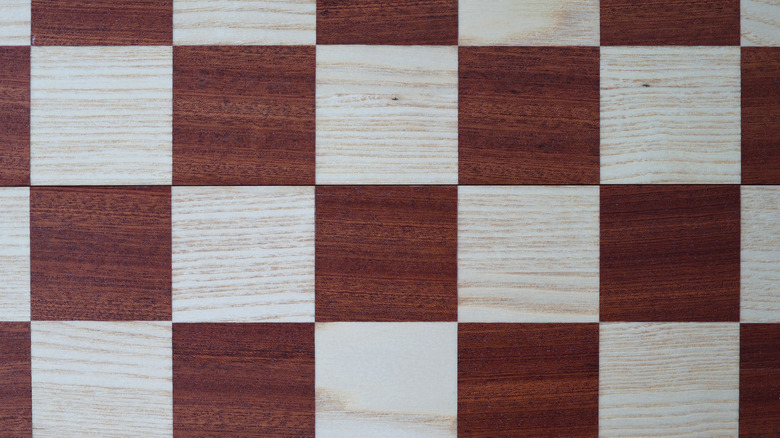
Is checkerboard flooring coming back into style? The answer is yes. You can easily accomplish the aesthetic of a classic checkerboard with the elegance of a wooden floor. This pattern utilizes alternating colors of wooden squares to create that classic checkerboard look. It's definitely a choice on the bolder side, given its striking appearance, but it could look incredible in a kitchen, hallway, or even an open living room. You can opt to have two similar wood colors for this pattern or two very contrasting colors for that unique effect.
Double basket weave
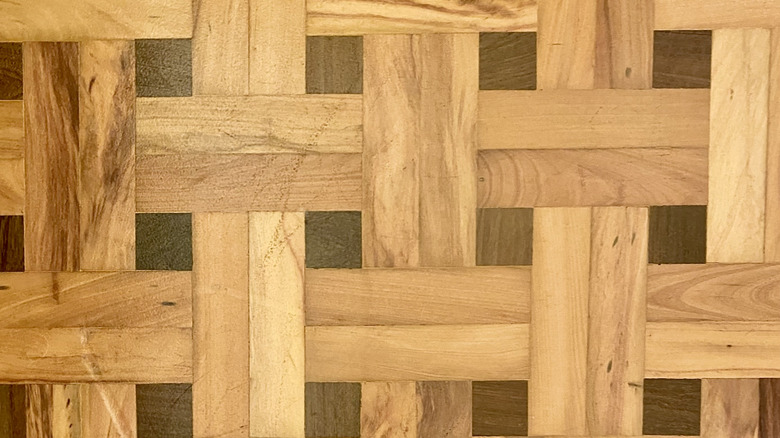
The double basket weave is exactly what is sounds like: the classic blanket weave pattern except with double stripes running together instead of just one. If you want to create a super diverse look, and you have the budget for it, you can incorporate different colored wood pieces into the design. You can choose the length and width of your basket pattern, making the planks super short and thin or long and thick.
Parquet

While the term parquet is mostly used to describe a type of wood design style, it is also used as the name for some specific wood patterns. The primary characteristic of a parquet floor is the repeated geometric shapes, and these can come in all types of patterns. The term originated in 16th century France and continues to be a popular choice for homeowners who want to add depth and dimension to their homes. Parquet is preferred thanks to its durability, aesthetic, and longevity.