

9 Gorgeous Chicago Home Architecture Styles That Are Dripping With Vintage Charm
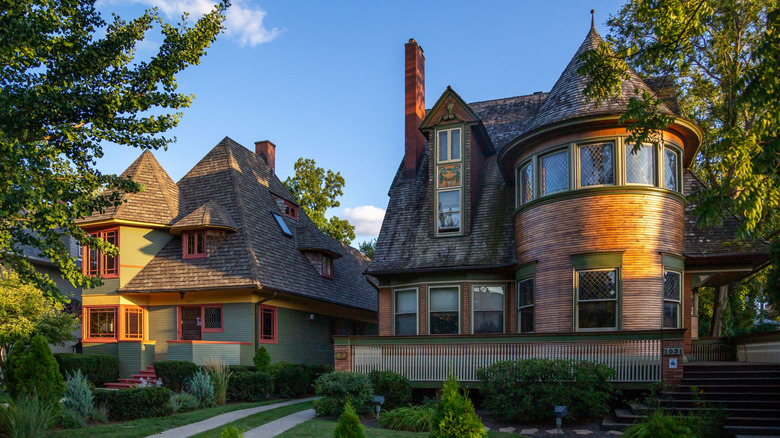
The city of Chicago, considered the most prominent large city in the Midwest United States, is known for many things, but one of its most enduring charms is its architecture. In addition to towering skyscrapers of glass and steel, Chicago contains many homes designed and built by world-renowned architects. They include pioneer of modern design Frank Lloyd Wright, who made his home in Chicago and helped define the city's architectural landscape, influencing many new styles and movements. Some of Chicago's most recognizable architectural styles feature gorgeous vintage charm and stunning detail, from Victorian to Tudor Revival.
The heyday of Chicago's architecture was roughly from the late Victorian era (1870s) to the 1960s, and over the years, many of the grandest houses were rebuilt and redesigned over time. It's a testament to their exquisite craftsmanship and design that, even when damaged by fire, these homes were seen as worthy of rebuilding rather than demolition, and some of them took on new architectural innovations that improved on their original structure.
The bungalow is one of Chicago's standard house styles, with a number of neighborhoods filled with various types, some of humble design and many featuring splendid Arts and Crafts details like solid wood built-in shelving, large stone hearths and chimneys, and sturdy, attractive brick construction. Victorian-style homes (including Queen Anne) are also widely seen throughout Chicago. Other styles that define Chicago architecture include Prairie style, Second Empire, Tudor Revival, Greystone, and Workers Cottage.
Round-fronted brick bungalow
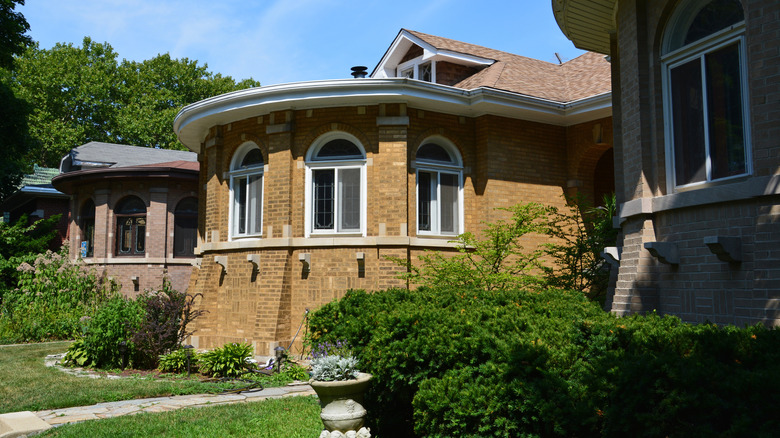
The Rogers Park Manor Bungalow Historic District is located in North Chicago, and is only one of the city's many historic districts featuring bungalows. This one is full of large, round-fronted brick bungalows. Often utilizing brick colors other than red, including gold and orange, the colors and shapes of these compact but beautiful Chicago homes make them a bungalow aficionado's dream. Chicago also has many Detroit-style bungalows and Arts and Crafts bungalows.
Prairie style
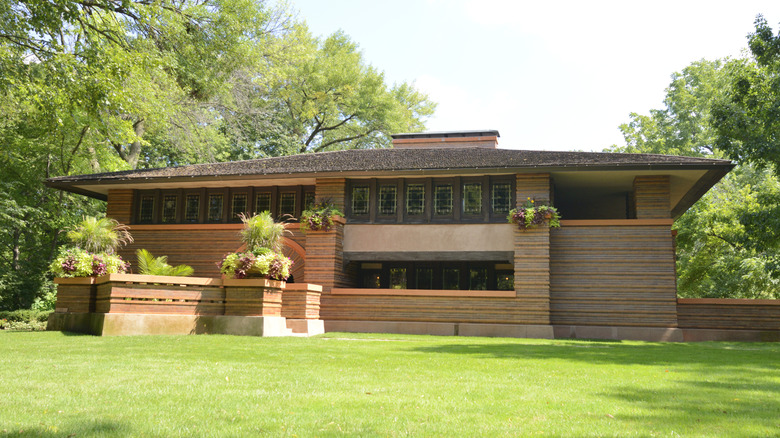
Built in 1902, the Arthur Heurtley home is a recognized U.S. National Historic Landmark. It's considered one of the pioneering examples of Frank Lloyd Wright's designs in the Prairie style. This house has neither a basement nor an attic, and rests on a concrete slab foundation. The brick is nestled in dyed mortar to emphasize the house's horizontal lines. Art glass windows with leaded panes line the second floor just beneath the narrow roof overhang, enhancing the living and dining room spaces, which are unexpectedly located on the second floor, one of many of Wright's innovative interior features.
Queen Anne style
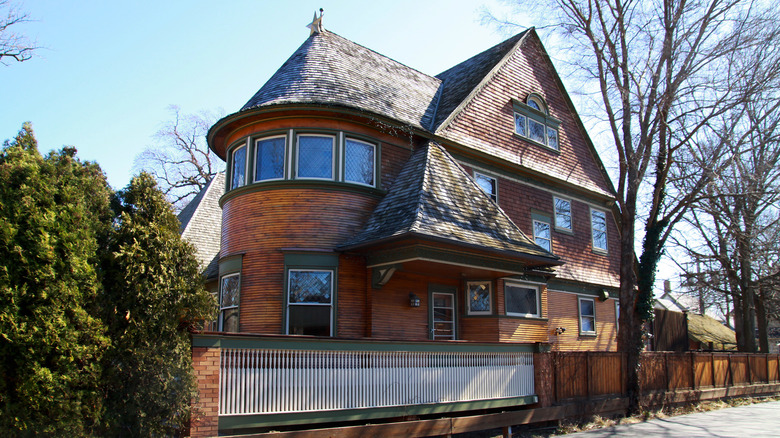
The Walter M. Gale House is a Queen Anne-style home, also designed by Wright and completed in 1893. Queen Anne is considered a Victorian architectural style that has distinct features like asymmetrical facades, multiple turrets, dormers, wraparound porches, small balconies, and textured surfaces, including shingles and stone. This house features a large turret with a wonderful solid band of curved windows made of leaded glass. This design feature was one pioneered by Wright and is seen in several of his famous houses.
Italianate, remodeled
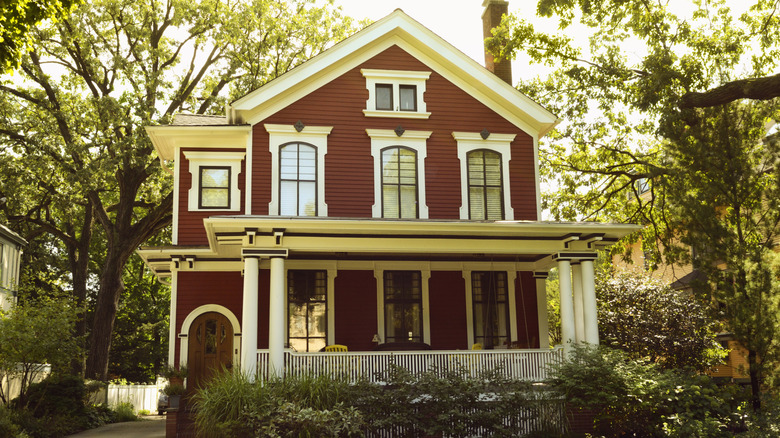
Located in the Frank Lloyd Wright historic district in Oak Park, this Chicago gem, known as the John J. Schmidt House, was built in 1872 in Italianate style. Italianate style was popular in the United States from the 1850s through the 1880s, and featured narrow windows, prominent porches and entry ways, and often cupolas and towers. The Schmidt house was remodeled in 1908 by E. E. Roberts (a prominent architect with designs throughout Oak Park) to include gorgeous Prairie-style details, including art glass windows.
Mixed style (Prairie with Japanese elements)
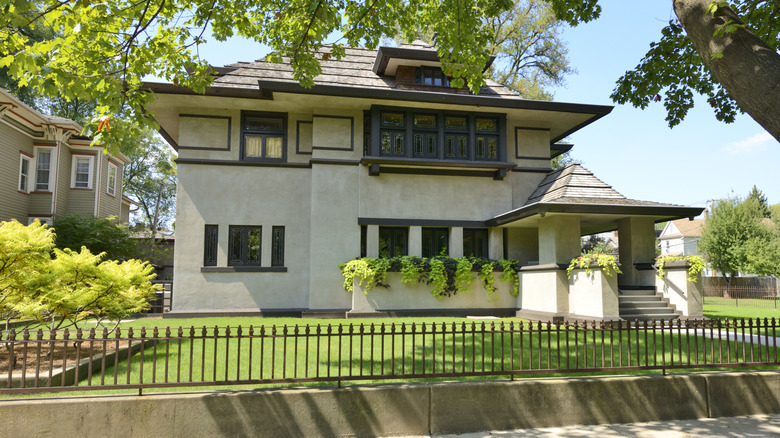
This impressive home, known as the Hills-DeCaro House, was first built in 1883 for Dr. William Gray, grandfather of prominent Prairie School architect William Gray Purcell. It was originally built in the Stick style, a popular late 19th-century architectural mode characterized by decorative wood details. In 1906, the house was rebuilt in the Prairie style by Frank Lloyd Wright. Wright redesigned the original roof to incorporate shapes echoing Japanese pagodas. He also added stucco siding to the exterior and signature elaborate window designs.
Gothic brick, renovated
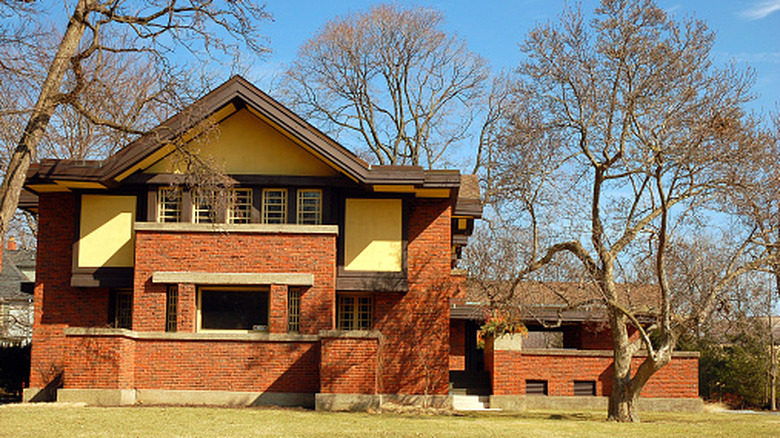
Located in Oak Park, this colorful brick home known as the Peter Beachy House was commissioned as a renovation of a Gothic cottage that had little more than the foundation still standing. Wright reimagined the structure with gabled roofs (a departure from his frequent flat-roofed Prairie style), red brick, and stucco with dark wood trim, as well as a row of leaded glass windows (a Wright trademark). The curving limbs of the mature trees are a gorgeous natural accent to the home, an example of Wright's penchant for designing a house to complement its setting and location.
Tudor Revival, reimagined
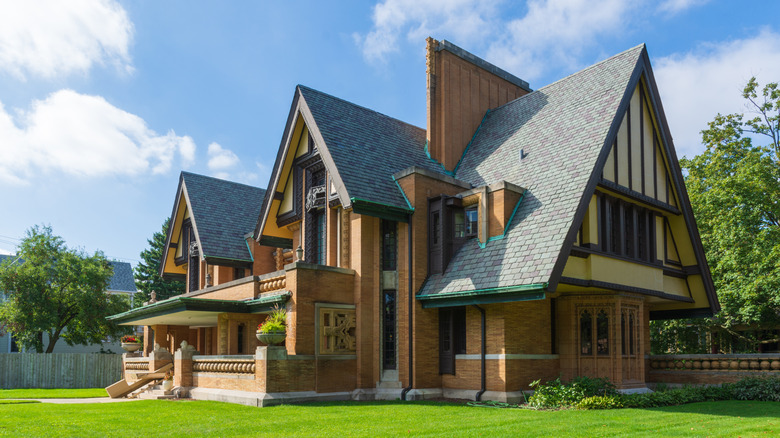
Asked to build a grand Tudor Revival home for client Nathan Moore in 1895, Frank Lloyd Wright, in need of money, got the job done, despite his dislike for traditional historical styles. One departure from that traditional style was the front porch added by Wright, a distinctive non-Tudor feature. When a fire ravaged the home in 1922, it was rebuilt by the innovative architect, whose studio was located nearby. Wright's re-design added modernistic architectural elements, inspired by the work of Louis Sullivan (the two men's innovations influenced each other), giving it a distinctively eclectic flair.
Second Empire
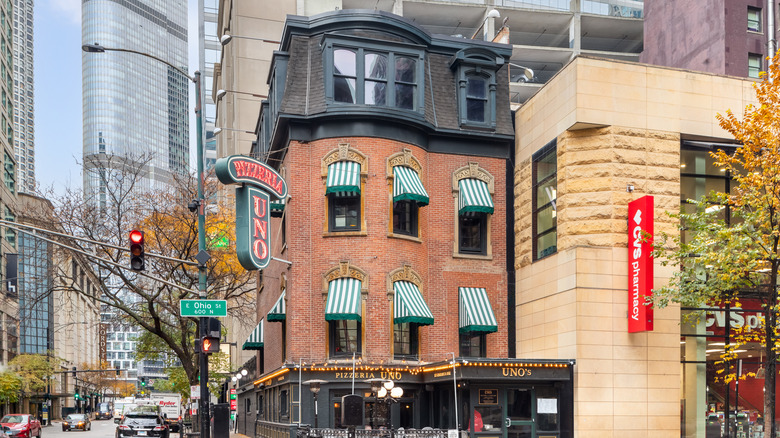
The building housing the original Pizzeria Uno in Chicago is not only a cultural landmark but an architectural one. With its tall, slender shape and grand mansard roof, it's an example of the Second Empire style, mostly built in the 1870s to 80s, though this one was built in 1892. This style usually included the distinctive mansard roofs, as well as elaborate stonework, large dormer windows, cornices, and slate shingles.
Greystone
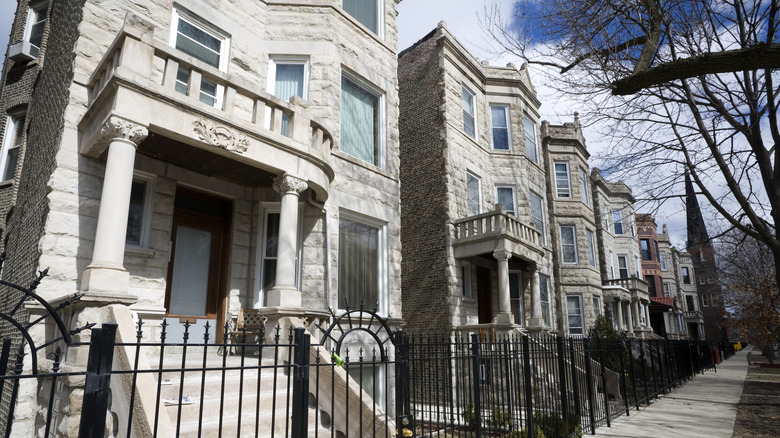
These greystone townhouses in Humboldt Park on Chicago's West Side are built of limestone from quarries in Indiana. This durable building material has a distinctive look and color, very different from the warmer clay brick hues of Chicago's brick bungalows and Prairie style brick mentions. Many greystones were built as multi-family houses and incorporate a variety of architectural styles, including Romanesque Revival, Beaux Arts, and Gothic, and there is even a coordinated movement to help preserve these unique buildings.