

8 Ways Martha Stewart Keeps Her Home Office Tidy And Organized (And Smart Tips To Do It Yourself)

A home office is its own kind of haven. It's a space that effectively puts you in a headspace to accomplish tasks and stay productive throughout the day, inching you closer to your goals. But let's be real: it can be really hard to stay focused when your workspace looks and feels chaotic. So when unsorted documents and stationery clutter your mind, creating a system that keeps you organized and at the top of your game is a solid solution.
Home and lifestyle expert Martha Stewart shares a lot of helpful storage tricks any home office dweller can implement. If you're looking for inspiration for an orderly home workspace, she shares a few smart, practical tips for keeping your office tidy and organized. From storage systems that keep your papers and stationery neat and accessible to ways to organize office equipment, Stewart shares doable tips that don't require a major office makeover or an intimidating budget.
Use open, modular cabinets for office supplies
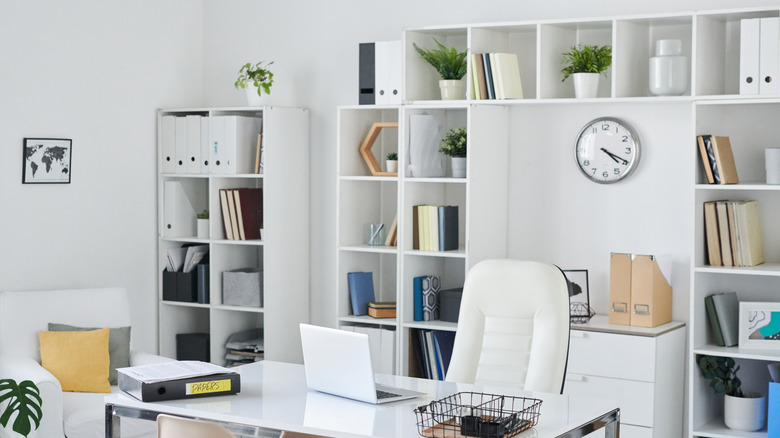
Stewart recommends an open, modular cabinet setup to keep everything visible and easy to access. Instead of hiding supplies behind closed doors where clutter can accumulate over time, open cabinet designs like the Everyday System from California Closets or the IKEA Open Wardrobe System let you neatly store and display your essentials. Furthermore, you can keep your office essentials neatly stacked on these shelves by using clear, stackable bins for paper supplies: acrylic trays for paper clips and pens, magazine racks for folders, and bookends to keep books and binders upright. If you're looking for more ways to maximize open shelving, add different pieces of decor — make your open cabinet look a little more lively by placing a small, office-friendly potted plant or picture frames.
Kitchen utensil dividers are great for office drawers, too
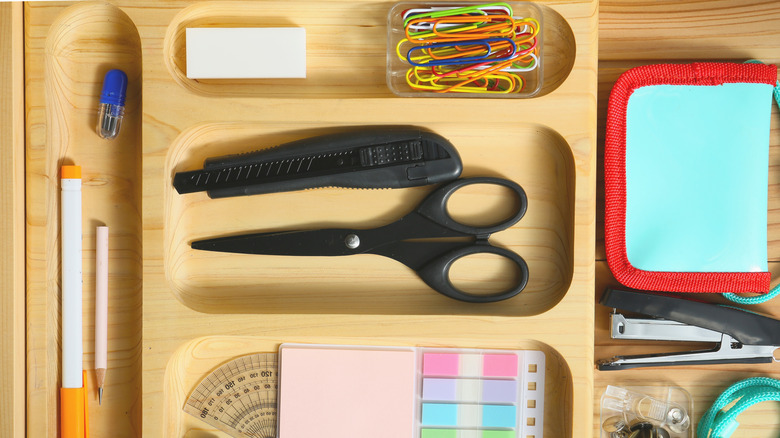
"There is no reason to have a messy drawer," Stewart shared on her YouTube video. She recommends using kitchen utensil dividers that work just as great in your desk drawers. Use dividers like IKEA's adjustable drawer organizer to sort pens, highlighters, sticky notes, push pins, tape, and more. This way, everything has its place, and you won't have to violently scramble through drawers to find your favorite pen.
If your organizers wiggle slightly out of place every time you pull the drawer out, insert a non-slip liner (you can get one from Dollar Tree for $1.25 each) and line the inside of your drawer before placing your organizers. Alternatively, affixing clear mounting tape to all bottom corners of the organizers works just as well.
Keep tasks and schedules within sight with a pin-up board
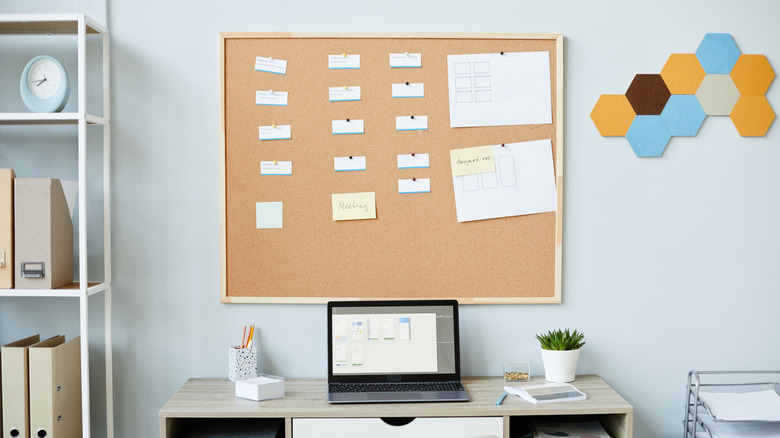
If you fall victim to the 'out of sight, out of mind' mentality, Stewart shares a great way to combat this on her YouTube video. Basically, you need to keep your to-do lists, calendars, and other notes you cannot forget on a pin-up board. This board is a great way to visually track your daily agenda and project goals. You can work with a corkboard, a pegboard, wire grids, or a whiteboard. Mount a board large enough to give you a full overview of all your reminders near your workspace, and keep some sticky note pads, markers, and pins or magnets nearby so you can post reminders as soon as you need them.
Turn an old basket into a paper waste or a recyclables bin
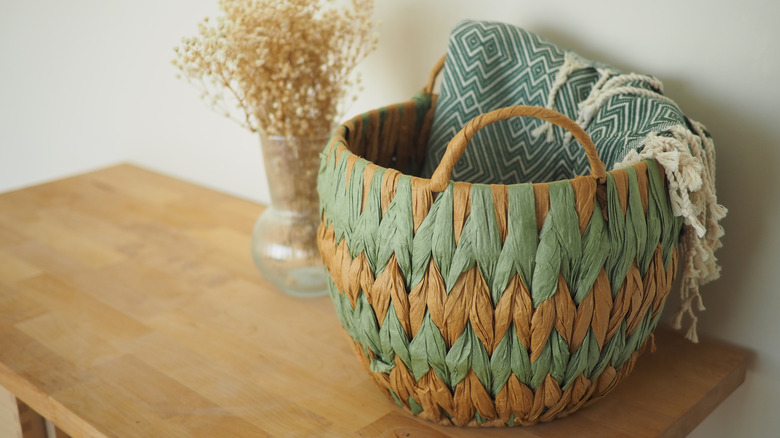
Leaving discarded sticky notes, crumpled papers, and old receipts on your desk will quickly turn your office into an eyesore. An easy fix is to place a dedicated waste bin under or beside your desk to swiftly dispose of clutter. In her YouTube video, Stewart repurposed an old woven basket, gave it a fresh coat of paint, and turned it into an easy-access trash bin for office waste. Remember to line them for easy emptying and set regular reminders to clear them out.
Label and bundle your cords
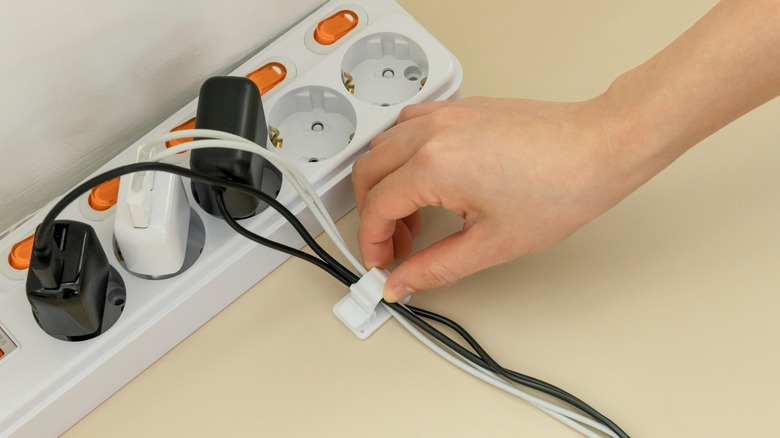
Workspace setup enthusiasts can feel more at ease with smart cable management, and Stewart knows this. She recommends using your label maker "judiciously" and printing labels for the power cords in your workspace to prevent cable confusion and unplugging important devices. To label your cords, make a small tag that identifies the device it's powering, and tape it around the base (preferably near the plug) so you'll know which device you can unplug after a day's use. Moreover, you can bundle cords with zip ties, Velcro straps, or cable clips that can make your desk look less chaotic. Hide these cords using cable boxes or simply route them behind furniture.
Keep archives and memorabilia in storage boxes
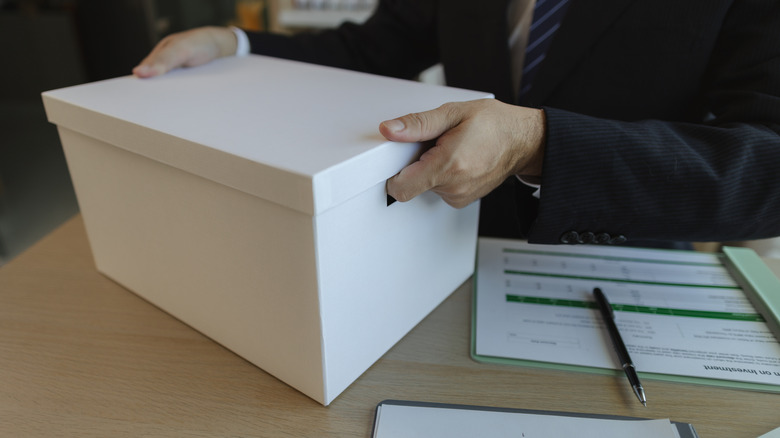
It is important to know how to manage and organize all of your important documents, such as personal identification, health records, financial statements, and other papers that help manage your day-to-day life. If you are a fellow "archivist" like Stewart, you can safeguard these important documents and certificates by placing them inside sturdy document storage boxes. Label each box clearly by category (such as tax records and personal documents) for easy reference. When storing photos, use acid-free, waterproof containers to prevent yellowing and moisture damage. To best preserve photographs, place them in photo albums or binders with archival sleeves to prevent fading and damage. Keep these document boxes away from direct sunlight and humidity.
Mount magnets and hooks to easily access tools
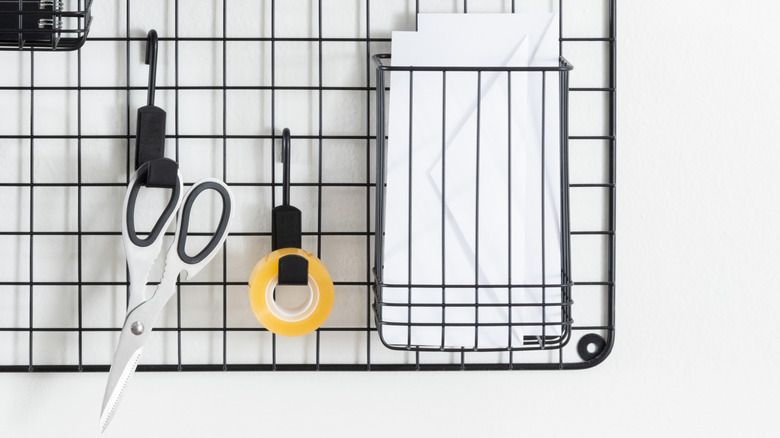
In Stewart's video, you will notice another smart way to keep your home office organized. Have essential tools within arm's reach by mounting magnets or wall hooks onto your cabinet's edges, or along your pin-up board. You can use these magnets for metal items like scissors and rulers, while hooks work for headphones, reading glasses, or measuring tapes. For easier access, position them at eye level so you can grab and return items without frantically searching through your drawers.