

How Many Open Shelves Is Actually Too Many?
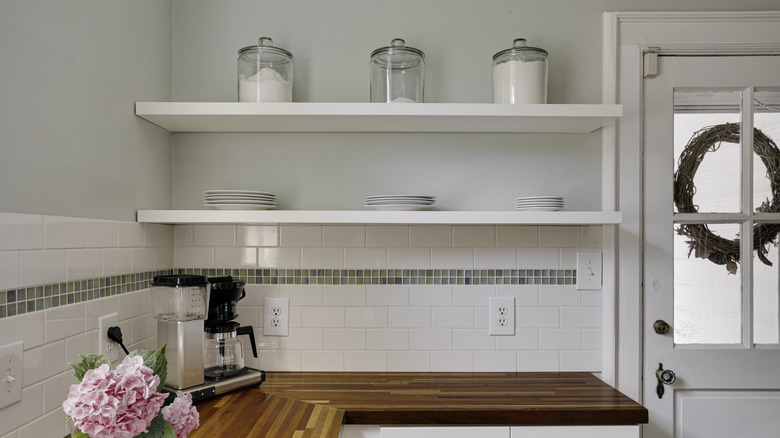
There's no denying that open shelves are incredibly convenient. You can easily reach for the items you need and put them back just as effortlessly. Plus, you don't have to deal with door clearance, so you can add a stylish open shelving to any room with a Pottery Barn dupe DIY. However, despite these benefits, you shouldn't throw caution to the wind and replace closed cabinets altogether. Troy Rivington, the co-founder of Rivington Marx Interiors, agrees with this assessment. He tells House Digest in his exclusive interview, "As someone who has been in the interior design industry for over a decade, I have seen the rise in popularity of open shelves firsthand. While I believe that open shelving can be a beautiful and practical addition to a home, it is true that there can be too much of a good thing."
When asked to share the optimal number of open shelves an individual should have in their home, he answers, "In my experience, the optimal number of open shelves in a home depends on the size and layout of the space, as well as the homeowner's personal style and storage needs." But don't overdo it. Our expert adds, "Generally, I recommend no more than three to four open shelves in a room, as this allows for both functionality and aesthetic balance."
The downsides of having too many open shelves in your home
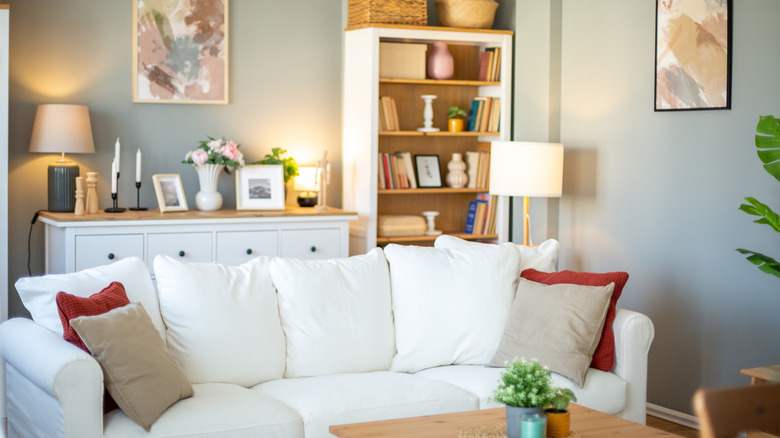
Detailing the reasons he advises against installing too many open shelves in a home, Troy Rivington shares with House Digest exclusively, "Having too many open shelves in a home can have a cluttered and overwhelming effect on the overall design. Not only can it make a space feel visually busy, but it can also lead to a lack of storage options." Moreover, you won't have a hidden space to quickly tuck some things away if you're expecting guests. Worse, you'll have to declutter and tidy it up before your visitors arrive. You'll also have to wipe down the shelves often since the items on display will get dusty.
Moreover, open shelves aren't meant for all the rooms of your house. Listing the areas they look best in, Rivington states, "Open shelves are best utilized in areas such as a kitchen or pantry for displaying dishes and cookware, or in a living room for showcasing books and decorative objects." You don't want it in private spaces where you need to keep certain things hidden from prying eyes. He continues, "I do not recommend having open shelves in spaces where privacy and organization are more important, such as a bedroom or bathroom."
Explore the alternatives to open shelves so you don't go overboard
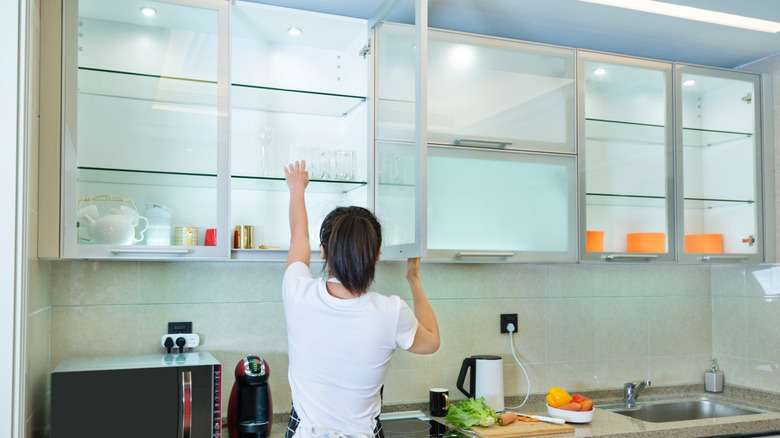
In case you don't want to deal with the hassle of open shelves or don't want your home to look visually cluttered, Troy Rivington suggests investing in a few doors for hidden storage options. "For those who want the look of open shelves in their home but do not want to go overboard, I suggest incorporating a mix of open shelves and closed storage units. This combination not only adds visual interest to a room but also allows for both display and concealed storage options," he proposes in his exclusive interview with House Digest.
"Alternatives to open shelves include using floating shelves with doors or incorporating built-in cabinets with open and closed storage compartments," our expert elaborates. That doesn't mean you have to stick with boring wood doors for concealed storage. When you're ready to say goodbye to open shelving, you can try out these trendy alternatives instead. "By finding the right balance and combination of open and closed storage, homeowners can achieve a functional and visually pleasing design," emphasizes Rivington.