

The Type Of Spider Plant That'll Bring The Island Vibes Into Your Home
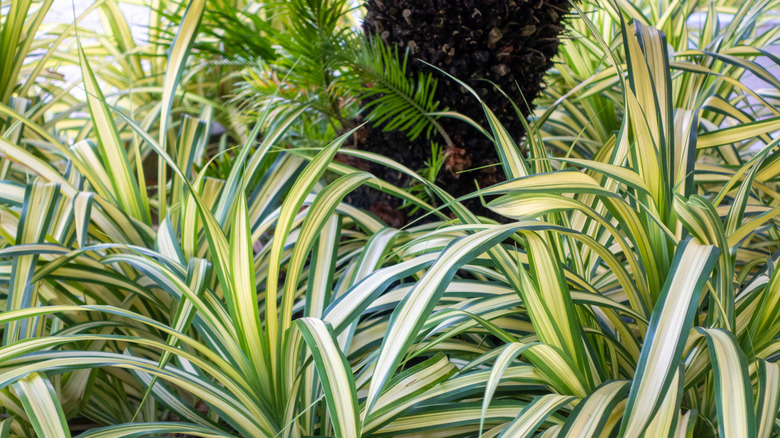
If you feel like your home could use a touch of tropical island vibes, a spider plant (Chlorophytum comosum) might be just what you need. But not just any spider plant — the Hawaiian spider plant (Chlorophytum comosum 'Hawaiian'). This guy is known for its lush, arching leaves striped with bright green and white variegation. It's eye-catching, easygoing, and a perfect addition for a laid-back, island-inspired space.
Spider plants are a group of easygoing houseplants that are beloved for their long, thin leaves and signature habit: producing little dangling plants called pups, or spiderettes. There are tons of spider plant varieties to choose from, some with short and curly leaves, some with dark green leaves, and some with milky white-green foliage. The Hawaiian variety has a deep green color and a signature gold-white stripe running along the leaf's center. This variety is less common than some of the more basic options, but it's sure to bring unique charm into your home if you manage to find it. It's a particularly hardy type of spider plant, so even the greenest of gardeners can try it out.
Like many other spider plants, the Hawaiian variety is incredibly low-maintenance. It's easy to grow and doesn't require any advanced gardening skills. Its leaves arch over the sides of the pots, so it looks beautiful when placed in a hanging pot, on a plant stand, or in a planter with legs. It's perfect for DIY wall hanging planters, too. Hawaiian spider plants aren't toxic to pets, which means you can leave them near the floor (still, don't let your pets eat plants on the regular).
How to care for Hawaiian spider plants
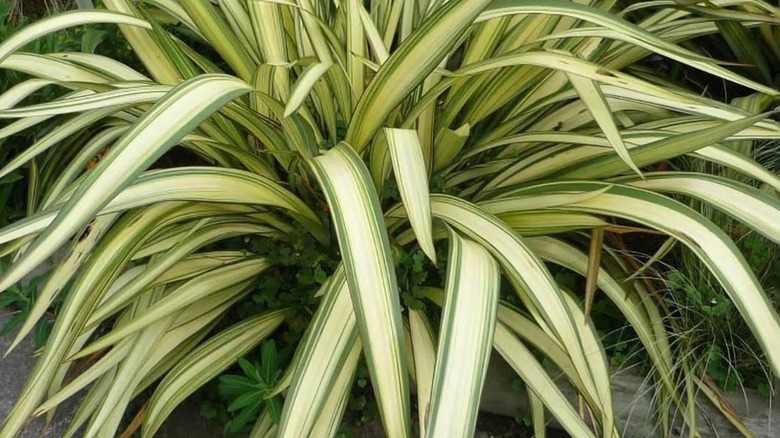
In many ways, Hawaiian spider plants behave like other varieties. Because Hawaiian spider plants have thick foliage that keep humidity trapped, overwatering can lead to rot. Let the soil dry completely between watering sessions, using the finger dip test to check before watering again.
In addition, some amateur gardeners have noticed that the Hawaiian variety of spider plants looks best when it gets enough light. So while regular spider plants can do well in low light, you can try placing the Hawaiian kind closer to a window, in bright but indirect light. Do monitor the leaves; if they start to change color or dry out, it's a sign to adjust and move the plant slightly away from the window (but not completely).
In terms of soil, anything well-draining will do. Spider plants don't have very specific humidity requirements; they'll do fine in most environments where a human would typically find the moisture level comfortable. If you'd like to propagate spider plants, you can do so with the little spiderettes that are hanging from your main plant. Simply root these in water before placing them in soil, and you'll have a brand-new plant.