

The Special Bird Feeder That'll Attract Blue Jays To Your Yard
We may receive a commission on purchases made from links.
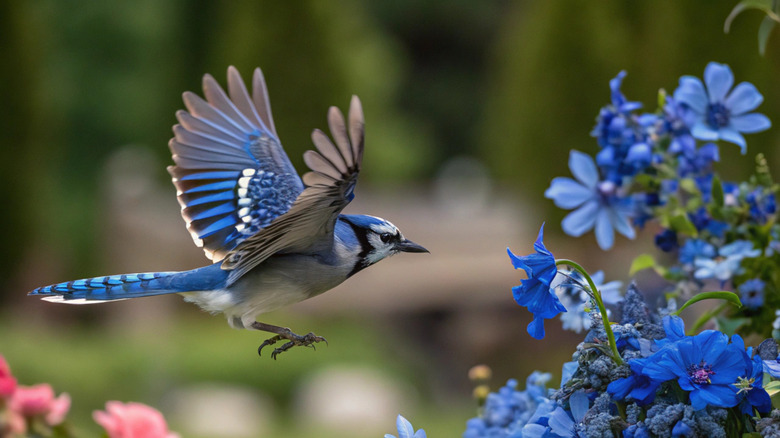
Attracting a flurry of birds to your garden helps fill your yard with life and color, which is why homeowners often want to find good ways to entice specific birds. The striking feathers of a blue jay showing up in your yard are a welcome sight to many homeowners, and offering up their favorite foods can help ensure they hang around. As opportunistic feeders, blue jays may visit a standard bird feeder; however, choosing the best bird feeders for blue jays will increase your chances of seeing them. A peanut wreath feeder is a great option because it holds one of blue jays' favorite foods.
Blue jays live throughout eastern and central North America, ranging from Florida all the way to the Rockies. While some may consider them a bully bird due to their occasional aggressive nature at the feeder, they are very intelligent and delightful to watch. Known for mimicking other birds and making a piercing call, blue jays are definitely the types of birds you want in your yard. They can be an effective source of natural pest control as they flit around eating insects, grasshoppers, mice, and even small reptiles.
Feeding nuts exclusively in a specially-designed feeder for this purpose is a great way to attract blue jays to your yard. When eating, "Blue Jays carry food in their throat and upper esophagus — an area often called a "gular pouch," according to Cornell Lab's All About Birds. They will then return to the feeder and repeat the process.
Using a peanut wreath feeder to attract blue jays
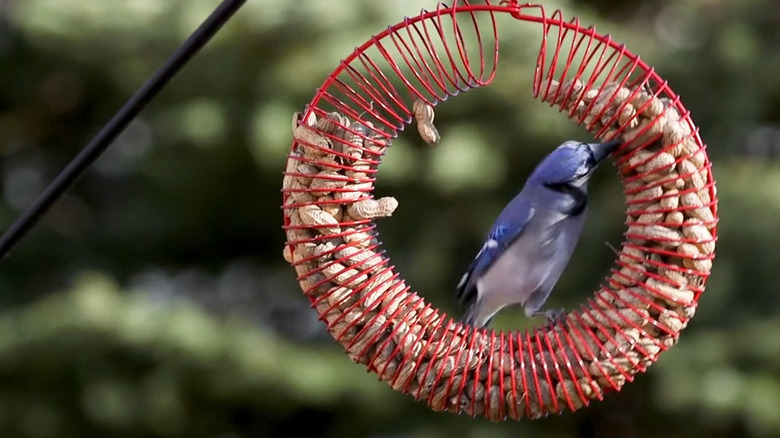
While you can use other types of bird feeders to offer peanuts to feathered friends, a wreath is a great option. Typically made of wire, this feeder is sometimes called a ring. Its inside is filled with peanuts, which blue jays can easily remove. An option like Songbird Essentials Whole Peanut Black Wreath Feeder fits the bill (pun intended).
When using peanut wreath feeders, fill them with unsalted peanuts in the shell. Once full, hang the feeder in a tree, ideally away from any other feeders if there's already heavy competition in your yard. Be sure you clean up any fallen peanuts and shells regularly to prevent mold from sickening birds. Moist peanuts can develop aflatoxins, so always replace wet peanuts after a rain, then fill the feeder with fresh ones. To save money on bird food, move the feeder to a dry spot temporarily if wet weather is expected. Also, if you don't have a water source already, consider adding a bird bath for drinking and bathing to encourage more jays.
Instead of purchasing a peanut ring, you can also attract more birds with a feeder made from an old Slinky. This DIY requires you bend a wire hanger into a round shape, or use a metal wreath form. It involves attaching the slinky around the hanger or wreath form, then glue the two ends at the top. You can then use the hanger's hook to hang it on a branch, or affix a piece of twine.