

The Self-Seeding Purple Flower That Looks Beautiful All Summer Long
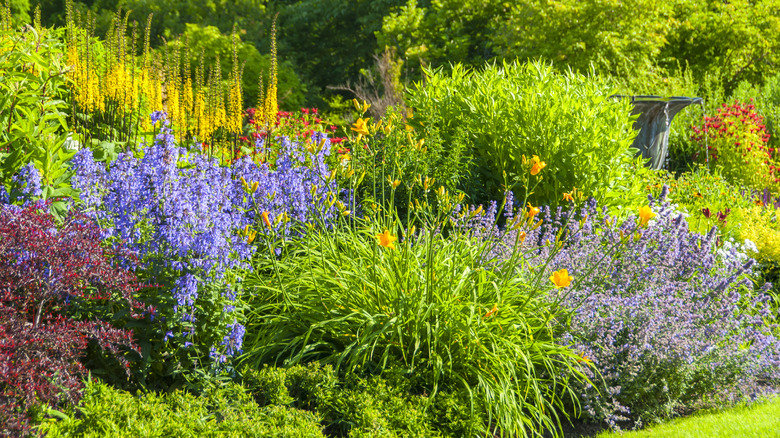
There's something quite magical about having a garden full of self-seeding flowers, whether they're growing in the ground or in beautiful pots and containers. Once you have these planted, springtime becomes exciting as you wander through your yard and see all those little seedlings popping up. And in just a short time, your anticipation is rewarded with stunning blooms that will continue to add color and sparkle to your yard all through the summer months. Whether you've already embraced the advantages of self-seeding flowers or not, one pretty purple one you might like to try is wild bergamot (Monarda fistulosa).
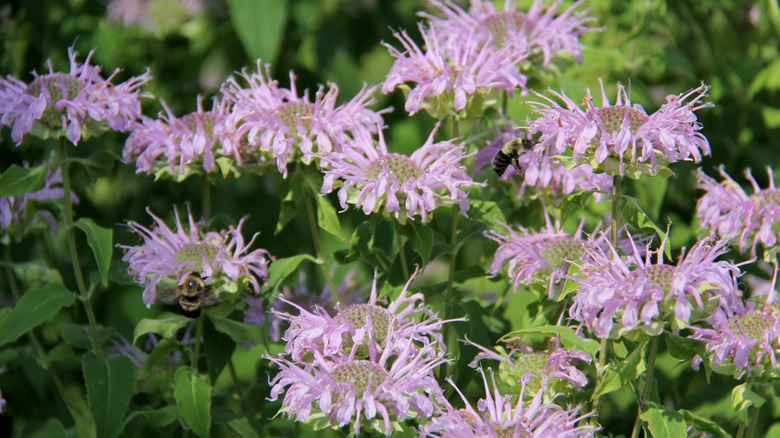
This pretty flower is native to North America and can often be found growing in fields, along roadways, and across prairies. Each clumping plant can grow to a height of around 4 feet, and it's the flowers, which bloom all summer long from June to September, that will delight you. Each bloom is a combination of individual tubular flowers with frilly petals that are arranged in a whorl around the green center, which will eventually become the seed head. From a distance, these look like lacy puffs of color in shades of pink or purple. What's even better is that this wildflower is an important source of nectar in your garden, which makes it a hummingbird and pollinator magnet. The leaves are somewhat minty with a hint of citrus, which means that rabbits and deer will usually stay away from this plant.
How to grow wild bergamot in your garden
Adding wild bergamot to your yard is as easy as scattering some seeds across the soil in your garden beds (or on the potting mix in your favorite container) in late winter or early spring. Cover these with a very light dusting of soil or some vermiculite, as they do need light to germinate. For more consistent results, you might like to start the seeds indoors in trays or small pots; this will allow you to better control the watering and temperature. Alternatively, you should be able to buy the plants at your local garden center, which might be a better idea if you want one of the more disease-resistant cultivars.
Out in the garden, wild bergamot doesn't need particularly rich soil and will thrive in shallow, rocky areas, as long as there's good drainage. It does like to be kept watered during dry spells. A sunny spot is best, but light shade will work, too. You will find that this is one of the most durable, heat-tolerant plants you can grow, especially if you live in a hot, dry climate like Texas.
One problem you'll have to look out for is powdery mildew, which plants in the Monarda genus are susceptible to. However, there are cultivars, such as 'Claire Grace,' that are more resistant to the disease. You'll also find that adequate airflow around the plants and ample water when needed will restrict the incidence and spread of the disease. Remember to water at the base of the plants to stop the foliage from getting wet whenever possible.
How to ensure wild bergamot will reseed
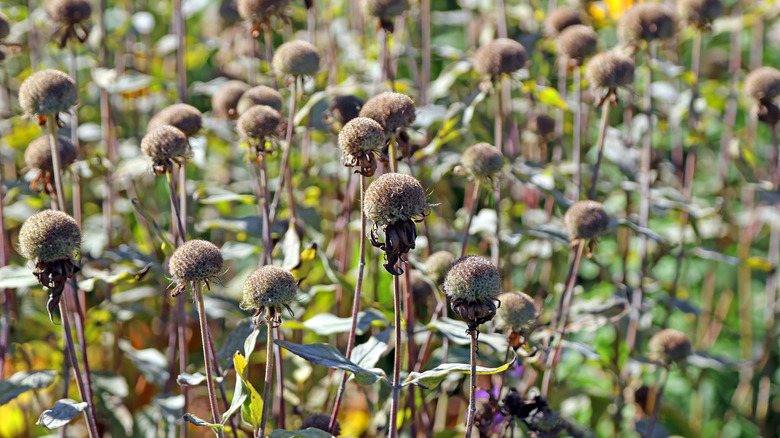
While deadheading the flowers that appear early on in the season is recommended and will allow more blooms to grow, you'll want to stop doing this toward the end of summer. To ensure that you'll have wild bergamot coming back year after year, leave the seed heads on the plant as the blooming season starts to wane. You want some of those seeds to drop to the ground and overwinter in the soil. You'll also find that the seed heads will provide some additional sustenance for seed-eating birds in the colder months.
Another benefit of leaving those tall flower stems with their seed heads in place that might not be obvious is that native bees will use the hollow stems to nest in. So, by growing this gorgeous self-seeding flower in your yard, you're not only being rewarded with pretty blooms year after year, but you're also providing many different wildlife species with food and shelter. Finally, you might like to explore some other self-seeding flowers to plant for continuous color throughout your garden.